Injured by Road Debris in Florida? Who’s Liable for Falling Cargo?
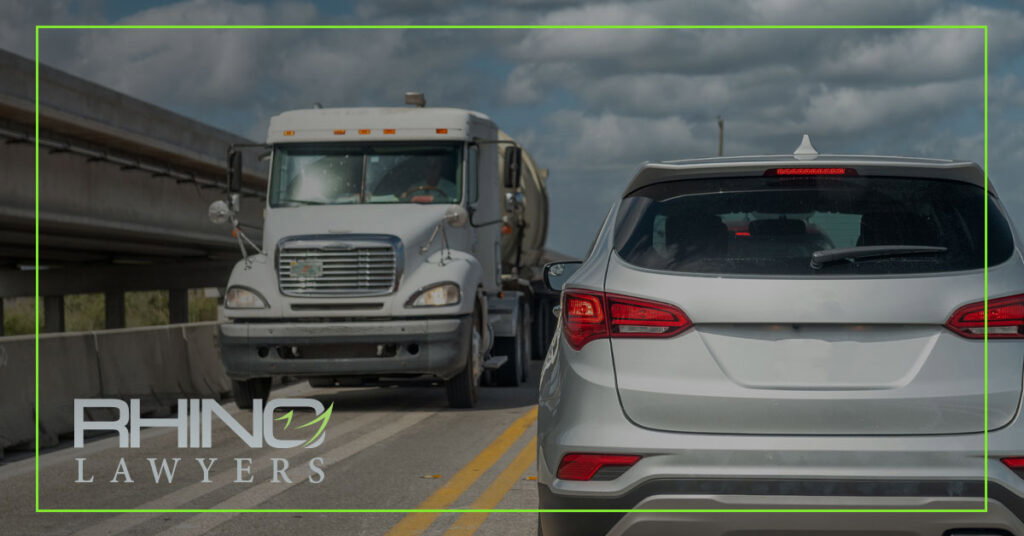
A ladder falls off a truck…
Debris flies into your lane…
You crash trying to avoid it.
Who’s responsible?
A falling cargo car accident in Florida can happen in seconds—but the consequences can last for months or years. One loose item. One unsecured load. One moment of chaos on I-4, I-75, or a local road in Tampa, Orlando, or Fort Myers.
These crashes often raise complex questions about unsecured load accident Florida claims, road debris from truck liability, and whether you can pursue an object falling from a vehicle claim if you never even touched the debris.
Florida law does address these situations—but proving fault is not always simple.
At RHINO Lawyers, we’ve handled cases where a piece of road debris changed everything. Let’s break down how liability works and what you need to know.
What Is an Unsecured Cargo Accident?
An unsecured cargo accident occurs when items fall from a vehicle and create a hazard on the road.
Common Examples
These crashes often involve:
- Ladders falling off work trucks
- Furniture flying out of pickup beds
- Construction materials spilling onto highways
- Tools or equipment dropping into traffic lanes
These situations are more common than most drivers expect.
Why These Crashes Are So Dangerous
Debris-related crashes can be especially dangerous because they happen without warning.
Drivers may:
- Swerve suddenly
- Brake aggressively
- Collide with other vehicles
Even small objects can cause serious damage at highway speeds.
According to the National Highway Traffic Safety Administration, road debris contributes to thousands of crashes each year.
Speed turns small hazards into major risks.
Florida Laws on Securing Loads
Florida has clear rules about securing cargo.
Driver Responsibilities
Drivers must ensure that any load they are transporting is properly secured.
That includes:
- Preventing items from falling
- Using proper restraints or tie-downs
- Ensuring loads do not create hazards for other drivers
These requirements are part of Florida’s broader traffic safety laws. You can review applicable statutes through the Florida Senate website.
Commercial vs Personal Vehicles
Commercial drivers often face stricter standards.
Trucking companies and contractors must follow additional safety regulations regarding load securement.
However, personal vehicle drivers are not exempt.
A loose mattress or unsecured ladder can still create liability.
Traffic Violations for Unsecured Loads
Failing to secure cargo may result in:
- Traffic citations
- Fines
- Liability for resulting crashes
A violation may also serve as evidence of negligence in a civil claim.
Who May Be Liable for Falling Cargo Accidents?
Liability depends on who was responsible for the load.
The Driver of the Vehicle
In many cases, the driver transporting the cargo is responsible.
If they failed to properly secure the load, they may be liable for resulting damages.
A Company or Employer
If the driver was working at the time of the crash, the employer may also be responsible.
Examples include:
- Delivery drivers
- Construction crews
- Service companies
Employers may be liable under vicarious liability principles.
Third Parties (Loaders or Contractors)
In some cases, a third party may have improperly loaded the cargo.
That could include:
- Warehouse workers
- Contractors
- Moving companies
Liability may extend beyond the driver.
Florida’s comparative negligence law under Florida Statute § 768.81 may apply if multiple parties share responsibility.
What If You Didn’t Hit the Object — But Crashed Avoiding It?
This is one of the most misunderstood situations.
“No Contact” Accident Claims
You may still have a valid claim even if your vehicle never touched the debris.
For example:
- You swerve to avoid a ladder and hit a guardrail
- You brake suddenly and get rear-ended
The key question becomes causation.
Proving Causation
To recover compensation, you must show that the falling object caused your crash.
This often requires:
- Evidence of the debris
- Proof of the sequence of events
Witness and Dash Cam Importance
Witnesses and dash cam footage can be critical.
They may confirm:
- The object fell from another vehicle
- Your reaction was reasonable
Without this evidence, insurers may dispute your claim.
Working with a Florida Car Accident Lawyer may help build a stronger case in no-contact scenarios.
What Evidence Helps Prove Your Case
Evidence can determine whether your claim succeeds.
Photos of Debris
If possible, capture:
- The object itself
- Where it landed
- Damage to your vehicle
Police Reports
Law enforcement documentation can support your version of events.
Crash reports can be requested through the Florida Highway Safety and Motor Vehicles website.
Surveillance or Traffic Cameras
Footage from nearby cameras may show:
- The object falling
- The vehicle responsible
Time is critical—footage may be erased quickly.
Vehicle Damage Patterns
Damage to your vehicle may support your claim.
Impact angles and collision points often tell a story.
Experienced Florida Personal Injury Attorneys can help interpret this evidence.
Steps to Take After a Falling Cargo Crash
The moments after a crash matter.
Get to Safety
Move your vehicle out of traffic if possible.
Avoid further danger.
Call Law Enforcement
Report the crash immediately.
An official report creates a record of the incident.
Seek Medical Attention
Even if injuries seem minor, get evaluated.
Symptoms may develop later.
Document Everything
Collect:
- Photos
- Witness information
- Details about the other vehicle (if known)
Preserve Evidence
Act quickly to secure any available footage or documentation.
For additional guidance, visit our Car Accident FAQs page.
Frequently Asked Questions
- Can I file a claim for a falling cargo accident in Florida?
Yes. If negligence caused the debris to fall, you may have a valid claim.
- What if I didn’t hit the object?
You may still recover compensation if the debris caused your crash.
- Who is responsible for unsecured cargo?
The driver, employer, or third parties involved in loading may be liable.
- Are unsecured loads illegal in Florida?
Yes. Drivers are required to secure cargo to prevent hazards.
- What evidence do I need?
Photos, reports, witness statements, and video footage can help support your case.
- Can multiple parties be at fault?
Yes. Florida law allows shared liability.
- What if I couldn’t identify the vehicle?
Your case may still proceed depending on available evidence and insurance coverage.
- How long do I have to file a claim?
Deadlines vary based on your situation.
Road Debris Caused Your Crash? You May Still Have a Case.
Road debris caused your crash? You may still have a case.
A falling cargo car accident in Florida can feel chaotic—but liability often traces back to someone’s failure to secure a load properly.
Even if you never touched the object. Even if the vehicle kept driving.
If you were injured in an unsecured load accident Florida case, call RHINO Lawyers at 844.RHINO.77. We offer a free consultation, are available 24/7, and there is no fee unless we win.
CONTACT A TAMPA AUTO ACCIDENT ATTORNEY
In short, after a car accident, you may not know your rights. Above all, don’t struggle through the process alone. Actually, our personal injury team is here to help you with any legal needs you might have regarding your accident.
Lastly, let RHINO Lawyers answer your questions and review the facts of your case with a Free Consultation. So, get started by completing the “Free Instant Case Evaluation” or by calling us any time, day or night, at 844.RHINO.77.
Read More
DUI with Property Damage in Florida: What Charges Are You Facing?
It was just a minor crash… right? That detail could change everything.
In Florida, a DUI arrest involving property damage is not treated the same as a standard DUI. Even a low-speed accident — a dented bumper, a scraped fender, a damaged mailbox — can elevate the charge and increase the consequences.
Drivers across Tampa, St. Petersburg, Clearwater, Lakeland, Orlando, Sarasota, and Fort Myers are often caught off guard by how quickly things escalate after a crash.
Because once property damage enters the picture, the legal exposure changes.
Understanding what you are facing matters.
What Is DUI with Property Damage in Florida?
Florida law distinguishes between a standard DUI and a DUI that results in damage or injury.
Under Florida Statute 316.193, DUI with property damage occurs when a driver:
- Is under the influence of alcohol or drugs, and
- Causes or contributes to damage to another person’s property or vehicle
This charge is often referred to as DUI with property damage or DUI crash Florida penalties in everyday terms.
Why the Crash Changes the Charge
Without a crash, a DUI may be charged as a misdemeanor based on impairment alone.
When property damage is involved, the case becomes more serious because:
- There is a measurable consequence (damage)
- Liability becomes part of the case
- Evidence expands beyond impairment
The focus shifts from “were you impaired” to “did your impairment cause damage.”
That distinction matters.
Is DUI with Property Damage a Criminal Charge?
Yes.
DUI with property damage is typically charged as a first-degree misdemeanor in Florida.
That classification carries higher potential penalties than a standard traffic infraction.
Possible Criminal Penalties
Depending on the case, penalties may include:
- Up to 1 year in jail
- Fines
- Probation
- Mandatory DUI school
- Community service
Actual outcomes depend on the facts, prior history, and evidence.
Still, the exposure is higher than a non-crash DUI.
How Property Damage Affects DUI Penalties
Even when the damage seems minor, the legal consequences can increase.
Increased Legal Exposure
Property damage introduces additional considerations:
- Insurance liability
- Repair costs
- Civil claims
A simple accident can lead to multiple layers of consequences.
Evidence Expands
In DUI accident charges in Florida cases, investigators may examine:
- Crash reports
- Vehicle damage
- Scene photographs
- Witness statements
The case is no longer based solely on impairment.
It becomes a crash investigation.
What Counts as Property Damage?
Property damage includes more than just another vehicle.
Examples include:
- Other cars
- Fences
- Mailboxes
- Buildings
- Road signs
- Landscaping
Even minimal damage can qualify.
The law does not require a large financial loss.
Any measurable damage may trigger the enhanced charge.
What Happens Immediately After a DUI Crash?
The process often moves quickly.
At the Scene
Officers may:
- Investigate the crash
- Observe signs of impairment
- Conduct field sobriety exercises
- Request breath or blood testing
If probable cause exists, an arrest may follow.
After Arrest
Two separate processes begin:
- Criminal case in court
- Administrative license action through FLHSMV
If you want to understand how quickly your driving privileges can be affected, our overview of Florida DUI administrative suspension timelines explains how these deadlines work.
Timing becomes critical.
License Consequences After a DUI with Property Damage
Penalties from a DUI crash in Florida can affect your license in multiple ways.
Administrative Suspension
The Florida Department of Highway Safety and Motor Vehicles may suspend your license shortly after your arrest.
The Florida Department of Highway Safety and Motor Vehicles handles this process.
The state outlines license suspension procedures on its driver license suspension resource page.
Court-Ordered Suspension
If convicted, additional suspension periods may apply.
Hardship License Possibility
Some drivers may qualify for limited driving privileges.
Eligibility depends on compliance requirements.
Driving is not automatically restored.
Insurance Impact and Financial Consequences
A DUI with accident consequences extends beyond court penalties.
FR-44 Insurance Requirement
Florida requires drivers convicted of DUI to carry FR-44 insurance.
This requires higher liability coverage limits.
The state explains these requirements here: Florida financial responsibility law.
Premium Increases
Insurance rates often increase significantly.
A crash combined with DUI creates additional risk from an insurer’s perspective.
Civil Liability
If another party’s property was damaged, you may face:
- Repair costs
- Insurance claims
- Potential lawsuits
Financial exposure can extend well beyond fines.
Can DUI with Property Damage Be Reduced?
Each case depends on specific facts.
Factors That May Influence Outcomes
Negotiations may consider:
- Strength of impairment evidence
- Accuracy of crash reconstruction
- Witness statements
- Video footage
- Prior driving history
Evidence Challenges
Key issues may include:
- Whether impairment was properly established
- Whether the crash was caused by the driver
- Or whether procedures were followed correctly
Every detail matters.
No two cases are identical.
Evidence That Matters in DUI Crash Cases
Because a crash is involved, the evidence becomes more complex.
Crash Reports
Reports summarize the officer’s findings.
They are important — but not always perfect.
Scene Documentation
Photos and diagrams may show:
- Vehicle positioning
- Impact points
- Road conditions
Witness Testimony
Independent witnesses can provide additional perspective.
Video Evidence
Dashcam and bodycam footage often play a significant role.
Video can support or challenge the narrative.
Counties Where DUI Crash Charges Are Common
DUI property damage Florida cases occur statewide.
Higher volumes are often seen in:
Hillsborough County
Heavy traffic and urban density contribute to accident frequency.
Pinellas County
Tourism and beach traffic increase crash exposure.
Polk County
High-speed roadways contribute to collision risk.
Pasco County
Population growth has increased enforcement activity.
The legal framework remains consistent across Florida.
Frequently Asked Questions About DUI with Property Damage
What is DUI with property damage in Florida?
A DUI charge combines impairment with damage to property or vehicles.
Is this more serious than a regular DUI?
Yes. Property damage increases legal exposure and potential penalties.
Can minor damage still lead to this charge?
Yes. Even small amounts of damage may qualify.
Will my insurance go up?
In most cases, yes. DUI convictions often lead to significant premium increases.
Can I go to jail for this charge?
Yes. A first-degree misdemeanor can carry up to one year in jail.
Does this affect my license?
Yes. Administrative and court-ordered suspensions may apply.
Can the defense challenge the charge?
Yes. Attorneys can evaluate the evidence and procedures in each case.
Is this considered a felony?
Not typically. However, more serious outcomes (such as injury) may elevate charges.
Before You Assume It’s “Just a Crash”
A minor accident can turn into a major legal issue when DUI plays a role.
Property damage changes the charge. It increases penalties.
It adds financial risk. And it expands the scope of the case.
If officers charged you with DUI property damage in Florida in Hillsborough, Pinellas, Polk, Pasco, or surrounding West Florida counties, take the time to understand what you are facing before making any decisions.
Call (844) RHINO-77 for a free consultation. RHINO Lawyers defends DUI and criminal traffic cases across West Florida and can help you understand your options so you can move forward with clarity.
CONTACT TAMPA TRAFFIC TICKET ATTORNEY
RHINO Lawyers can help and guide you through a system molded by law enforcement, judges, and lawyers for decades. Having won cases for our clients in similar circumstances, our criminal defense team knows what it takes to fight on your behalf.
Let RHINO Lawyers answer your questions and review the facts of your case with a Free Consultation. So, get started by completing the “Free Instant Case Evaluation” or by calling us any time, day or night, at (844) RHINO-77.
Read More
What If You’re Injured in a Car Accident While Visiting Florida on Vacation?
Vacation in Florida… ruined by a crash?
Now you’re dealing with insurance from another state?
If you were involved in a Florida accident out of state driver situation, you’re not just dealing with injuries—you’re dealing with unfamiliar laws, out-of-state insurance policies, and a process that can feel overwhelming fast. A tourist car accident in Florida brings unique challenges, especially when you’re trying to recover while far from home.
Questions start piling up quickly.
Do Florida laws apply or your home state’s laws?
Will your insurance cover anything?
Can you even file a Florida injury claim non-resident case if you’ve already left the state?
These situations are more common than you think—especially in high-traffic areas like Orlando, Tampa, Clearwater, Sarasota, and Fort Myers, where tourism is constant.
At RHINO Lawyers, we regularly help visitors who are navigating a visiting Florida car accident what to do scenario. Let’s break down how this works—and what you should do next.
What Laws Apply If You’re From Another State?
One of the biggest points of confusion is which state’s laws apply.
Florida Jurisdiction
If your accident occurred in Florida, Florida law generally governs your claim.
That includes:
- Fault rules
- Insurance requirements
- Injury thresholds
Even if you live in another state, the crash is handled under Florida jurisdiction.
Florida’s No-Fault Rules
Florida operates under a no-fault system.
That means your Personal Injury Protection (PIP) coverage may apply first—regardless of who caused the crash.
You can review Florida insurance requirements through the Florida Highway Safety and Motor Vehicles website.
However, not all out-of-state drivers carry PIP.
That’s where things become more complex.
How Insurance Works for Out-of-State Drivers
Insurance is often the most confusing part of a Florida tourist car accident claim.
PIP Differences Between States
Some states require PIP coverage. Others do not.
If your home state does not require PIP, your policy may still provide limited coverage in Florida—but not always.
That can affect:
- Immediate medical coverage
- Reimbursement timelines
Policy Conflicts
Multiple policies may come into play, including:
- Your personal auto insurance
- The at-fault driver’s liability coverage
- Rental car insurance (if applicable)
Insurance companies may dispute:
- Which policy applies first
- Whether Florida law overrides your home policy
These disputes can delay claims significantly.
Working with a Florida Car Accident Lawyer may help identify coverage and avoid costly gaps.
Can You File a Claim in Florida?
Yes—even if you don’t live here.
Where Claims Are Handled
A Florida injury claim non-resident case is typically handled in Florida if:
- The crash occurred in Florida
- The at-fault driver is subject to Florida jurisdiction
This means your claim may proceed in Florida courts if necessary.
Legal Options
Depending on the severity of your injuries, you may be able to pursue:
- PIP benefits (if applicable)
- A third-party liability claim
- Additional compensation if injury thresholds are met
Florida law allows recovery beyond no-fault limits in certain cases. You can review comparative negligence principles under Florida Statute § 768.81.
Understanding where and how to file is critical.
Common Challenges Tourists Face
Being injured away from home adds another layer of difficulty.
Traveling Home Mid-Treatment
Many visitors return home before completing medical care.
That can create gaps in treatment.
Insurance companies may argue:
- Injuries were not serious
- Treatment was inconsistent
Continuity of care becomes essential.
Communication Issues
Handling a claim from another state can involve:
- Different time zones
- Limited access to documents
- Difficulty attending appointments or evaluations
Coordination becomes more complex.
Out-of-State Insurance Complications
Your insurer may not be familiar with Florida’s no-fault system.
That may lead to:
- Delays
- Denials
- Confusion over coverage
Experienced Florida Personal Injury Attorneys can help bridge that gap.
Steps to Take Before Leaving Florida
What you do before heading home can significantly impact your case.
Get Medical Care Immediately
Even if injuries seem minor, get evaluated.
Symptoms may develop later.
Early treatment helps establish a clear connection to the crash.
Document Everything
Before leaving, gather:
- Police reports
- Photos of the crash scene
- Driver information
- Witness contact details
Crash reports can be accessed through the Florida Highway Safety and Motor Vehicles website.
Continue Treatment at Home
Follow up with medical providers in your home state.
Consistency matters.
Consider a Legal Consultation
Before leaving Florida—or soon after—consider speaking with someone who understands Florida law.
For additional guidance, visit our Car Accident FAQs page.
Because timing matters.
Frequently Asked Questions
- Can I file a claim in Florida if I live in another state?
Yes. If the crash occurred in Florida, your claim may be handled under Florida law.
- Does my out-of-state insurance cover me in Florida?
It may, but coverage depends on your policy and state requirements.
- What if I don’t have PIP coverage?
Other insurance options may still apply, including liability and uninsured motorist coverage.
- Do I need to return to Florida for my case?
Not always. Many aspects of a claim can be handled remotely.
- What happens if I leave before finishing treatment?
You can continue treatment in your home state, but consistency is important.
- Can I still recover compensation if I was partially at fault?
Possibly. Florida’s comparative negligence system may reduce compensation based on fault percentage.
- How long do I have to file a claim?
Deadlines vary depending on your case.
- What should I do immediately after a crash in Florida?
Seek medical care, document the scene, and gather information before leaving.
Injured While Visiting Florida? You Don’t Have to Handle It Alone.
Injured while visiting Florida? You don’t have to handle it alone.
A Florida accident out-of-state driver situation can feel overwhelming—especially when you’re trying to recover far from home. Between unfamiliar laws, insurance complications, and travel challenges, it’s easy to feel stuck.
But you still have rights.
If you were hurt in a tourist car accident in Florida, call RHINO Lawyers at 844.RHINO.777. We’re available 24/7, and there is no fee unless we win.
CONTACT A TAMPA AUTO ACCIDENT ATTORNEY
In short, after a car accident, you may not know your rights. Above all, don’t struggle through the process alone. Actually, our personal injury team is here to help you with any legal needs you might have regarding your accident.
Lastly, let RHINO Lawyers answer your questions and review the facts of your case with a Free Consultation. So, get started by completing the “Free Instant Case Evaluation” or by calling us any time, day or night, at 844.RHINO.77.
Read More
DUI Checkpoints in Florida: Can You Be Stopped Without Cause?
No speeding. No swerving. So why did an officer pull you over anyway?
DUI checkpoints in Florida — also called sobriety checkpoints or roadblocks — raise one of the most common questions drivers have: Can police stop you without cause?
The short answer: sometimes, yes.
The longer answer depends on how agencies set up the checkpoint, how officers conduct stops, and whether they follow strict legal requirements under Florida law.
Across Tampa, St. Petersburg, Clearwater, Lakeland, Orlando, Sarasota, and Fort Myers, law enforcement uses DUI checkpoints to deter impaired driving. Officers and courts also closely scrutinize these checkpoints because they involve stopping drivers who may not have done anything wrong.
Understanding your rights — and the limits on law enforcement — matters.
Are DUI Checkpoints Legal in Florida?
Florida permits DUI checkpoints, but only under specific conditions.
Courts have upheld sobriety checkpoints when they follow constitutional guidelines. These guidelines balance public safety with individual rights under the Fourth Amendment.
The legal framework comes from court decisions interpreting search and seizure protections. Florida courts generally allow checkpoints if they meet structured, pre-planned criteria rather than arbitrary stops.
A helpful overview of impaired driving enforcement policies can be found through the National Highway Traffic Safety Administration at NHTSA impaired driving enforcement guidance.
The key concept is this:
A checkpoint cannot be random.
It must be organized, documented, and consistently applied.
Can Police Stop You Without Cause in Florida?
At a DUI checkpoint, officers may stop vehicles without individualized suspicion.
That is the exception to the normal rule.
Outside of checkpoints, officers generally need reasonable suspicion to conduct a traffic stop. At a properly conducted checkpoint, that requirement is replaced with a neutral stopping pattern.
What Makes a Stop Lawful at a Checkpoint?
To be valid, DUI checkpoints in Florida typically must include:
- A predetermined plan
- Neutral criteria for stopping vehicles (for example, every car or every third car)
- Supervisory oversight
- Minimal intrusion on drivers
If officers deviate from these standards, the legality of the stop may be challenged.
What Drivers Often Miss
The legality of the checkpoint itself matters just as much as what happens during the stop.
If the setup is flawed, it can affect the entire case.
What Happens When You Go Through a DUI Checkpoint?
The interaction is usually brief.
An officer may:
- Ask for your driver’s license and registration
- Observe your behavior
- Ask limited questions
If no signs of impairment are present, officers typically allow you to proceed.
If an officer believes impairment may be involved, the stop can escalate.
That is where things change.
What Gives Officers Reason to Investigate Further?
Even at a checkpoint, officers must identify indicators before expanding the stop.
Common factors include:
- Odor of alcohol
- Slurred speech
- Bloodshot or watery eyes
- Open containers
- Admissions of drinking
Once those indicators are observed, the officer may request field sobriety exercises or chemical testing.
The transition from checkpoint stop to DUI investigation happens quickly.
Your Rights at a Sobriety Checkpoint in Florida
Drivers have rights — even at a checkpoint.
You Must Provide Basic Information
Florida law requires drivers to provide:
- A valid driver’s license
- Vehicle registration
- Proof of insurance upon request
You Do Not Have to Answer All Questions
You may decline to answer certain questions beyond identifying information.
However, how you respond may influence the officer’s perception.
Field Sobriety Tests Are Voluntary
Field sobriety exercises are not required by law.
You may refuse them.
Chemical Testing Is Different
Under Florida’s implied consent law, refusing a lawful breath test can result in administrative penalties.
The statute governing implied consent can be reviewed here: Florida Statute 316.1932.
Understanding the difference between these tests matters.
What Happens If You Are Arrested at a Checkpoint?
The process is the same as any DUI arrest.
Criminal Case Begins
You may face charges under Florida DUI law.
Court proceedings typically include:
- Arraignment
- Pretrial hearings
- Possible trial
Administrative License Suspension
Separately, your license may be suspended through the administrative process handled by FLHSMV.
If you want to understand how quickly that process can affect your ability to drive, our overview of Florida DUI administrative suspension timelines provides helpful context.
Two tracks begin immediately.
Each has its own consequences.
Can You Turn Around to Avoid a DUI Checkpoint?
This is a common question.
In many situations, drivers attempt to avoid checkpoints by turning onto a different road.
Is It Legal?
Turning around is not automatically illegal.
However, officers may observe your driving behavior.
If your maneuver violates traffic laws — such as an illegal U-turn — that can provide independent grounds for a stop.
What Officers Look For
Law enforcement may watch for:
- Sudden or unsafe turns
- Traffic violations
- Erratic driving
Avoidance alone is not always enough to justify a stop.
The behavior surrounding it may be.
When DUI Checkpoints May Be Challenged
Not all checkpoints are conducted properly.
Legal challenges may focus on:
- Lack of a formal operational plan
- Inconsistent stopping patterns
- Excessive detention time
- Inadequate supervision
If a checkpoint fails to meet legal standards, evidence obtained during the stop may be questioned.
Each case depends on specific facts.
Evidence That Matters in Checkpoint Cases
Checkpoint cases often rely heavily on documentation and video.
Operational Plans
Agencies typically prepare written plans that outline how they will conduct the checkpoint.
These documents may become important in evaluating legality.
Bodycam and Dashcam Footage
Video can show:
- How the stop was conducted
- How long did the interaction last
- What the driver said and did
Officer Testimony
Officers must explain:
- Why law enforcement established the checkpoint
- How officers selected drivers for stops
- What observations led to further investigation
Details matter.
Insurance and Long-Term Impact of a DUI Arrest
A DUI arrest — even from a checkpoint — can have lasting consequences.
FR-44 Insurance Requirements
Florida requires FR-44 coverage after a DUI conviction.
The state explains financial responsibility requirements here: Florida financial responsibility law.
Higher coverage limits often mean higher premiums.
License Consequences
DUI convictions trigger license suspension periods rather than point-based penalties.
Record Impact
A DUI conviction can affect employment, background checks, and future legal situations.
Checkpoint origin does not change those outcomes.
Counties Where DUI Checkpoints Are Common
Law enforcement uses DUI checkpoints throughout Florida, particularly in high-traffic areas.
Hillsborough County
Tampa enforcement often increases during weekends and major events.
Pinellas County
Clearwater and St. Petersburg frequently conduct checkpoints near entertainment districts.
Polk County
Highway corridors and commuter routes see periodic checkpoint activity.
Pasco County
Growth in traffic volume has led to increased enforcement presence.
No matter the location, the same legal standards apply.
Frequently Asked Questions About DUI Checkpoints in Florida
Are DUI checkpoints legal in Florida?
Yes, when conducted under proper legal guidelines and structured procedures.
Can police stop you without cause at a checkpoint?
Yes, if the checkpoint follows a neutral, pre-planned system for stopping vehicles.
Do I have to answer all questions?
No. You must provide identification, but you may decline to answer additional questions.
Are field sobriety tests required?
No. They are voluntary.
What happens if I refuse a breath test?
Refusal may result in administrative license suspension under implied consent laws.
Can I avoid a checkpoint?
Turning away is not automatically illegal, but traffic violations during avoidance may justify a stop.
Can the defense challenge checkpoint cases?
Yes. Legal challenges often focus on how the checkpoint was conducted.
Does a checkpoint DUI differ from other DUI cases?
The legal process remains the same, though attorneys evaluate the initial stop differently.
Before You Assume the Stop Was Automatic
DUI checkpoints are legal in Florida — but not unlimited. Officers can stop drivers without individualized suspicion.
At the same time, they must follow strict procedures. If officers do not follow those procedures, the defense may question the legality of the stop.
If officers stopped or arrested you at a DUI checkpoint in Hillsborough, Pinellas, Polk, Pasco, or surrounding West Florida counties, take the time to understand how they conducted the stop and what options you may have.
Call (844) RHINO-77 for a free consultation. RHINO Lawyers defends DUI and criminal traffic cases across West Florida and can help you understand your rights and next steps.
CONTACT TAMPA TRAFFIC TICKET ATTORNEY
RHINO Lawyers can help and guide you through a system molded by law enforcement, judges, and lawyers for decades. Having won cases for our clients in similar circumstances, our criminal defense team knows what it takes to fight on your behalf.
Let RHINO Lawyers answer your questions and review the facts of your case with a Free Consultation. So, get started by completing the “Free Instant Case Evaluation” or by calling us any time, day or night, at (844) RHINO-77.
Read More
Drive-Thru Accident Florida: Can You File a Claim?
Hit in a Chick-fil-A drive-thru?
Crash at a gas pump?
Is it just a minor accident… or a real injury case?
A drive-thru accident in Florida scenario might seem small at first glance. Low speeds. Tight turns. Short distances. But these incidents often raise serious legal questions about gas station car accident liability and whether a private property accident Florida claim is even possible.
Here’s the truth: even a low-speed crash injury in Florida can lead to real pain, mounting medical bills, and complex liability disputes—especially in crowded commercial spaces like drive-thrus and gas stations. These situations are often classified as a parking lot business accident, and they come with unique challenges under Florida law.
At RHINO Lawyers, we’ve handled cases across Tampa, Clearwater, Orlando, Lakeland, Sarasota, and Fort Myers where what looked like a “small bump” turned into a serious injury claim.
Let’s break down what really matters.
Are Drive-Thru and Gas Station Accidents Common?
These crashes happen more often than most drivers realize.
Tight Spaces Increase Risk
Drive-thrus and gas stations are designed for convenience—not safety.
Drivers must navigate:
- Narrow lanes
- Sharp turns
- Close proximity to other vehicles
One small mistake can lead to a collision.
Frequent Distractions
Unlike highways, these environments are full of distractions.
Drivers may be:
- Looking at menus
- Handling payments
- Checking phones
- Watching pedestrians
Even a moment of inattention can cause a crash.
According to the National Highway Traffic Safety Administration, distracted driving remains a major contributor to collisions across the United States.
In drive-thru and gas station settings, distractions are constant.
Who May Be Liable?
Liability in these cases is rarely straightforward.
Other Drivers
Most commonly, another driver may be responsible.
Examples include:
- Rear-end collisions in a drive-thru line
- Drivers pulling out of pump lanes without yielding
- Vehicles cutting across lanes improperly
Negligence still applies—even on private property.
Business or Property Owners
In some cases, the business itself may share responsibility.
That may happen if:
- The layout creates a dangerous traffic flow
- Visibility is obstructed
- Signage is missing or unclear
- Hazards are not properly maintained
Property owners have a duty to maintain reasonably safe conditions.
However, proving business liability requires strong evidence.
Shared Fault
Florida follows a modified comparative negligence system under Florida Statute § 768.81.
This means:
- Fault may be divided between parties
- Compensation may be reduced based on your percentage of fault
- Recovery may be barred if you are more than 50% responsible
In tight spaces like drive-thrus, shared fault is common.
Can You Still Recover Compensation?
Yes. Even on private property.
PIP Coverage Still Applies
Florida is a no-fault state.
That means your Personal Injury Protection (PIP) coverage applies regardless of where the crash occurred.
PIP typically covers:
- 80% of medical expenses
- 60% of lost wages
You can review Florida insurance requirements through the Florida Highway Safety and Motor Vehicles website.
Drive-thru or gas station? It still applies.
When Injury Thresholds Matter
If your injuries are serious, you may pursue compensation beyond PIP.
That may include:
- Pain and suffering
- Emotional distress
- Loss of enjoyment of life
Working with a Florida Car Accident Lawyer may help determine whether your case meets Florida’s legal thresholds.
Because “low-speed” does not mean “low impact.”
Unique Challenges in These Claims
Drive-thru and gas station cases come with specific obstacles.
Limited Police Response
Many of these crashes occur on private property.
Law enforcement may not respond unless injuries are reported.
Without a formal report, proving fault becomes harder.
You can still request documentation through the Florida Highway Safety and Motor Vehicles website.
Surveillance Footage Is Critical
Most businesses have cameras.
That footage may show:
- Vehicle movement
- Driver behavior
- Points of impact
But there’s a catch.
The video is often deleted quickly.
Acting fast can make the difference between proving your case and losing key evidence.
Conflicting Driver Stories
Without clear footage or witnesses, disputes are common.
Each driver may blame the other.
Insurance companies may default to shared fault.
That reduces potential compensation.
Experienced Florida Personal Injury Attorneys may help build a stronger case when facts are unclear.
How to Strengthen Your Case
Strong cases are built early.
Take Photos Immediately
Capture:
- Vehicle positions
- Damage
- Surroundings
- Traffic flow
Details fade quickly.
Request an Incident Report
Notify the business or property owner.
Ask for a written report.
This creates a record.
Seek Medical Treatment
Even minor pain should be evaluated.
Symptoms may worsen over time.
Early treatment supports your claim.
Preserve Evidence
Act quickly to request surveillance footage.
Time matters.
Be Careful With Statements
Insurance companies may contact you soon after the crash.
Be cautious about recorded statements.
For additional guidance, visit our Car Accident FAQs page.
Frequently Asked Questions
- Can I file a claim for a drive-thru accident in Florida?
Yes. Private property accidents may still qualify for injury claims.
- Who is at fault in a gas station crash?
It depends on the facts. Drivers, and sometimes property owners, may share responsibility.
- Does PIP apply in these accidents?
Yes. Florida’s no-fault system applies regardless of location.
- Are low-speed crashes serious?
They can be. Injuries may still occur even at low speeds.
- What if there were no witnesses?
Photos, video footage, and documentation become critical.
- Can a business be liable for a crash?
In some cases, yes—if unsafe conditions contributed.
- How long do I have to file a claim?
Deadlines vary based on your case.
- What should I do immediately after the crash?
Document everything, seek care, and preserve evidence.
Injured in a “Low-Speed” Crash? It May Be More Serious Than You Think.
Injured in a “low-speed” crash? It may be more serious than you think.
A drive-thru accident in Florida, or a parking lot business accident, may seem minor—but the injuries, legal issues, and insurance complications can be significant.
Understanding your rights early can make a major difference.
If you were injured in a crash at a drive-thru or gas station, call RHINO Lawyers at 844.RHINO.77. We offer a free consultation, are available 24/7, and there is no fee unless we win.
CONTACT A TAMPA AUTO ACCIDENT ATTORNEY
In short, after a car accident, you may not know your rights. Above all, don’t struggle through the process alone. Actually, our personal injury team is here to help you with any legal needs you might have regarding your accident.
Lastly, let RHINO Lawyers answer your questions and review the facts of your case with a Free Consultation. So, get started by completing the “Free Instant Case Evaluation” or by calling us any time, day or night, at 844.RHINO.77.
Read More
Failure to Obey a Traffic Signal in Florida: Just a Ticket or More?
Ran a light? Missed a sign? That “simple” mistake can follow you.
In Florida, a failure to obey a traffic control device — a red light, stop sign, or posted signal — often looks like a routine citation. Pay the fine, move on, forget about it.
That assumption can cost you.
Points, insurance increases, and liability exposure can stack quickly. When a crash is involved, the consequences expand even further. What starts as a minor stop in Tampa, Clearwater, Orlando, or Fort Myers can become a long-term problem.
Understanding how Florida treats these violations is the difference between a quick resolution and a costly mistake.
What Counts as “Failure to Obey a Traffic Control Device” in Florida?
Florida law requires drivers to follow official traffic control devices at all times. That includes signals, signs, and road markings.
The governing statute is Florida Statute 316.074, which makes it unlawful to disobey traffic control devices unless directed otherwise by a law enforcement officer.
Common Examples
Drivers are cited for violations such as:
- Running a red light
- Failing to stop at a stop sign
- Ignoring a yield sign
- Disobeying lane control signals
- Driving past posted road restrictions
Each situation falls under the same general rule: follow the signal as posted.
Why the Law Is Broad
The statute is written broadly to cover a wide range of driving situations. It allows officers to issue citations when they believe a driver failed to comply with a clearly posted control device.
That flexibility is intentional.
It also means interpretation plays a role.
Is This Just a Ticket — or Something More?
In many cases, it starts as a simple citation.
What happens next depends on several factors.
Points on Your License
Most traffic signal violations carry 3 points on your Florida driving record.
Florida’s point system is explained on the state’s DHSMV point system page.
Accumulating points within a set timeframe can lead to suspension:
- 12 points in 12 months → 30-day suspension
- 18 points in 18 months → 3-month suspension
- 24 points in 36 months → 1-year suspension
One ticket may not seem significant.
Multiple violations can quickly add up.
Fines and Court Costs
The base fine varies by county, but total costs often include:
- Court fees
- Administrative costs
- Optional traffic school expenses
The number on the ticket is rarely the final number paid.
Insurance Impact
Insurance carriers frequently treat these violations as at-fault incidents.
That can result in:
- Increased premiums
- Loss of discounts
- Higher long-term insurance costs
In Florida’s high-cost insurance market, even one violation can affect rates for years.
Red Light Tickets: Camera vs. Officer Issued
Not all red light violations are handled the same way.
Red Light Camera Citations
Some Florida cities use automated enforcement systems.
These citations are issued based on camera footage and are typically treated as civil penalties.
You can review how these systems operate through Florida’s Red Light Camera Program overview.
Officer-Issued Citations
When an officer observes the violation directly, the citation may carry points and additional consequences.
The difference matters.
One affects your driving record.
The other may not, depending on how it is resolved.
What If a Crash Were Involved?
This is where things escalate.
Increased Liability Exposure
If a failure to obey a traffic signal in Florida violation leads to a crash, the citation may be used in evaluating fault.
Insurance companies often consider:
- Traffic citations
- Crash reports
- Witness statements
A red light violation can significantly influence liability.
Civil Consequences
Florida follows a comparative negligence system.
The Florida Bar explains how fault is assigned in civil cases on its comparative negligence overview.
Even a partial fault can affect financial responsibility.
Potential Additional Charges
Depending on the circumstances, additional violations may be added, including careless driving or reckless driving.
The situation can shift quickly.
What Happens After You Receive the Ticket?
Florida typically gives drivers several options.
Pay the Ticket
The court generally treats payment as an admission of guilt.
The state assesses points.
The court closes the case.
Elect Traffic School
Eligible drivers may choose to attend traffic school to avoid points.
Restrictions apply based on prior elections.
Request a Hearing
Drivers may contest the citation in court.
At a hearing:
- The officer presents evidence
- The driver may present evidence
- A judge determines the outcome
For additional context on how these cases are handled across Florida courts, see our Florida traffic ticket defense resources.
Each option carries different consequences.
Can You Fight a Traffic Signal Violation?
Yes. Many drivers choose to contest these citations.
Possible Defense Angles
Depending on the facts, issues may include:
- Obstructed or unclear signage
- Malfunctioning signals
- Timing of yellow lights
- Incomplete officer observation
- Emergency circumstances
Each case depends on evidence.
Evidence That Matters
Relevant documentation may include:
- Intersection photos
- Traffic signal timing data
- Dashcam footage
- Witness statements
Details can change the outcome.
Mistakes Drivers Make After Getting a Ticket
Common missteps include:
- Paying immediately without understanding the consequences
- Ignoring the ticket deadline
- Assuming the violation is minor
- Failing to document the scene
Early decisions often shape long-term results.
Counties Where These Tickets Are Common
Traffic signal violations occur statewide, especially in high-volume areas.
Hillsborough County
Heavy traffic congestion leads to frequent red light citations in Tampa.
Pinellas County
Tourist traffic contributes to violations in Clearwater and St. Petersburg.
Polk County
Busy commuter routes increase citation frequency.
Pasco County
Rapid growth has increased traffic enforcement activity.
The rules remain consistent across Florida.
Frequently Asked Questions About Traffic Signal Violations
How many points is a red light ticket in Florida?
Most violations carry 3 points if issued by an officer.
Will my insurance go up?
In many cases, yes. Insurers often treat these violations as at-fault incidents.
Can I avoid points?
Traffic school may be an option for eligible drivers.
Is a camera ticket the same as an officer ticket?
No. Camera tickets are typically civil violations and may not carry points.
Can I fight a red light ticket?
Yes. Drivers can request a hearing and present evidence.
What if the light changed quickly?
Signal timing may be relevant in certain cases.
Does this affect my license?
Yes. Points can accumulate and lead to suspension.
What happens if a crash occurs?
The citation may affect liability and increase consequences.
Before You Treat It Like “Just a Ticket”
A failure to obey a traffic signal can be more than a minor mistake.
Points affect your record. Insurance costs can rise. Liability exposure may increase. And repeated violations can lead to suspension.
If you received a traffic signal violation, Florida drivers often underestimate the severity in Hillsborough, Pinellas, Polk, Pasco, or surrounding West Florida counties. Take the time to understand your options before making a decision.
Call (844) RHINO-77 for a free consultation. RHINO Lawyers defends traffic and criminal traffic cases across West Florida and can help you understand your next steps with clarity.
CONTACT TAMPA TRAFFIC TICKET ATTORNEY
RHINO Lawyers can help and guide you through a system molded by law enforcement, judges, and lawyers for decades. Having won cases for our clients in similar circumstances, our criminal defense team knows what it takes to fight on your behalf.
Let RHINO Lawyers answer your questions and review the facts of your case with a Free Consultation. So, get started by completing the “Free Instant Case Evaluation” or by calling us any time, day or night, at (844) RHINO-77.
Read More
Test Drive Accident Florida: Who Pays for Injuries?
Test driving a car… then suddenly — CRASH.
Whose insurance covers you?
A test drive accident in Florida can get complicated fast. One moment you’re evaluating a vehicle. Next, you’re dealing with injuries, damage, and a major question: who pays test drive accident claims when the crash happens before you even own the car?
Responsibility in an accident while test driving a car scenario often involves multiple layers—driver actions, dealership policies, and insurance coverage. In many cases, dealership liability crash questions arise immediately, along with concerns about car dealership insurance Florida requirements.
At RHINO Lawyers, we’ve seen test drive crashes across Tampa, Clearwater, Orlando, Lakeland, Sarasota, and Fort Myers turn into complex injury claims. The confusion is real—but the law does provide answers.
Let’s break it down.
Who Is Responsible During a Test Drive Accident?
Responsibility depends on the specific facts of the crash.
Driver vs Dealership Liability
During a test drive, you are typically operating a vehicle owned by the dealership. That creates a shared legal dynamic.
If you were driving negligently—speeding, distracted, or failing to yield—you may be partially responsible.
However, dealerships may also carry liability depending on:
- Whether the vehicle was safe to operate
- If proper permission was given
- Whether an employee was supervising
Florida law generally allows claims based on negligence. You can review comparative negligence principles under Florida Statute § 768.81.
Permission to Drive Matters
Test drives usually require dealership permission.
That permission is critical because it may trigger dealership insurance coverage.
If the vehicle was driven without authorization, coverage disputes may arise.
Documentation from the dealership—such as a test drive agreement—may become key evidence.
What Insurance Policies May Apply?
Multiple insurance policies may be involved in a test drive crash.
Understanding which policy applies first can significantly affect your claim.
Dealership Coverage
Most dealerships carry commercial auto insurance.
This policy often covers:
- Vehicles owned by the dealership
- Drivers operating vehicles with permission
In many cases, dealership insurance may be primary.
That means it pays first.
Your Personal Auto Policy
Your own insurance may also apply.
Personal auto policies sometimes provide coverage when you drive a vehicle you do not own.
However, this coverage is often secondary.
Secondary vs Primary Coverage
Insurance companies often dispute which policy pays first.
That can lead to delays.
Dealership insurers may argue that your personal policy should apply. Your insurer may argue the opposite.
These disputes are common in test drive accident cases in Florida.
Working with a Florida Car Accident Lawyer may help identify all available coverage and avoid costly gaps.
What If Another Driver Caused the Crash?
Sometimes the test drive vehicle is not at fault at all.
Third-Party Claims
If another driver caused the crash, you may pursue a claim against that driver.
That claim may include:
- Medical expenses
- Lost wages
- Pain and suffering (if thresholds are met)
Florida operates under a no-fault system for initial medical coverage. You can review PIP requirements through the Florida Highway Safety and Motor Vehicles website.
However, serious injuries may allow claims beyond PIP.
Comparative Fault Still Applies
Even if another driver caused the crash, fault may be shared.
For example:
- One driver runs a light
- Another driver speeds through an intersection
Both may share responsibility.
Under Florida law, compensation may be reduced by your percentage of fault.
Clear evidence becomes essential.
Injuries During a Test Drive — What You Need to Prove
Injury claims require more than just showing that a crash occurred.
Medical Documentation
Strong medical records help establish:
- The nature of your injuries
- When symptoms began
- How the crash caused the injury
Delays in treatment may create challenges.
Consistent care supports credibility.
Fault Evidence
To recover compensation, you must show negligence.
That may involve:
- Police reports
- Witness statements
- Photos of the scene
- Vehicle damage analysis
Crash reports can be requested through the Florida Highway Safety and Motor Vehicles website.
According to the National Highway Traffic Safety Administration, crash dynamics and vehicle impact patterns often help determine fault.
Evidence builds clarity.
Clarity builds claims.
Steps to Take Immediately After the Crash
What you do next can directly affect your claim.
Report the Incident
Notify law enforcement and the dealership immediately.
A formal report helps document:
- The crash details
- The parties involved
- Initial observations
Gather Dealership Information
Collect:
- Dealership name and contact information
- Insurance details (if available)
- Test drive agreement paperwork
These details may become critical later.
Seek Medical Care
Even if injuries seem minor, get evaluated quickly.
Symptoms may appear later.
Early documentation strengthens your case.
Preserve Evidence
Take photos of:
- Vehicle damage
- Road conditions
- Surrounding environment
Evidence disappears quickly.
Act fast.
Be Careful With Statements
Insurance companies may request recorded statements.
Be cautious.
Providing incomplete or inaccurate information may affect your claim.
For additional guidance, visit our Car Accident FAQs page.
Frequently Asked Questions
- Who pays for injuries during a test drive accident in Florida?
Coverage may come from dealership insurance, your personal policy, or another driver’s insurance, depending on fault.
- Does dealership insurance always apply?
Not always. Coverage depends on permission and policy terms.
- Can I use my own insurance during a test drive?
Yes, your policy may apply as secondary coverage.
- What if another driver caused the crash?
You may pursue a third-party claim against that driver.
- Are test drive accidents treated differently under Florida law?
They follow general negligence principles but involve unique insurance layers.
- What if the fault is unclear?
Florida’s comparative negligence system may assign shared responsibility.
- Should I report the crash to the dealership?
Yes, immediately. Documentation is critical.
- How long do I have to file a claim?
Deadlines vary depending on the case details.
Injured During a Test Drive? Don’t Guess Who Pays.
Injured during a test drive? Don’t guess who pays.
A test drive accident in Florida may involve multiple insurance policies, shared fault, and complex liability questions. Understanding your rights early can make a significant difference in how your claim is handled.
If you were injured in an accident while test-driving a car, call RHINO Lawyers at 844.RHINO.77 for a free consultation. We are available 24/7, and there is no fee unless we win.
CONTACT A TAMPA AUTO ACCIDENT ATTORNEY
In short, after a car accident, you may not know your rights. Above all, don’t struggle through the process alone. Actually, our personal injury team is here to help you with any legal needs you might have regarding your accident.
Lastly, let RHINO Lawyers answer your questions and review the facts of your case with a Free Consultation. So, get started by completing the “Free Instant Case Evaluation” or by calling us any time, day or night, at 844.RHINO.77.
Read More
Can You Reopen a Car Accident Claim in Florida?
Already accepted a settlement… and now your injuries are worse?
Can you go back and ask for more?
If you’re searching whether you can reopen a car accident claim in Florida cases after signing paperwork, the answer is not what most people hope. In most situations, once you sign a release, that decision is final. Questions like can you undo a settlement, signed release accident claim Florida, or dealing with an injury worse after settlement all point to one critical concept: Florida settlement finality.
That one signature can close your case permanently—even if your condition changes later.
At RHINO Lawyers, we’ve seen this scenario play out across Tampa, Clearwater, Orlando, Lakeland, Sarasota, and Fort Myers. Someone settles quickly… then months later, the pain worsens. New diagnoses appear. Treatment becomes more serious.
And suddenly, the question becomes urgent.
Can anything be done?
Let’s break it down.
What Happens When You Accept a Settlement in Florida?
When you accept a settlement after a car accident, you are not just receiving money.
You are signing a legal agreement.
Release of Liability Explained
In nearly every Florida car accident settlement, you will sign a document called a release of liability.
This document typically states that:
- You accept a specific amount of money
- Release the insurance company and the at-fault party from further claims
- You waive the right to pursue additional compensation
Once signed, the claim is considered resolved.
Permanently.
Why Claims Are Usually Final
Florida law strongly favors finality in settlements.
Why?
Because settlements are meant to:
- Resolve disputes
- Avoid litigation
- Provide certainty for both sides
Courts generally enforce settlement agreements as written.
That means reopening a claim after signing a release is extremely difficult.
In most cases, the answer is no.
Are There Any Exceptions?
There are very limited situations where a settlement might be challenged.
But these are rare—and difficult to prove.
Fraud or Misrepresentation
If an insurance company or party intentionally misled you, there may be grounds to challenge the agreement.
Examples could include:
- False statements about coverage
- Concealing critical information
However, proving fraud requires strong evidence.
Mistakes in the Agreement
In rare cases, a settlement may be challenged if there was a clear mistake in the contract.
For example:
- Incorrect parties listed
- Material terms are misunderstood by both sides
But simple regret is not enough.
Rare Legal Challenges
Courts may consider reopening a settlement in extraordinary circumstances.
But these cases are uncommon.
And success is not guaranteed.
Working with experienced Florida Personal Injury Attorneys may help determine whether any exception applies.
Because once a release is signed, the legal door is usually closed.
What If Your Injuries Get Worse Later?
This is one of the most common—and frustrating—situations.
Why This Happens
Not all injuries are immediately clear.
After a crash, you may experience:
- Mild pain
- Stiffness
- Limited symptoms
But over time, those symptoms may develop into:
- Herniated discs
- Chronic pain
- Nerve damage
- Long-term mobility issues
According to the National Highway Traffic Safety Administration, injury symptoms may evolve depending on the severity and nature of a crash.
Importance of Medical Evaluation Before Settling
Once you settle, future medical issues are typically your responsibility.
Even if they are related to the accident.
That’s why it is critical to:
- Complete medical treatment before settling
- Understand your diagnosis
- Consider future care needs
A quick settlement may not account for long-term consequences.
And once finalized, it cannot usually be undone.
How Insurance Companies Push Early Settlements
Insurance companies often try to resolve claims quickly.
Why?
Because early settlements may reduce their financial exposure.
Quick Offers
Shortly after a crash, you may receive a settlement offer.
It may seem appealing.
- Fast payment
- No drawn-out process
But these offers are often made before the full extent of injuries is known.
Pressure Tactics
Adjusters may suggest:
- “This is the best offer you’ll get.”
- “You don’t need a lawyer.”
- “Your injuries are minor.”
These tactics are designed to close the claim quickly.
Before costs increase.
Understanding your rights—and the value of your claim—is critical before accepting any offer.
Consulting a Florida Car Accident Lawyer may help you evaluate whether a settlement reflects the full impact of your injuries.
How to Protect Yourself Before Signing Anything
Once a release is signed, options become limited.
So protection must happen before that moment.
Review the Terms Carefully
Do not rush.
Read the agreement fully.
Understand:
- What rights are you giving up
- What claims are being released
Understand Future Damages
Ask:
- Could my condition worsen?
- Will I need future treatment?
- Are there long-term impacts?
Settlements should account for both current and future damages.
Know Your Insurance Coverage
Understanding coverage—including PIP and potential additional claims—can impact settlement decisions. You can review Florida insurance requirements through the Florida Highway Safety and Motor Vehicles website.
Get Guidance Before Signing
Before accepting any settlement, it may be helpful to speak with someone who understands how these agreements work.
For additional information about accident claims, visit our Car Accident FAQs page.
Because once you sign, the decision is usually final.
Frequently Asked Questions
- Can I reopen a car accident claim after settling in Florida?
In most cases, no. Signing a release typically ends your claim permanently.
- What is a release of liability?
It is a legal document that waives your right to pursue further compensation after accepting a settlement.
- What if my injuries get worse after settling?
You generally cannot reopen the claim, even if new injuries or complications arise.
- Are there exceptions to settlement finality?
Rarely. Exceptions may involve fraud or significant legal errors in the agreement.
- Can I sue after signing a settlement?
Usually not. The release prevents further legal action related to the accident.
- Why do insurance companies offer quick settlements?
To resolve claims before the full extent of injuries and costs is known.
- Should I accept the first settlement offer?
It may be wise to fully understand your injuries and future needs before deciding.
- How can I protect myself before settling?
Review terms carefully, understand future damages, and consider getting professional guidance.
Signed Too Soon? You May Still Have Questions.
Signed too soon? You may still have questions.
Once a settlement is finalized, reopening a claim is extremely difficult under Florida law. That’s why understanding the long-term impact of your injuries—and the agreement you are signing—is so important.
If you’re unsure whether your settlement was fair, or if you’re dealing with an injury that’s worse after the settlement, it may still be worth reviewing your situation.
Call RHINO Lawyers at 844.RHINO.77 for a free consultation. We are available 24/7, and there is no fee unless we win.
CONTACT A TAMPA AUTO ACCIDENT ATTORNEY
In short, after a car accident, you may not know your rights. Above all, don’t struggle through the process alone. Actually, our personal injury team is here to help you with any legal needs you might have regarding your accident.
Lastly, let RHINO Lawyers answer your questions and review the facts of your case with a Free Consultation. So, get started by completing the “Free Instant Case Evaluation” or by calling us any time, day or night, at 844.RHINO.77.
Read More
Driving Without Insurance in Florida: Ticket or License Suspension?
No insurance card? You might be risking more than a ticket.
In Florida, driving without valid insurance coverage can trigger consequences that go far beyond a simple citation. A lapse in coverage, even for a short period, can lead to license suspension, reinstatement fees, and long-term financial exposure.
Drivers across Tampa, St. Petersburg, Clearwater, Lakeland, Orlando, Sarasota, and Fort Myers are often surprised by how quickly the state acts when insurance requirements are not met.
Because in Florida, compliance is not optional. It is continuously monitored.
What Insurance Does Florida Actually Require?
Florida operates under a no-fault insurance system.
That means drivers must carry minimum coverage at all times — not just when stopped by law enforcement.
The state outlines these requirements through its Florida insurance requirements page.
Minimum Coverage Requirements
Florida requires:
- $10,000 Personal Injury Protection (PIP)
- $10,000 Property Damage Liability (PDL)
These coverages must remain active for any registered vehicle.
Continuous Coverage Rule
Insurance must be maintained continuously — even if the vehicle is not being driven.
Canceling a policy without turning in your license plate can trigger a suspension.
That catches many drivers off guard.
What Happens If You’re Driving Without Insurance in Florida?
The outcome depends on how the issue is discovered.
Traffic Stop Scenario
If you are pulled over and cannot provide proof of insurance, you may receive a no insurance ticket Florida drivers often underestimate.
This is not just about showing a card.
Officers can verify coverage electronically.
Database Detection
Florida tracks insurance electronically.
If coverage lapses, FLHSMV may issue a notice and begin the suspension process — even without a traffic stop.
That means you can lose your license without ever being pulled over.
Florida License Suspension for No Insurance
This is where the situation escalates.
When Suspension Happens
Your license may be suspended if:
- Your insurance policy lapses
- You fail to provide proof of coverage when requested
- You are involved in a crash without proper insurance
The state explains suspension procedures on its driver license suspension resource page.
How Long Is the Suspension?
Suspension periods vary depending on history:
- First offense: Suspension until proof of insurance + fees
- Repeat offenses: Longer suspension periods and higher reinstatement costs
Reinstatement is not automatic.
Reinstatement Fees and Requirements
Getting your license back involves more than paying the original ticket.
Typical Reinstatement Fees
Florida imposes escalating reinstatement fees:
- $150 for a first suspension
- $250 for a second suspension
- $500 for subsequent suspensions
Proof of Insurance Required
You must provide valid proof of coverage before reinstatement.
SR-22 or FR-44 Requirements
In some cases — especially after accidents or additional violations — drivers may be required to carry higher-risk insurance such as FR-44.
These policies are more expensive and require higher liability limits.
What If You Get Into a Crash Without Insurance?
This is where exposure increases significantly.
Financial Liability
Without insurance, you may be personally responsible for:
- Property damage
- Medical expenses
- Civil claims
Florida’s no-fault system still requires drivers to carry PIP and PDL.
Without it, costs shift directly to you.
Potential Additional Consequences
A crash without insurance can also lead to:
- Extended license suspension
- Required proof of financial responsibility
- Lawsuits from other parties
The financial impact can be substantial.
Ticket vs. Suspension — Which Is Worse?
Many drivers focus on the ticket.
The suspension is often the bigger issue.
Ticket Consequences
A citation may involve:
- Fines
- Court costs
Suspension Consequences
A suspension affects:
- Your ability to drive
- Employment
- Daily responsibilities
Losing driving privileges can disrupt work, school, and family obligations.
That impact is immediate.
Can You Fight a No Insurance Ticket in Florida?
Yes, depending on the situation.
Common Scenarios
You may have options if:
- Insurance was valid, but proof was not available at the time
- There was a lapse due to a billing or administrative error
- The vehicle was not required to be insured under specific circumstances
Court Process Overview
If you contest the citation, the case may involve:
- Evidence of coverage
- Documentation review
- Court determination
For drivers navigating traffic court, our overview of Florida traffic ticket defense processes provides additional context on how these cases are handled.
Each case is fact-specific.
Evidence That Matters in Insurance Cases
Resolving a no-insurance case often depends on documentation.
Proof of Coverage
Key documents include:
- Insurance policy declarations
- Payment records
- Coverage dates
Communication Records
Emails or notices from insurers may help clarify lapses or errors.
DMV Records
FLHSMV records may show when coverage was reported or canceled.
Accuracy matters.
Counties Where Insurance Violations Are Common
Driving without insurance in Florida cases occurs statewide.
Higher volumes are often seen in:
Hillsborough County
Large population and traffic volume increase enforcement activity.
Pinellas County
Tourism and seasonal drivers contribute to compliance issues.
Polk County
Commuter traffic leads to frequent roadside stops.
Pasco County
Rapid growth has increased both enforcement and registration activity.
Regardless of location, the same rules apply.
Frequently Asked Questions About Driving Without Insurance in Florida
Is driving without insurance illegal in Florida?
Yes. Florida requires continuous minimum coverage for registered vehicles.
Can my license be suspended for no insurance?
Yes. Suspension is a common consequence of failing to maintain coverage.
How much is a no-insurance ticket in Florida?
Costs vary, but fines, fees, and reinstatement costs can add up quickly.
What happens if I get into an accident without insurance?
You may be personally liable for damages and face additional penalties.
Can I reinstate my license immediately?
Only after providing proof of insurance and paying the required fees.
Will I need special insurance after a suspension?
In some cases, yes — higher-risk policies like FR-44 may be required.
Can I fight a no-insurance ticket?
Yes, especially if coverage existed but was not properly documented.
Does this affect my driving record?
Yes. Violations and suspensions can impact your record and future penalties.
Before This Turns Into Something Bigger
Driving without insurance is not just a paperwork issue. It is a compliance issue.
It can lead to suspension, financial exposure, and long-term consequences that extend well beyond the original citation.
If you are facing a no insurance ticket, Florida drivers often underestimate in Hillsborough, Pinellas, Polk, Pasco, or surrounding West Florida counties, take action before the situation escalates.
Call (844) RHINO-77 for a free consultation. RHINO Lawyers defends traffic and criminal traffic cases across West Florida and can help you understand your options so you can move forward with confidence.
CONTACT TAMPA TRAFFIC TICKET ATTORNEY
RHINO Lawyers can help and guide you through a system molded by law enforcement, judges, and lawyers for decades. Having won cases for our clients in similar circumstances, our criminal defense team knows what it takes to fight on your behalf.
Let RHINO Lawyers answer your questions and review the facts of your case with a Free Consultation. So, get started by completing the “Free Instant Case Evaluation” or by calling us any time, day or night, at (844) RHINO-77.
Read More