
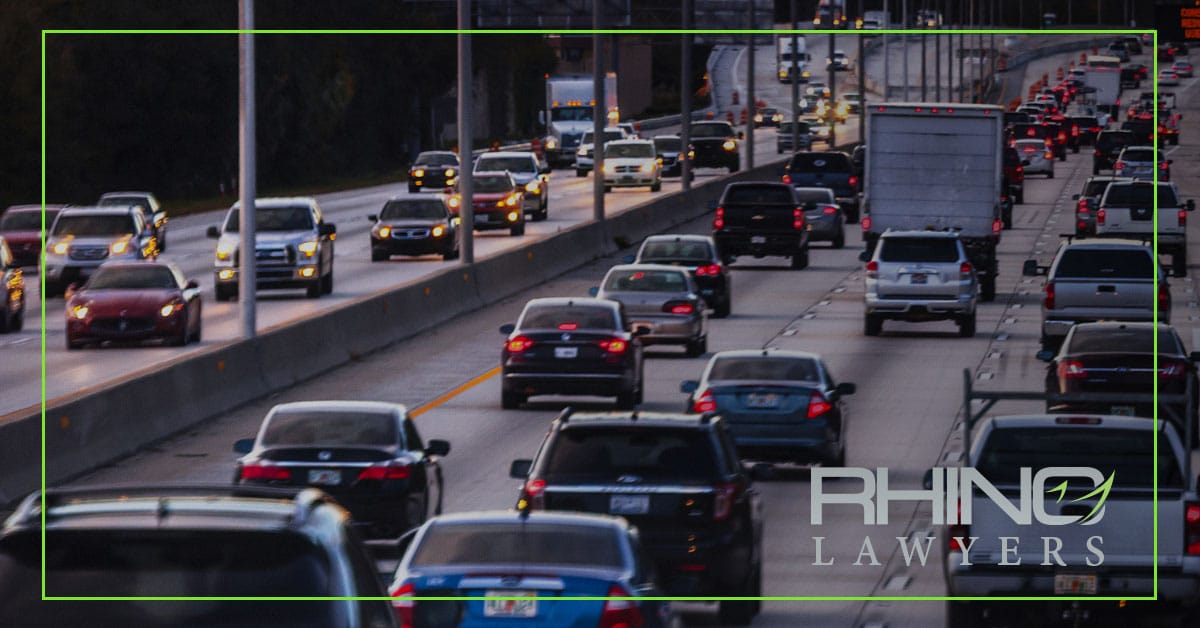
EVENT DATA RECORDERS AND AUTO ACCIDENTS
First of all car accidents happen all the time without impartial witnesses to recount the accident. But did you know car manufacturers have been installing event data recorders (EDR) since 2014? In fact, some car manufacturers were installing these before 2014. Considering, EDR’s are like a plane’s black box, it could help piece together how the crash happened.
What is An Event Data Recorder (EDR)?
Like, a flight-event recorder or “black box” records an event data recorder documents information about your car before a crash. But, it does not record video or audio. Instead, in the event of an accident, an EDR records electronic data about your driving. Admittedly, the event data recorder will permanently save the information if your airbag deploys. Otherwise, it overwrites the data after some time. Because of this, the information collected is time-sensitive.
What Information Does My Event Data Recorder Keep After An Accident?
Event data records have evolved over the years from only monitoring airbags. Actually, now these they collect 30 plus types of data from your car. Typically, saving a few seconds of information before and during the crash. Unless your airbag deploys then it will save around 20 seconds of data. Furthermore, here are some key data points it collects that can help shed light on the accident.
- Time and date of your accident
- Your speed at the time of the crash
- Depth of accelerator pedal
- Steering wheel direction
- Seat position
- Braking pattern
- Throttle position
- If certain warning lights were operating
- Who was wearing a seatbelt
- Airbag deployment status
- Force of impact
Florida EDR Laws
Finally, these data collection devices being in all new vehicles brought concerns about data privacy. So, in 2015 they passed the Driver Privacy Act. Namely, the act made the data collected the property of the vehicle owner or lessee. Since enacted 17 states have established statutes associated with event data recorders.
So, Florida does not have a specific statute around event data recorders. Still, Florida has a computer trespass statute. In fact, statute 815.06 states the following:
“Whoever willfully, knowingly, and without authorization accesses or causes to be accessed any computer, computer system, or computer network commits an offense against computer users and commits a felony of the third degree. – COMPUTER-RELATED CRIMES”
Thus, allowing the interpretation of EDR’s to fit within this general description.
CONTACT A TAMPA AUTO ACCIDENT ATTORNEY
In short, after a car accident, you may not know your rights. Above all, don’t struggle through the process alone. Actually, our personal injury team is here to help you with any legal needs you might have regarding your accident.
Lastly, let RHINO Lawyers answer your questions and review the facts of your case with a Free Consultation. So, get started by completing the “Free Instant Case Evaluation” or by calling us any time, day or night, at 844.329.3491.
Read More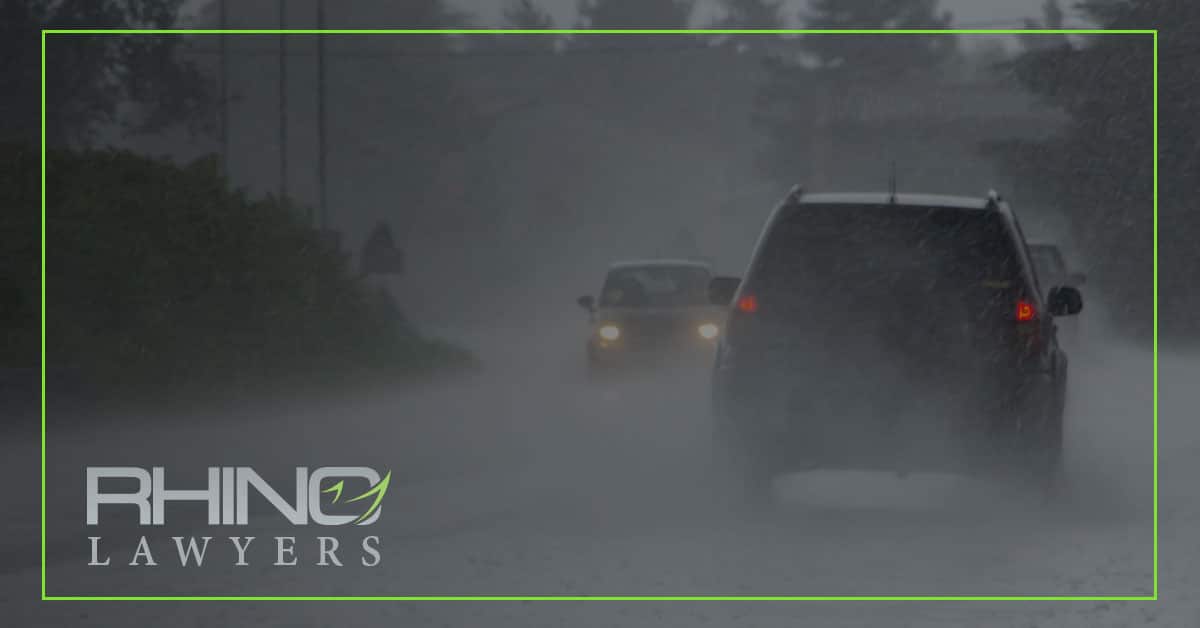
UNSAFE ROADS CAUSING CAR ACCIDENTS
First of all, statistically negligent drivers cause most car accidents. But, did you know unsafe roads can also lead to a car accident? In fact, these crashes are most notably after severe weather. So, if you suspect unsafe road conditions contributed to your accident, we can help.
Driving Hazards that Make Unsafe Road Conditions
Next, Florida residents know severe storms occur almost daily during the summer months. Not to mention, the weather we get from hurricane season. As a result, these storms produce a variety of unsafe road conditions. Thus, the following are some of the most common hazards.
- Slippery Roads
- Tree limbs and leaves
- Potholes
- Debris in the road
- Sinkholes
- Deteriorated shoulders
While each of these hazards is avoidable in some instances. Unfortunately, not all drives are lucky when they encounter one of these conditions. In fact, the unlucky one can lose control of the vehicle and even crash into another car.
Legal Options for Unsafe Road Accidents
Lastly, anyone injured in an auto accident due to unsafe road conditions can receive compensation. Despite, having protection from most lawsuits, you can sue a government agency. Actually, the Federal Tort Claims Act allows for these claims. Especially, when an injury occurs due to unsafe roads.
But, not every accident from an unsafe road condition constitutes a lawsuit. For this reason, it becomes the burden of the plaintiff to provide proof of neglect. Furthermore, to hold them responsible they need to know about the issue. Plus, they would need time to assess and fix the problem.
For example, if you drive your vehicle during or after a hurricane. And, during this drive, you have an accident due to debris in the road. In this case, you cannot blame them as you took the risk of going out during these extreme conditions. And, they have not had enough time to assess the roads.
Either way, you should always speak to an auto accident attorney after an accident so they can review your case.
CONTACT A TAMPA AUTO ACCIDENT ATTORNEY
In short, after a car accident, you may not know your rights. Above all, don’t struggle through the process alone. Actually, our personal injury team is here to help you with any legal needs you might have regarding your accident.
Lastly, let RHINO Lawyers answer your questions and review the facts of your case with a Free Consultation. So, get started by completing the “Free Instant Case Evaluation” or by calling us any time, day or night, at 844.329.3491.
Read More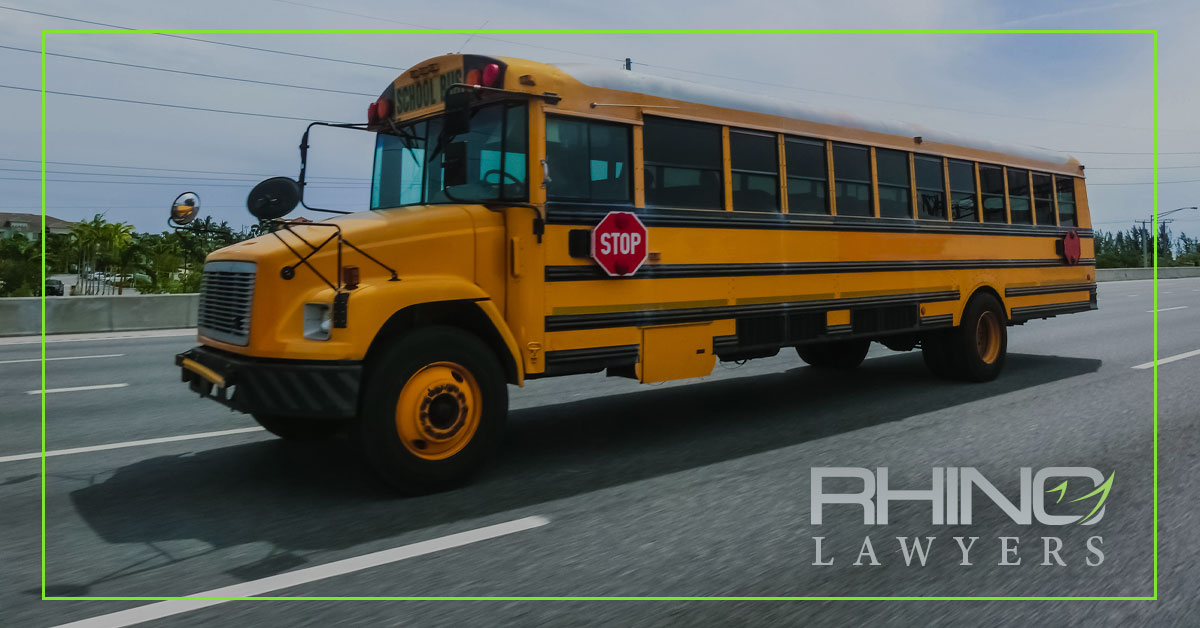
CHALLENGES OF SCHOOL BUS ACCIDENT CLAIMS
To begin with, school bus involved accidents are rare. In fact, car accidents are 70 times more likely according to the NHTSA. Yet, these accidents can still occur. And, receiving compensation for your child’s injury can be more complex. Because the school district brings new challenges to school bus accident claims.
Difference Between School Bus and Car Accident Claims
First, a school bus and car accident claims have many differences. Actually, these two accidents even call for a distinct approach when filing a claim. Even though, they both typically involve a negligent driver. And, that is a key component in auto accident cases.
Consequently, a school bus accident involves the school system. Which is part of and run by the local government. Because the accident involves a government body you must follow special procedures to file a claim. Besides, the school district has sovereign immunity that protects them from most lawsuits.
Who is Liable for the School Bus ACCIDENT?
So, who is liable for your child’s injuries in a school bus accident? Specifically, you would file a claim against the negligent or at-fault individual. Because every accident is different, the person who caused the accident can vary. For instance, the accident could have resulted due to one of the following parties.
- School bus driver
- Manufacturer of the bus or bus parts
- Another motorist
- A private transportation company
- Your school district/local government
As a matter of fact, some cases have more than one party responsible. In that case, a personal injury attorney can help you seek damages from all parties.
Filling An Accident Claim Against the School System
Finally, even though sovereign immunity will protect the school district from most lawsuits. It does not protect them all lawsuits. In fact, Florida law will allow an accident victim to pursue damages. Provided the school district employee’s negligence the caused their injury. So, if your child gets injured in a school bus accident contact an auto accident attorney to help you through the complexities of this type of case.
CONTACT A TAMPA AUTO ACCIDENT ATTORNEY
In short, after a car accident, you may not know your rights. Above all, don’t struggle through the process alone. Actually, our personal injury team is here to help you with any legal needs you might have regarding your accident.
Lastly, let RHINO Lawyers answer your questions and review the facts of your case with a Free Consultation. So, get started by completing the “Free Instant Case Evaluation” or by calling us any time, day or night, at 844.329.3491.
Read More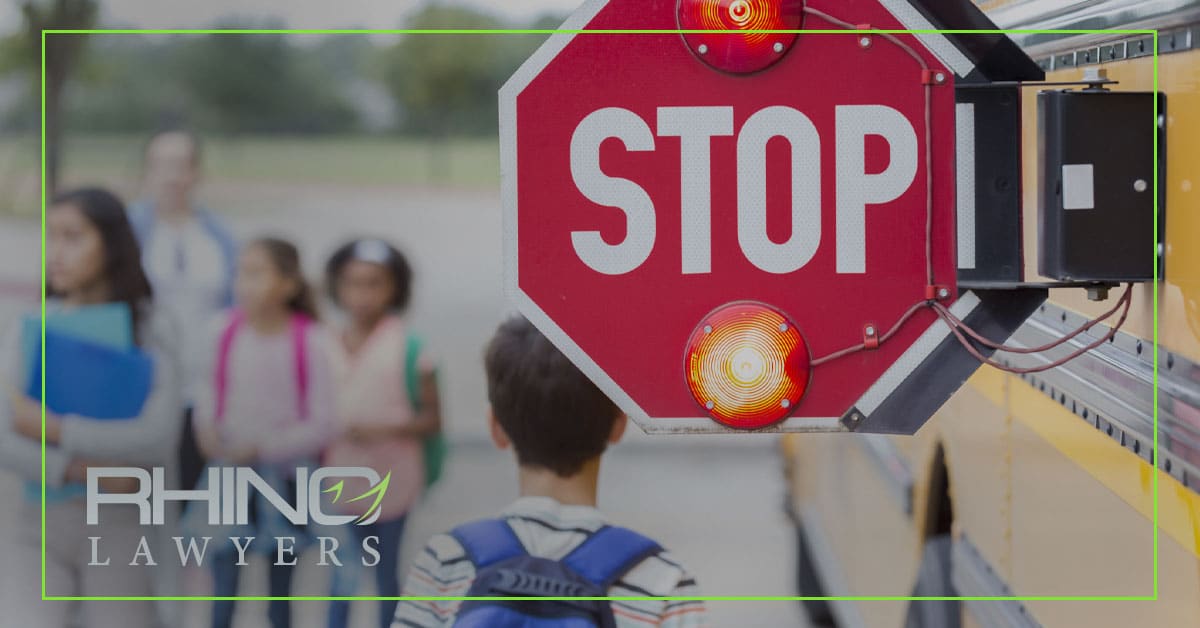
PENALTIES FOR PASSING A STOPPED SCHOOL BUS
To start with, a new school year brings the addition of school buses to the roads. Thus, buses will start taking students to and from school. And, drivers will need to remember there are penalties for passing a stopped school bus.
But, some drivers forget or get distracted ignoring the safety features. Like, the flashing yellow and red lights and the stop sign on the side of the bus. Additionally, they made the rules around stopping for a school bus simple.
- Two-lane roads – all vehicles traveling either direction have to stop.
- Multi-lane roads with a paved center – again all vehicles have to stop.
- Divided roads or highways with a 5ft unpaved median, raised median, or barrier – Any vehicle traveling behind the bus must stop. And, vehicles traveling in the opposite direction do not need to stop but should drive with caution.
Florida Penalties for Passing A Stopped School Bus
Next, like most states, Florida takes this traffic offense seriously. Because when you don’t stop for a school bus loading or unloading kids, you endanger their lives. Thus, Florida Statute 318.18 states the following:
Failure to Stop for School Bus
- 4 points on your license
- Up to a $165 fine
- Mandatory hearing
- A second offense within 5 years adds a suspended license up to 6 months.
Failure to Stop Passing the Side Kids Enter and Exit
- 4 points on your license
- Up to $265 fine
- Mandatory hearing
- A second offense within 5 years adds a suspended license up to 1 year.
A Violation Causing Serious Injury
- 6 points on your license
- Up to $1500 fine
- Mandatory hearing
- A suspended license not less than 1 year.
Additionally, these penalties will increase as of January 1, 2021. Because the Florida Senate and Gov. Ron DeSantis recently approved and passed House Bill 37 doubling the penalties.
SCHOOL BUS RIDER SAFETY TIPS
Even though, riding the bus to school is one of the safest alternatives to parents dropping kids off at school. Unfortunately, drivers fail to follow the rules. Which can result in a citation or worse an accident. So, here are some safety tips to help keep your child safe as they prepare to ride the bus.
- Make sure they give themselves enough time to get to the bus stop.
- Stay alert. So, they can see and hear cars on the road.
- Don’t stand on the edge of the road. Try to stay at least 5 steps from the edge or curb.
- If they need to cross the road always wait for the bus driver to signify it is safe to cross. Even if the bus driver says it is safe, look both ways before crossing.
- Never try to board the bus while it is moving. Always wait for the bus to stop and open the doors indicating it is safe to board.
- The same goes for exiting the bus. They should not get out of their seat to exit until the has stopped.
- While on the bus sit facing forward and don’t hang anything out the window.
CONTACT TAMPA TRAFFIC TICKET ATTORNEY
RHINO Lawyers can help and guide you through a system molded by law enforcement, judges, and lawyers for decades. Having won cases for our clients in similar circumstances, our criminal defense team knows what it takes to fight on your behalf.
Let RHINO Lawyers answer your questions and review the facts of your case with a Free Consultation. Get started by completing the “Free Instant Case Evaluation” or by calling us any time, day or night, at 844.329.3491.
Read More
HOW TO AVOID BACK-TO-SCHOOL ACCIDENTS
As summer break comes to an end the back-to-school season starts. Although back-to-school can be an exciting time for kids and parents, it brings the risk of back-to-school accidents. As a matter of fact, we can all do our part to avoid back-to-school accidents. So, we put together some safety tips for students and parents to follow as school gets back into session.
Back-to-School Bus Rider Safety
First, riding the bus to school is one of the safest alternatives to parents dropping kids off at school. In fact, they designed school buses with safety in mind. Yet, school bus accidents can still happen. So, here are some safety tips to help keep your child safe as they go back-to-school.
- Make sure they give themselves enough time to get to the bus stop.
- Stay alert. So, they can see and hear cars on the road.
- Don’t stand on the edge of the road. Try to stay at least 5 steps from the edge or curb.
- If they need to cross the road always wait for the bus driver to signify it is safe to cross. Even if the bus driver says it is safe, look both ways before crossing.
- Never try to board the bus while it is moving. Always wait for the bus to stop and open the doors indicating it is safe to board.
- The same goes for exiting the bus. They should not get out of their seat to exit until the has stopped.
- While on the bus sit facing forward and don’t hang anything out the window.
Parents and Carpool Driver Safety
Next, if you drive your student or take part in a carpool to get them to school then this is for you. Because drivers need to stay alert and use extra caution in school zones and around school buses. So, here are some tips to help you avoid a back-to-school accident.
- First and foremost, adhere to the speed limit.
- Follow your child’s schools drop off procedures.
- Watch for kids crossing the street and try to make eye contact with them.
- Slow down when approaching a school bus.
- If the bus is flashing red lights stop! In fact, you should stop about 20 feet from the bus.
- Never ever pass a stopped school bus that is allowing kids to get on or off the bus.
Teen Drivers Back-to-School Safety Tips
Finally, we must not forget about the teenage driver. Since car accidents are one of the leading causes of death for teens. Preparation like this is very important. For this reason, we put together some safety precautions to review with your teen.
- Buckle up and do not start driving until everyone in the car has a seatbelt on.
- Put your cell phone away and do not use it while driving.
- Drive the speed limit.
- Limit the number of passengers to help reduce distractions.
- If it is raining turn on your headlights and drive with extra caution.
CONTACT A TAMPA AUTO ACCIDENT ATTORNEY
In short, after a car accident, you may not know your rights. Above all, don’t struggle through the process alone. Actually, our personal injury team is here to help you with any legal needs you might have regarding your accident.
Lastly, let RHINO Lawyers answer your questions and review the facts of your case with a Free Consultation. So, get started by completing the “Free Instant Case Evaluation” or by calling us any time, day or night, at 844.329.3491.
Read More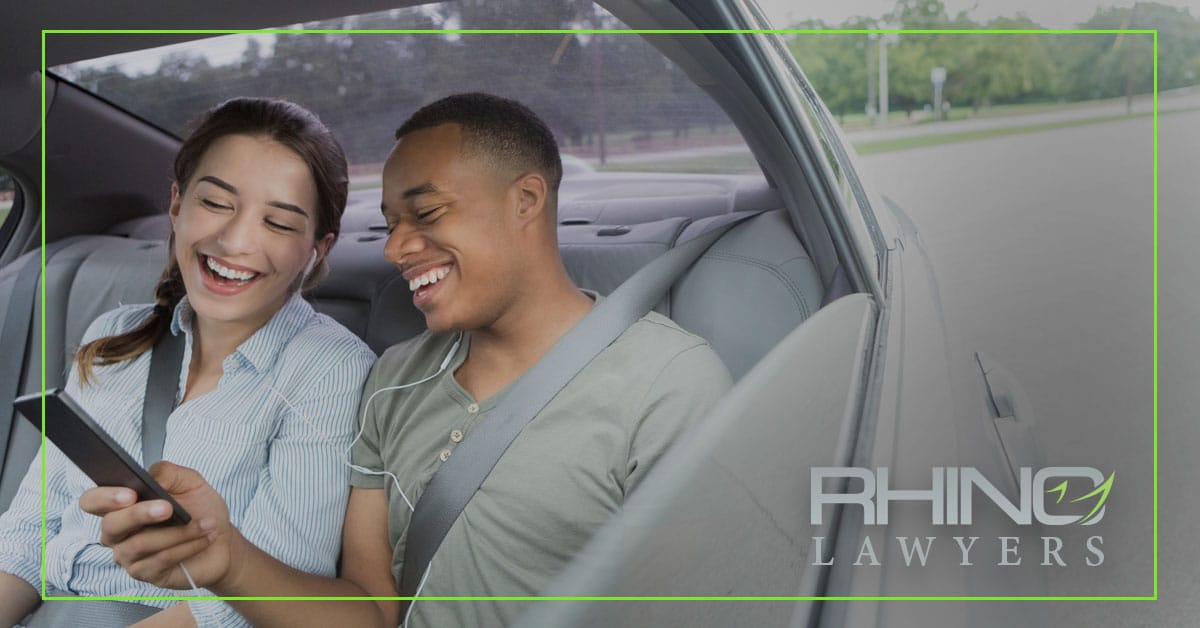
ARE BACK SEAT PASSENGERS SAFE
To begin with, most people think they would be safer in the back seat during a front-end collision. But, are back seat passengers safe? Actually, according to the Insurance Institute for Highway Safety (IIHS), back seat passengers are not safer.
In all honesty, the back seat is not is completely unsafe. But, that technology has increased the safety of the front seat passengers. So, here is what you need to know about the safety of your passengers during an auto accident.
Front Seat Technology in New Cars
First, car manufacturers constantly add new safety features to vehicles. Usually, they add these features to increase safety in the event of a frontal collision. In fact, these features help to keep the driver and front-seat passenger firmly in their seats. Thus, reducing the chances of getting tossed around the car during impact. For example, most new vehicles include the following safety features.
- Improved seat belts with crash tensioners and force limiters
- Passive airbags (both front and side)
- Electronic stability control
- Forward collision warning
- Automatic emergency braking
Back Seats Don’t Have the Same Protection
Next, your passengers in the back seat of your car are not completely unsafe in an accident. Actually, newer cars have added side airbags and side-impact zones. But, when it comes to a front-end crash the rear seat belts lack crash tensioners and force limiters. As well as, the back seat passenger does not have front airbags.
While back seat passengers have some protection, the lack of those features put them at higher risk of injury or death in a front-end collision. Luckily, researchers and automakers have recognized this issue. And, continue to investigate new technology to improve the safety of back seat passengers.
CONTACT A TAMPA AUTO ACCIDENT ATTORNEY
In short, after a car accident, you may not know your rights. Above all, don’t struggle through the process alone. Actually, our personal injury team is here to help you with any legal needs you might have regarding your accident.
Lastly, let RHINO Lawyers answer your questions and review the facts of your case with a Free Consultation. So, get started by completing the “Free Instant Case Evaluation” or by calling us any time, day or night, at 844.329.3491.
Read More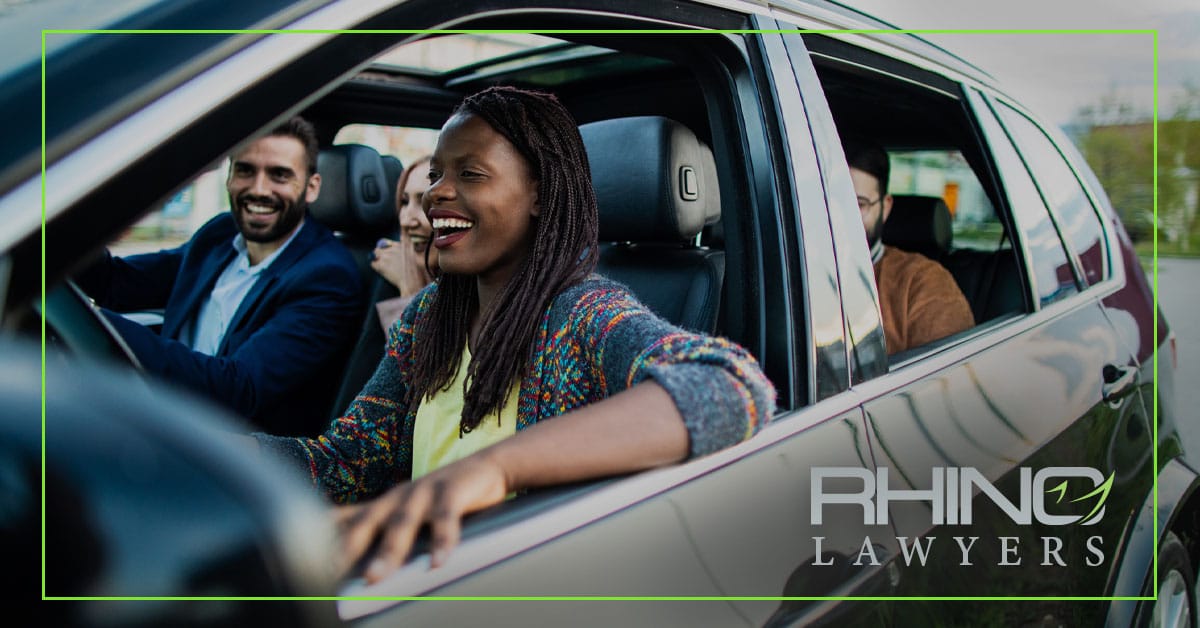
PASSENGERS’ RIGHTS IN AN AUTO ACCIDENT
To start with, with most auto accidents you hear about the drivers of the cars involved. And, you want to know how the law compensated the injured driver. But, what about passengers? Particularly, passengers’ rights in an auto accident.
Additionally, under Florida law who is responsible for a passenger’s injuries? Regardless, who the at-fault party is in the accident a passenger should know their rights. So, we put together some information every passenger in Florida should know to help protect their rights after an auto accident.
Basic Steps Even Passengers Should Take After An Accident
First, every driver and passenger needs to know what to do after an accident. Granted, most passengers don’t know all their rights or how to protect them after an accident. So, we put together 7 tips to help you in the event of a car accident:
- Get to safety – This will prevent more damage from occurring.
- Contact the police – It is important to make sure there is a police report. Because you will need this report when you file your claim.
- Exchange Information – Even if they do not have insurance, you will need their contact and vehicle details. Furthermore, you should get the contact information from any witnesses.
- Document the Details – You will need to write down both driver’s vehicle information, time, and location of the accident. As well as, the officer’s name with a badge number. Also, try to document any details that may help when you file your claim.
- Take Pictures – You should take pictures of the accident scene. Include photos of the damage to each car, the license plate of both drivers, and traffic signs.
- Seek medical attention – Often, injuries are not immediately apparent. Don’t wait, seek medical attention at your local emergency room, or by seeing your family physician right away.
- Get Legal Help – Most importantly, consult with an auto accident lawyer.
Who’s Insurance Covers You as a Passenger?
Admittedly, Florida is a no-fault state. Thus, as a car owner, Florida requires you to have PIP (personal injury protection) insurance. In fact, Florida Statute 627.736 states, your PIP coverage will cover injuries up to the policy limit. So, that does not mean as a passenger you are not covered. Luckily, passengers have options when injured in an accident.
- Your PIP Policy – First, Florida law says passengers that have a PIP policy must use it first when injured in an accident.
- A Family Member In Your Household’s Policy – Second, passengers without a PIP policy can use the insurance policy of a household family member. As long as they were not involved in the same accident.
- The Driver’s Policy – Third, a passenger that does not have access to their own or household members’ PIP policy can receive coverage. In fact, you can use the policy of the driver you were riding with.
What if you as a passenger have serious injuries?
Additionally, as a passenger injured in an accident your injuries might exceed the benefits of the PIP policy. In this case, the Florida no-fault rules won’t apply. So, you can make a claim against the at-fault driver. Although, we recommend having an auto accident attorney to review your case. Because they can advise you of all your options.
Passengers Cannot Double Dip
Finally, as a passenger, you may have access to more than one PIP policy for coverage. But, you can only recover damages once. And, what this means is that if you have $4,000 in damages, you can only recover that amount once. So, if your insurance does not cover the full amount of your damages, you can file a claim against the other driver or the vehicle owner. Thus, allowing you to recover the rest of your damages.
CONTACT A TAMPA AUTO ACCIDENT ATTORNEY
In short, after a car accident, you may not know your rights. Above all, don’t struggle through the process alone. Actually, our personal injury team is here to help you with any legal needs you might have regarding your accident.
Lastly, let RHINO Lawyers answer your questions and review the facts of your case with a Free Consultation. So, get started by completing the “Free Instant Case Evaluation” or by calling us any time, day or night, at 844.329.3491.
Read More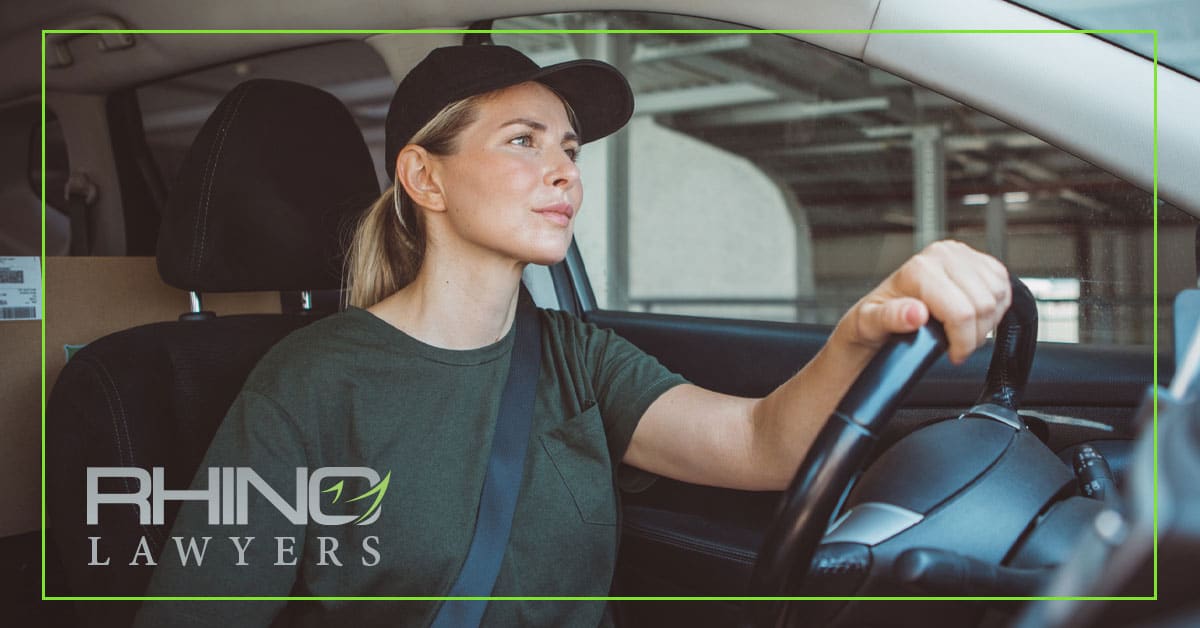
WORK-RELATED CAR ACCIDENTS
To start with, car accidents happen every day in Florida. Unfortunately, some car accidents happen to individuals while working. Thus, making these instances work-related car accidents for those unfortunate people.
Under these circumstances, Workers Compensation becomes your “primary” insurance, not your insurance. Thus, covering medical bills and lost wages. But, what about recovering damages from your personal injury? Like, any other auto accident you need to consult with an auto accident attorney. Because they can advise all the options you have available.
Work-Related Car Accident Injury Recovery Limits
First, you are eligible for Workers Compensation after a work-related car accident. Regardless of fault. Unfortunately, you cannot use your PIP (personal injury protection) benefits with these car accidents. Nor, can you recover damages from Workers Compensation.
Even though, Florida’s Workers Compensation doesn’t allow you to recover damages it pays your medical bills. And, it will pay 2/3 of lost wages while you are out of work. Despite, getting your medical bills paid. Still, these benefits restrict the injured employee from receiving full compensation.
How to handle a work-related car accident
Next, we have good news for individuals involved in work-related car accidents caused by another driver. While you can’t recover damages from your Workers Compensation benefits. Yet, you can recover damages from the party that caused the accident. Be that as it may, here are a couple of facts you should know about.
- You cannot sue your employer.
- Workers Compensation has the right to “subrogation” or reimbursement. Thus, allowing them to recover the benefits they paid.
Additionally, your Workers Compensation carrier will file a claim against the negligent party if you don’t. Because they want to recover benefits paid due to the accident.
What to do after an accident
Finally, knowing what to do after an accident is the first step in getting you through the tragic event. Even though each accident is different there are basics steps you can take to protect your rights. So, we put together 7 tips to help you in the event of a car accident:
- Get to safety – This will prevent more damage from occurring.
- Contact the police – It is important to make sure there is a police report. Because you will need this report when you file your claim.
- Exchange Information – Even if they do not have insurance, you will need their contact and vehicle details. Furthermore, you should get the contact information from any witnesses.
- Document the Details – You will need to write down the other driver’s vehicle information, time, and location of the accident. As well as, the officer’s name with a badge number. Also, try to document any details that may help when you file your claim.
- Take Pictures – You should take pictures of the accident scene. Include photos of the damage to each car, the license plate of the other driver, and traffic signs.
- Seek medical attention – Often, injuries are not immediately apparent. Don’t wait, seek medical attention at your local emergency room, or by seeing your family physician right away.
- Get Legal Help – Most importantly, consult with an auto accident lawyer.
CONTACT A TAMPA AUTO ACCIDENT ATTORNEY
In short, after a car accident, you may not know your rights. Above all, don’t struggle through the process alone. Actually, our personal injury team is here to help you with any legal needs you might have regarding your accident.
Lastly, let RHINO Lawyers answer your questions and review the facts of your case with a Free Consultation. So, get started by completing the “Free Instant Case Evaluation” or by calling us any time, day or night, at 844.329.3491.
Read More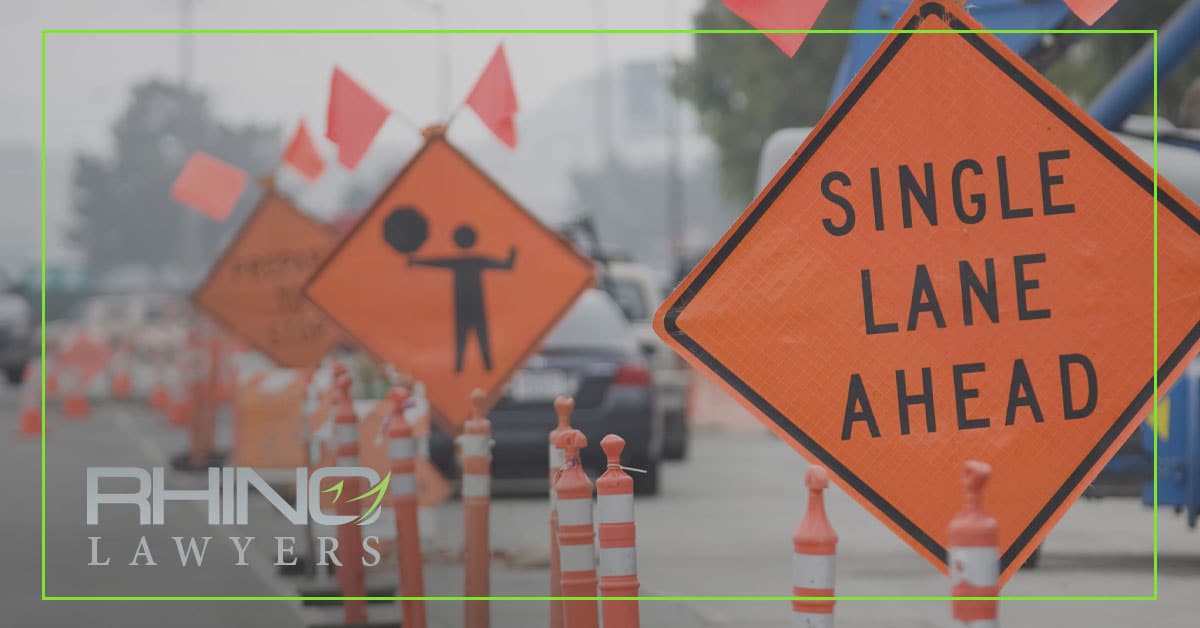
DRIVING IN CONSTRUCTION ZONES
To start with, road repair/construction is a necessity to keep our roadways and highways in working order. Because roads in disrepair are dangerous for motorists to travel on. But, driving in construction zones also poses a danger to motorists and construction workers alike. So, the state takes driving violations in a construction zone seriously. And, this is what you need to know.
Unsafe Driving Habits in Construction Zones
Unfortunately, navigating through a construction zone can add to a driver’s frustration with an already busy roadway. Especially, when you add construction barriers, new traffic flows, and large construction vehicles. So, we listed some unsafe driving habits you should avoid while in a construction zone.
- Speed Limit – Not following the reduced speed limit posted in the construction zone.
- Lane Changes – Merging at the last minute or waiting until the lane ends.
- Driving Distracted – Using a cell phone without a hands-free device, texting, or any action that takes your attention off the road.
- Following Safe Distance – Tailgating or following another vehicle too closely.
- Passing – Drivers not reducing their speed while passing work vehicles stopped on the side of the road.
Construction Zone Speeding Violation Penalties
Next, a person caught speeding in a construction zone is subject to the maximum fine. Yet, if workers are present, then they are looking at double the amount stated in Florida Statute 318.18. Not to mention, the possibility of a mandatory court appearance. As well as, points on their license and increased insurance premiums. So, it’s best to follow the posted speed limit. But, if you receive a ticket we recommend contact us right away so we can help keep your driving record clean.
CONTACT TAMPA TRAFFIC TICKET ATTORNEY
RHINO Lawyers can help and guide you through a system molded by law enforcement, judges, and lawyers for decades. Having won cases for our clients in similar circumstances, our criminal defense team knows what it takes to fight on your behalf.
Let RHINO Lawyers answer your questions and review the facts of your case with a Free Consultation. Get started by completing the “Free Instant Case Evaluation” or by calling us any time, day or night, at 844.329.3491.
Read More
ARE MOTOR SCOOTERS SAFE?
To begin with, the increasing popularity of two-wheel vehicles has riders questioning their safety. Though, you have many options like motorcycles, motor scooters, and bicycles to choose from. While many people choose motorcycles for commuting because of their speed. Yet, others prefer motor scooters for their size. But, are motor scooters safe?
What is a Motor Scooter?
Notably, a motor scooter is a vehicle with two wheels created to transport a person. Yet, Florida statutes do not define motor scooters. So, Florida considers it a motorcycle. Thus, subject to the same laws as a motorcycle. Although, most motor scooters have a 50cc engine, so Florida law does not require a motorcycle endorsement to operate on the road.
Definitions
- Motor Scooter – In short, it is a two-wheeled vehicle created to transport a person on the road.
- Motorized Scooter – Similar, to a motor scooter but it does not have a seat and is not permitted on roads.
- Mobility Scooter – Typically, have three to four wheels and is also not permitted on the road.
Common Motor Scooter Accidents
As previously stated, motor scooters have to follow the rules of the road. But, like all two-wheeled vehicles, they are subject to the dangers associated with larger vehicles. Although like motorcycles, common motor scooter accidents are different. Because of their size and slower speeds. For instance, these are some of the common accidents that occur with motor scooters.
- Hit From Behind – First, unlike a bicycle, motor scooters are not allowed in the bike lane. Thus, forcing them to share the road with other motor vehicles. And, due to their slower speeds, oncoming drivers may not see them as they approach at higher speeds. As a result, rear-end collisions have become common with scooters.
- Losing Control – Second, the construction of scooters makes them unstable and difficult to maneuver. Because of their smaller wheels and high center of gravity.
- Opening Car Doors – Third, like bicycle riders, scooters often ride as far right as it is safe. So, they can allow faster traffic to pass easier. Yet, this makes them vulnerable to opening car doors.
- Getting Sideswiped – Fourth, as scooters travel in the right lane with normal traffic, it puts them at risk of getting hit by a car changing lanes. Because scooters are small and quieter than most vehicles on the road. Thus, making them easy to overlook at higher speeds.
Common Causes of Motor Scooter Accidents
Regarding, the causes of motor scooter accidents. Like, bicyclists ride as no one can see them, motor scooter riders need to ride as if other drivers cannot see them. Because this will help them drive more defensively. Considering, these are some of the common causes of scooter accidents:
- Visibility – They are not seen by other drivers.
- Right turn crashes – These collisions occur when a vehicle fails to use its turn signal. Or, they make a sudden turn crossing the scooter’s path.
- Mechanical – Occur when the scooter has a defect or is not well maintained.
- Drinking and Driving – Hit by a drunk driver.
Motor Scooter Injuries and Wrongful Death
Similarly, motorcyclists and scooter riders also lack the protection of steel frames. So, riders get exposed to the same dangers. Though falling off a scooter with the lower speeds are not as severe. But, collisions with an automobile can cause serious damage or death. In fact, some common injuries include:
- Road Rash or Scrapes
- Cuts and Gashes
- Broken Bones
- Soft Tissue Damage
- Internal Injuries
- Neck and Shoulder Injuries
- Back and Spinal Cord Damage
- Head or Traumatic Brain Injuries
Unfortunately, not all motor scooter accidents end with someone walking away. Or, even with a trip to the hospital. To tell the truth, some can’t walk away from the accident leaving families wondering what to do. For this reason, we recommend if you lost a loved one due to a negligent driver to contact an attorney.
Scooter Rider Safety Tips
Even though, scooter riders face similar risks motorcyclists and bicyclists face. Still, there are some differences. For one thing, motorcyclists can keep up with traffic. And, bicyclists usually have a designated bike lane to separate them from traffic. So, we have put together some tips to help keep motor scooter riders safer while on the road.
- Don’t ride on heavily traveled roads.
- Avoid roads with high-speed limits.
- Refrain from lane-splitting. Especially, since it is illegal in Florida.
- Watch for opening car doors.
- Try not to ride in wet weather.
- Always wear a helmet.
- Increase visibility with brightly colored clothes.
- Never drink and drive.
- Keep up with regular maintenance.
Basic Florida Scooter Laws
Finally, all motor scooter riders must follow the rules on the road. But, to keep up with the increased amount of scooter riders on Florida roads lawmakers have initiated some new laws. So, before you buy or jump on your scooter and go for a ride you should know and understand these rules.
- All riders need to be 16 years old or older. As well as, have a valid driver’s license.
- Florida law does not require riders to have scooter insurance.
- Follow all traffic laws and ride on the road.
- Obey all traffic control devices like traffic lights and stop signs.
- If you are over the age of 16 and don’t exceed 30 mph the law does not require a helmet.
- Stay off of sidewalks, bike paths, state highways, and interstates.
- Not allowed to ride alongside cars/trucks or between lanes.
- You must ride as far right as is it safe. Unless you are avoiding road hazards or turning left.
CONTACT A TAMPA MOTORCYCLE ACCIDENT ATTORNEY
In short, after a motorcycle accident, you may not know your rights. Above all, don’t struggle through the process alone. Actually, our personal injury team is here to help you with any legal needs you might have regarding your accident.
Lastly, let RHINO Lawyers answer your questions and review the facts of your case with a Free Consultation. So, get started by completing the “Free Instant Case Evaluation” or by calling us any time, day or night, at 844.329.3491.
Read More