




You were hit. But now the insurance company is saying you share some of the blame.
That moment is jarring. You are dealing with injuries, stress, and vehicle damage, and suddenly, fault becomes the focus instead of recovery.
Florida comparative negligence after a car accident is one of the most misunderstood parts of injury claims. It can directly affect how insurance companies evaluate responsibility and how much compensation may be available.
Understanding how comparative negligence works in Florida is critical before assumptions turn into permanent decisions.
What Comparative Negligence Means in Florida
Florida follows a comparative negligence system, which allows fault to be divided between multiple parties involved in a crash.
You do not have to be completely blameless to pursue an injury claim. Instead, responsibility is evaluated based on how each party’s actions may have contributed to the collision.
For example:
- One driver may be considered 70% responsible
- Another driver may be considered 30% responsible
Those percentages matter. They influence how insurance companies evaluate claims, negotiations, and disputes. Comparative negligence exists because crashes are rarely black and white.
How Comparative Negligence Affects Car Accident Claims
Insurance companies focus heavily on fault allocation. Assigning partial blame can significantly reduce their financial exposure.
Adjusters may argue that:
- You were speeding
- You were distracted
- You changed lanes unsafely
- You failed to react quickly enough
Even when another driver clearly caused the crash. Small percentages add up. A shift of even 10% can change how insurers approach a claim. Fault is not just a legal concept. It is a financial tool.
Common Crash Scenarios Where Fault Is Disputed
Comparative negligence most often appears in crashes involving unclear timelines or conflicting accounts.
Rear-End Accidents
Many drivers assume rear-end crashes are automatically the fault. Insurance companies often disagree.
They may argue:
- Sudden or unnecessary braking
- Inoperative brake lights
- Unexpected lane changes
Intersection Collisions
Intersections are prime territory for fault disputes.
Insurance companies analyze:
- Traffic signals and signage
- Right-of-way
- Speed and visibility
- Reaction time
Lane Change and Merging Accidents
These cases often revolve around positioning.
Questions include:
- Who controlled the lane
- Whether a signal was used
- Timing of the maneuver
Gray areas invite shared blame. And insurers rely on those gray areas.
How Comparative Negligence Plays Out on Florida Roads
Florida traffic conditions create frequent fault disputes. Tourist drivers are unfamiliar with local roads. Heavy congestion on I-4, I-75, and I-275. Sudden rainstorms that reduce visibility and traction.
Consider a Tampa-area crash involving stop-and-go traffic. One driver brakes suddenly. Another reacts late. A chain reaction follows. Insurance companies may assign partial fault to multiple drivers, even when one initiated the crash.
Comparative negligence thrives in complex environments. Florida provides plenty of them.
How Insurance Companies Evaluate Fault
Insurance companies conduct their own investigations. These often occur quickly and with limited information.
They review:
- Police crash reports
- Photos and videos
- Vehicle damage patterns
- Witness statements
- Recorded driver statements
Early impressions matter. Once fault assumptions are formed, they can be difficult to reverse. This is why early documentation and caution are important.
Evidence That Can Influence Comparative Negligence
Fault decisions are shaped by evidence. Strong evidence can shift percentages.
Important sources include:
- Police crash reports
- Dash cam or surveillance footage
- Vehicle damage analysis
- Skid marks and debris patterns
- Independent witness statements
Even small details can influence how fault is assigned. Evidence does not eliminate disputes. But it can change the narrative.
Florida’s No-Fault System and Comparative Negligence
Florida operates under a no-fault insurance system, meaning Personal Injury Protection (PIP) coverage typically applies first after a crash.
However, comparative negligence becomes more relevant when:
- Injuries are serious
- Medical costs exceed PIP limits
- Claims involve multiple parties
Fault still matters in Florida, especially when insurance companies are deciding how aggressively to defend a claim.
Common Mistakes Injured People Make With Fault Issues
Comparative negligence cases often unravel due to early missteps.
Accepting Blame Too Quickly
Apologizing or speculating at the scene can be misinterpreted later.
Giving Detailed Recorded Statements Early
Early statements may lock in timelines before injuries or evidence are fully understood.
Assuming the Police Report Is Final
Police reports matter, but they are not always the last word on fault.
Ignoring Evidence Preservation
Photos, videos, and witness information can disappear quickly.
Avoiding these mistakes can protect your position.
How RHINO Lawyers Helps Navigate Fault Disputes
Comparative negligence cases require careful review and strategy. Small details can make a meaningful difference.
RHINO Lawyers focuses on auto injury cases across Florida, including:
- Hillsborough
- Pinellas
- Polk
- Pasco
- Manatee
- Orange
- Sarasota
- Lee
- Collier
- Charlotte
- Hernando
Florida crashes often involve heavy traffic, tourism, and unpredictable weather. Fault is rarely straightforward. Having experienced guidance can help injured people understand how blame is being evaluated and challenged.
FAQs About Florida Comparative Negligence After a Car Accident
Q: Can I still pursue a claim if I was partly at fault?
Yes. Florida’s comparative negligence system allows shared fault in many cases.
Q: Who decides fault after a car accident?
Insurance companies make their own assessments, which may differ from police reports.
Q: Does a traffic citation automatically make me at fault?
Not necessarily. Citations are one factor, but they do not always determine fault.
Q: Can fault percentages change later?
In many cases, yes. Additional evidence can affect how fault is evaluated.
Q: Does comparative negligence affect PIP benefits?
PIP benefits usually apply regardless of fault, but fault can matter beyond PIP.
Q: What if multiple drivers share fault?
Comparative negligence allows responsibility to be divided among multiple parties.
Q: Should I discuss fault with the other driver?
It is often best to limit discussion and document the scene.
Q: Can fault affect settlement discussions?
Yes. Fault percentages often influence how insurance companies approach negotiations.
Injured? Do Not Accept Blame Too Quickly.
Shared fault does not mean shared responsibility for recovery. Insurance companies begin shaping fault narratives early, and those narratives can be difficult to undo.
If you were injured in a car accident and the blame is being shifted your way, clarity matters before assumptions become permanent.
If it happens on the road, call 844-RHINO-77 to speak with RHINO Lawyers. Free consultation. Available 24/7. No fee unless we win.
Call a RHINO and protect your position before fault costs you.
CONTACT A TAMPA AUTO ACCIDENT ATTORNEY
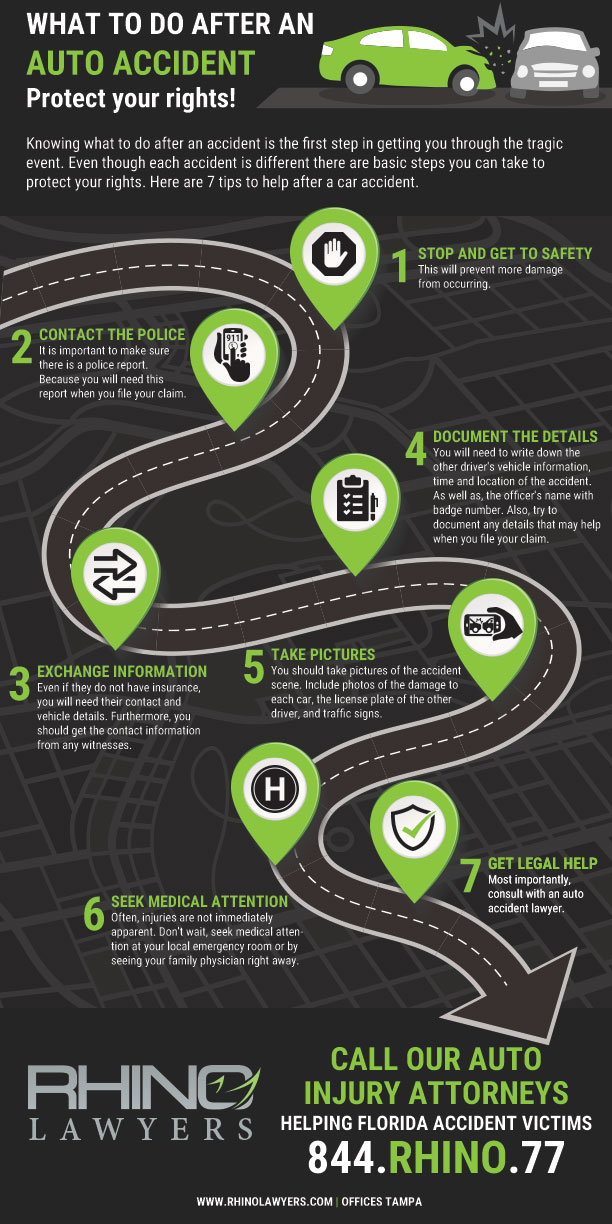
In short, after a car accident, you may not know your rights. Above all, don’t struggle through the process alone. Actually, our personal injury team is here to help you with any legal needs you might have regarding your accident.
Lastly, let RHINO Lawyers answer your questions and review the facts of your case with a Free Consultation. So, get started by completing the “Free Instant Case Evaluation” or by calling us any time, day or night, at 844.RHINO.77.