Injured by Road Debris in Florida? Who’s Liable for Falling Cargo?
A ladder falls off a truck…
Debris flies into your lane…
You crash trying to avoid it.
Who’s responsible?
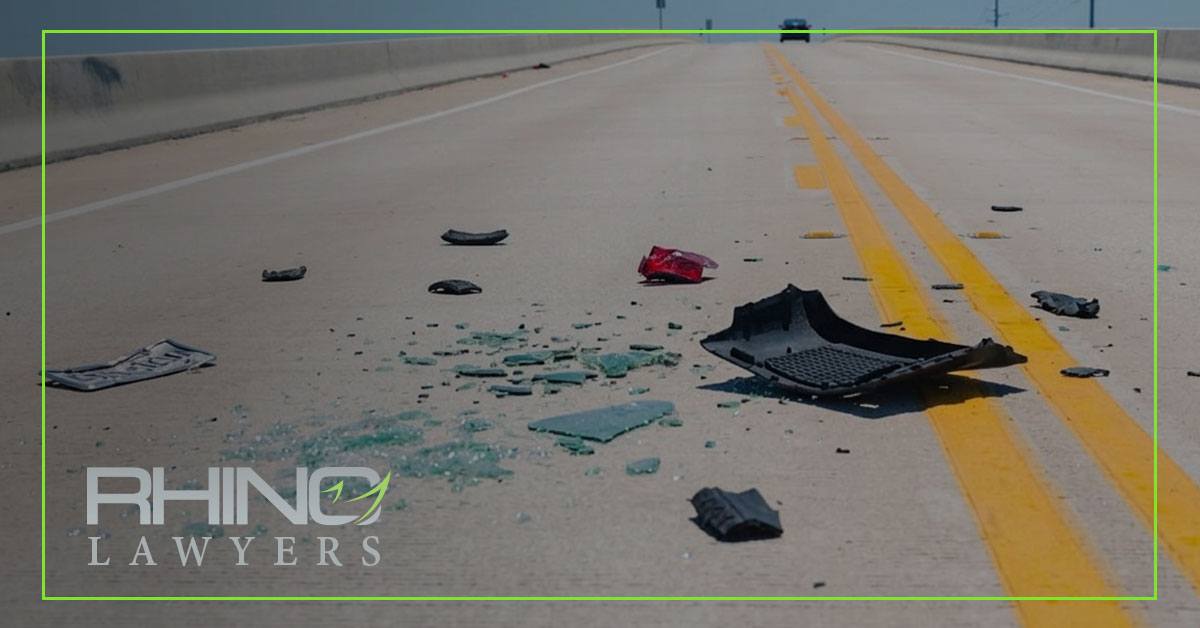
A falling cargo car accident in Florida can happen in seconds—but the consequences can last for months or years. One loose item. One unsecured load. One moment of chaos on I-4, I-75, or a local road in Tampa, Orlando, or Fort Myers.
These crashes often raise complex questions about unsecured load accident Florida claims, road debris from truck liability, and whether you can pursue an object falling from a vehicle claim if you never even touched the debris.
Florida law does address these situations—but proving fault is not always simple.
At RHINO Lawyers, we’ve handled cases where a piece of road debris changed everything. Let’s break down how liability works and what you need to know.
What Is an Unsecured Cargo Accident?
An unsecured cargo accident occurs when items fall from a vehicle and create a hazard on the road.
Common Examples
These crashes often involve:
- Ladders falling off work trucks
- Furniture flying out of pickup beds
- Construction materials spilling onto highways
- Tools or equipment dropping into traffic lanes
These situations are more common than most drivers expect.
Why These Crashes Are So Dangerous
Debris-related crashes can be especially dangerous because they happen without warning.
Drivers may:
- Swerve suddenly
- Brake aggressively
- Collide with other vehicles
Even small objects can cause serious damage at highway speeds.
According to the National Highway Traffic Safety Administration, road debris contributes to thousands of crashes each year.
Speed turns small hazards into major risks.
Florida Laws on Securing Loads
Florida has clear rules about securing cargo.
Driver Responsibilities
Drivers must ensure that any load they are transporting is properly secured.
That includes:
- Preventing items from falling
- Using proper restraints or tie-downs
- Ensuring loads do not create hazards for other drivers
These requirements are part of Florida’s broader traffic safety laws. You can review applicable statutes through the Florida Senate website.
Commercial vs Personal Vehicles
Commercial drivers often face stricter standards.
Trucking companies and contractors must follow additional safety regulations regarding load securement.
However, personal vehicle drivers are not exempt.
A loose mattress or unsecured ladder can still create liability.
Traffic Violations for Unsecured Loads
Failing to secure cargo may result in:
- Traffic citations
- Fines
- Liability for resulting crashes
A violation may also serve as evidence of negligence in a civil claim.
Who May Be Liable for Falling Cargo Accidents?
Liability depends on who was responsible for the load.
The Driver of the Vehicle
In many cases, the driver transporting the cargo is responsible.
If they failed to properly secure the load, they may be liable for resulting damages.
A Company or Employer
If the driver was working at the time of the crash, the employer may also be responsible.
Examples include:
- Delivery drivers
- Construction crews
- Service companies
Employers may be liable under vicarious liability principles.
Third Parties (Loaders or Contractors)
In some cases, a third party may have improperly loaded the cargo.
That could include:
- Warehouse workers
- Contractors
- Moving companies
Liability may extend beyond the driver.
Florida’s comparative negligence law under Florida Statute § 768.81 may apply if multiple parties share responsibility.
What If You Didn’t Hit the Object — But Crashed Avoiding It?
This is one of the most misunderstood situations.
“No Contact” Accident Claims
You may still have a valid claim even if your vehicle never touched the debris.
For example:
- You swerve to avoid a ladder and hit a guardrail
- You brake suddenly and get rear-ended
The key question becomes causation.
Proving Causation
To recover compensation, you must show that the falling object caused your crash.
This often requires:
- Evidence of the debris
- Proof of the sequence of events
Witness and Dash Cam Importance
Witnesses and dash cam footage can be critical.
They may confirm:
- The object fell from another vehicle
- Your reaction was reasonable
Without this evidence, insurers may dispute your claim.
Working with a Florida Car Accident Lawyer may help build a stronger case in no-contact scenarios.
What Evidence Helps Prove Your Case
Evidence can determine whether your claim succeeds.
Photos of Debris
If possible, capture:
- The object itself
- Where it landed
- Damage to your vehicle
Police Reports
Law enforcement documentation can support your version of events.
Crash reports can be requested through the Florida Highway Safety and Motor Vehicles website.
Surveillance or Traffic Cameras
Footage from nearby cameras may show:
- The object falling
- The vehicle responsible
Time is critical—footage may be erased quickly.
Vehicle Damage Patterns
Damage to your vehicle may support your claim.
Impact angles and collision points often tell a story.
Experienced Florida Personal Injury Attorneys can help interpret this evidence.
Steps to Take After a Falling Cargo Crash
The moments after a crash matter.
Get to Safety
Move your vehicle out of traffic if possible.
Avoid further danger.
Call Law Enforcement
Report the crash immediately.
An official report creates a record of the incident.
Seek Medical Attention
Even if injuries seem minor, get evaluated.
Symptoms may develop later.
Document Everything
Collect:
- Photos
- Witness information
- Details about the other vehicle (if known)
Preserve Evidence
Act quickly to secure any available footage or documentation.
For additional guidance, visit our Car Accident FAQs page.
Frequently Asked Questions
- Can I file a claim for a falling cargo accident in Florida?
Yes. If negligence caused the debris to fall, you may have a valid claim.
- What if I didn’t hit the object?
You may still recover compensation if the debris caused your crash.
- Who is responsible for unsecured cargo?
The driver, employer, or third parties involved in loading may be liable.
- Are unsecured loads illegal in Florida?
Yes. Drivers are required to secure cargo to prevent hazards.
- What evidence do I need?
Photos, reports, witness statements, and video footage can help support your case.
- Can multiple parties be at fault?
Yes. Florida law allows shared liability.
- What if I couldn’t identify the vehicle?
Your case may still proceed depending on available evidence and insurance coverage.
- How long do I have to file a claim?
Deadlines vary based on your situation.
Road Debris Caused Your Crash? You May Still Have a Case.
Road debris caused your crash? You may still have a case.
A falling cargo car accident in Florida can feel chaotic—but liability often traces back to someone’s failure to secure a load properly.
Even if you never touched the object. Even if the vehicle kept driving.
If you were injured in an unsecured load accident in Florida, call RHINO Lawyers at 844.RHINO.77. We offer a free consultation, are available 24/7, and there is no fee unless we win.
CONTACT A TAMPA AUTO ACCIDENT ATTORNEY
In short, after a car accident, you may not know your rights. Above all, don’t struggle through the process alone. Actually, our personal injury team is here to help you with any legal needs you might have regarding your accident.
Lastly, let RHINO Lawyers answer your questions and review the facts of your case with a Free Consultation. So, get started by completing the “Free Instant Case Evaluation” or by calling us any time, day or night, at 844.RHINO.77.