
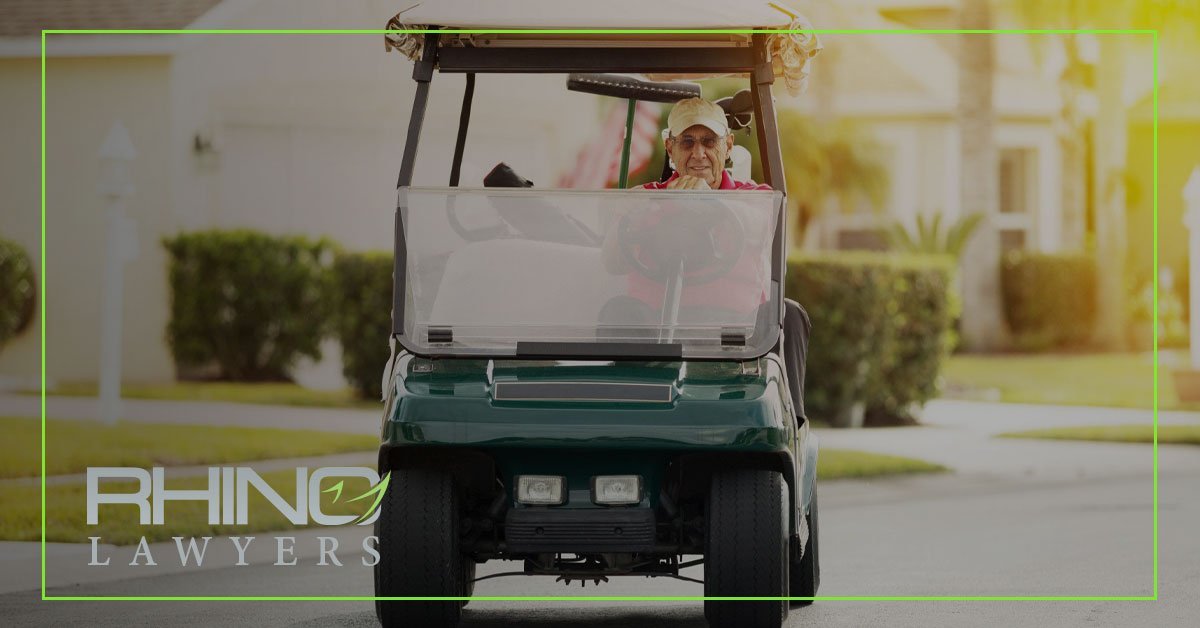
Las reglas de tránsito para carritos de golf
Anualmente, quince mil personas obtienen un accidente de carrito de golf lesión. Eso equivale a unas 288 personas por semana. Pero es fácil evitar convertirse en víctima de un accidente cuando se siguen las normas de tránsito, tanto dentro como fuera del campo de golf.
Siga leyendo para conocer los requisitos de edad, las normas sobre el equipo y las leyes de registro de carritos de golf en Florida.
¿Es un carrito de golf un vehículo de motor?
Estatuto de Florida §320.01(41) clasifica los carritos de golf como vehículos de baja velocidad (LSV). Esto significa vehículos de cuatro ruedas que circulan a una velocidad máxima de 20 a 25 mph.
Estos son vehículos de motor diseñados para operar en campos de golf y con fines recreativos. No pueden superar las 20 mph, según la Sección 320.01(22) de los Estatutos de Florida.
El vehículo tiene tres o más ruedas y pesa 1,800 libras o menos. Puede transportar un máximo de cuatro pasajeros, incluido el conductor.
Una vía de circulación es el ancho entre las líneas limítrofes disponible para el tráfico de vehículos públicos según la sección 320.01(16) de los Estatutos de Florida. Solo se puede cruzar una calle con su carrito de golf bajo condiciones específicas. Su operación solo está permitida en carreteras con límites de velocidad publicados de 30 mph o menos cuando la vía contenga señalización que indique que su uso es para automóviles y carritos de golf.
Condiciones de Operación en Vías Públicas
No se pueden conducir en vías públicas de Florida, excepto bajo condiciones específicas encontradas en el Estatuto de Florida 316.212. Según la ley, el uso de carritos de golf en vías públicas no está permitido, excepto para lo siguiente:
- En una carretera de condado o calle municipal designada para el uso de carritos de golf
- Para cruzar una carretera estatal que interseca con una vía de condado o una calle municipal designada para el uso de carritos de golf
- Cruzando una carretera estatal a mitad de cuadra cuando hay un campo de golf a ambos lados de la carretera
- En una carretera estatal, si el DOT determina que el uso de carritos de golf no obstaculiza el flujo de tráfico
- Cruzando una calle o carretera donde un solo parque de casas móviles se encuentra a ambos lados de la vía
- En un sistema de carreteras de parque estatal, si el límite de velocidad es de 35 mph o menos
- Operación permitida únicamente desde la salida hasta la puesta del sol
- Conducir de noche solo está permitido con autorización del gobierno y en vehículos equipados con faros delanteros, luces de freno, direccionales y parabrisas
Los carritos de golf que circulen por vías públicas deben tener frenos eficientes, neumáticos seguros, dirección confiable, espejos retrovisores y dispositivos de advertencia reflectantes en la parte trasera y delantera. Los conductores deben cumplir con todas las leyes de tránsito y mantener la velocidad establecida.
Al usar los cruces de carritos de golf designados que se intersecan con una vía pública, debe ceder el paso a los peatones y al tráfico vehicular que cruza.
Evite operar carritos de golf con mal tiempo. Las lluvias intensas pueden causar caminos resbalosos e inundaciones, lo que aumenta los riesgos de seguridad.
Áreas prohibidas
No se pueden operar carritos de golf en calles con límites de velocidad superiores a 30 mph. Es ilegal conducir por las aceras a menos que estén designadas para ese propósito. Las entidades gubernamentales locales pueden obtener autorización del Departamento de Transporte para permitir su uso en las aceras.
Las ordenanzas locales deben limitar la velocidad de los carritos de golf a 15 mph, y las aceras deben tener al menos ocho pies de ancho. El Estatuto de Florida §316.212(b) exige la colocación de letreros que indiquen que el uso incluye carritos de golf.
Los carritos de golf que utilicen las aceras deben cumplir con todos los requisitos de equipamiento para su uso en la calle. Los requisitos de seguridad adicionales pueden incluir una bocina u otro dispositivo de advertencia.
Requisitos de licencia
Los adultos no son los únicos en riesgo de sufrir accidentes en carritos de golf. Cada año más de 6500 niños sufren lesiones en carritos de golf; más de la mitad de ellos menores de 12 años. Por eso existen restricciones de edad para conducir estos vehículos.
El permiso para que los adolescentes de 14 años en adelante conduzcan ya no es válido. A partir de julio de 2023, las leyes sobre carritos de golf en Florida exigen que los adolescentes tengan al menos 15 años y un permiso de aprendizaje, o 16 años o más con una licencia de conducir.
Cualquier persona mayor de 18 años debe tener una identificación o una licencia de conducir emitida por el gobierno que sea válida para operar un carrito de golf.
Conducir bajo la influencia
No puedes operar tu carrito de golf en vías públicas bajo los efectos de drogas o alcohol. Las autoridades pueden detenerte y realizar una prueba de sobriedad si consideran que estás intoxicado. Si el oficial determina que estás bajo los efectos, puede acusarte de conducir bajo los efectos del alcohol (DUI).
Pasajeros
La ley de Florida exige que todas las personas en un carrito de golf tengan su propio asiento. No se permite compartir asientos ni llevar niños en el regazo.
Todos los asientos deben tener cinturón de seguridad, y todos los ocupantes deben usar cinturones de seguridad en las carreteras. Los niños de tres años o menos deben ir en un asiento de seguridad para niños. El estado recomienda usar un asiento elevado para niños mayores de cuatro años, pero esto no es un requisito legal.
Requisitos de equipo
Para operar un carrito de golf en vías públicas en Florida, este debe contar con todo lo siguiente:
- Faros
- Luces traseras
- Direccionales delanteras y traseras
- Luces de freno
- Parabrisas
- Freno de mano
- Reflectores de luz roja en cada lado y en la parte trasera
- Espejo retrovisor exterior del lado del conductor
- Espejo retrovisor interior o espejo exterior del lado del pasajero
- Cinturón de seguridad para cada asiento designado
- Número de identificación del vehículo (VIN)
Si tiene un permiso de discapacidad válido para su automóvil, puede estacionar su carrito de golf en los espacios de estacionamiento accesibles. Debe exhibir su permiso de discapacidad. Puede recibir una multa por estacionarse ilegalmente si no exhibe el permiso.
Registro de carritos de golf
La mayoría de los carritos de golf en Florida no tienen títulos porque están diseñados para uso todoterreno. Los títulos y el registro no son un requisito a menos que se conduzcan en la calle.
Debe registrar su carrito de golf en el Departamento de Seguridad de Carreteras y Vehículos de Florida para usarlo en la vía pública. El registro debe mostrar el número de identificación del vehículo (VIN). Siempre debe exhibir una calcomanía de registro actualizada.
Para registrar y titular el suyo como un LSV, asegúrese de que cumpla con los requisitos de equipamiento anteriores. Visite un Centro de Servicio de Vehículos Motorizados con lo siguiente:
- Certificado de origen del fabricante
- Solicitud de Título Formulario HSMV 82040
- Comprobante de seguro mínimo de PDL y PIP
- Identificación personal: cédula de identidad, licencia de conducir o pasaporte
- Tarifas necesarias: tarifa de título, tarifa de placa, tarifa de inscripción inicial, tarifa de registro (según el peso del vehículo)
Si modificas tu carrito de golf para convertirlo en un LSV, el registro y el título reflejan la fecha del registro y del título, no la fecha de fabricación. Si compras una versión apta para la calle, puede ser más antigua que la fecha en su título.
Seguro para carritos de golf
Para circular con tu vehículo por vías públicas, debes contar con, al menos, $10,000 en cobertura de responsabilidad civil por daños materiales (PDL) y $10,000 en cobertura de protección contra lesiones personales (PIP).
Uno de los accidentes más comunes en la carretera es la colisión en T. Las personas sufren graves, lesiones que cambian la vida cuando un automóvil choca contra el costado de otro vehículo o carrito de golf. Esto incluye lesiones de la médula espinal, lesiones cerebrales traumáticas, huesos rotos y lesiones en los tejidos.
Al operar uno en propiedad privada, el seguro no es obligatorio pero es recomendable. Accidentes de carritos de golf representan el 10-15% de las reclamaciones por lesiones personales en un campo de golf. Aproximadamente el 70% de estos accidentes ocurren en campos de golf privados, y el 40% involucran a operadores con experiencia.
Al recuperarse de lesiones personales, es fácil aceptar una oferta de acuerdo de seguro que parece justa. Las compañías de seguros saben que las víctimas de accidentes carecen de conocimientos legales sobre lo que constituye una oferta de acuerdo justo. Siempre consulte a un abogado de lesiones personales antes de aceptar un acuerdo.
Si usted sufre un accidente
Al operar un carrito de golf en vías públicas en Florida, es fundamental cumplir con todas las leyes de Florida. Incluso el conductor más cauteloso puede ser víctima de un accidente.
Si sufre lesiones en un accidente de carrito de golf, contacto RHINO Lawyers para una evaluación gratuita de su caso. Negociaremos su acuerdo o llevaremos el caso a juicio mientras usted se recupera. Llame 844.RHINO.77 hoy.
COMUNÍQUESE CON UN ABOGADO DE ACCIDENTES AUTOMOVILÍSTICOS EN TAMPA
En resumen, después de un accidente automovilístico, es posible que no conozca sus derechos. Sobre todo, no luche solo durante el proceso. En realidad, nuestro equipo de lesiones personales está aquí para ayudarle con cualquier necesidad legal que pueda tener relacionada con su accidente.
Por último, que RHINO Lawyers responda a sus preguntas y revise los hechos de su caso con una consulta gratuita. Así que comience completando el “Evaluación de caso instantánea y gratuita”o llamándonos en cualquier momento, día o noche, al 844.RHINO.77.
Leer más
¿Qué es el programa RIDR y cómo puedo beneficiarme de él?
Driving under the influence is becoming a bigger and bigger problem in Florida. In 2021, there were nearly 44,000 drivers in the Sunshine State charged with a DUI.
To address this problem, Florida came up with a DUI diversion program called the Reducing Impaired Driving Recidivism Initiative (RIDR) to discourage people from doing this again.
Depending on your type of DUI, you could become eligible for this program. You increase your chances of this even further when you have the proper lawyer by your side.
What is this program? Who is eligible? How can a lawyer help you get into a RIDR program in Florida?
Read on for a guide that answers all of those questions and more.
What Is the DUI Diversion Program?
The DUI diversion program is a program that Florida came up with to try to help people charged with a DUI avoid getting charged with it again. Also, it is to educate drivers who are facing this charge about the dangers of driving under the influence.
Hillsborough happens to be one of the only counties in the state that currently offers this type of program. This program directly targets people who are just facing DUI charges.
Eligibility
There are certain requirements that you have to meet to be eligible for this program.
For starters, you can only enter this program if it is your first DUI. If you or a loved one have a past with DUI charges, you are not going to be eligible for the RIDR program this time around.
Then, you have to consider what type of DUI charge that you may be facing. That is because Florida only allows people with certain DUI charges to participate in this program.
The main requirement here is that this is a misdemeanor DUI. If you or a loved one have a felony DUI charge pending, you are not eligible to participate in this program.
Then, you have to account for who was in your vehicle at the time of this DUI. If there was any sort of minor in the vehicle, you lose your eligibility for this program.
Your BAC level can play a role in your eligibility as well. To meet this requirement, your BAC level had to have been under .20.
Review your case and consider talking to a DUI lawyer to see if your case is eligible for this program.
Program Levels
Another important thing you need to know about this program is that there are three different levels that the program offers. This depends on what kind of DUI charge you are facing.
However, there are a few things that apply to each one of the levels mentioned. The first is that if you have prior felony charges, you are not eligible for any of these program levels.
Level 1
This tends to be reserved for the least serious DUI charges.
The main thing you need here is a BAC level below .15. So, what do you have to do to complete the Level 1 program?
You have to have continuous alcohol monitoring and an ignition interlock alcohol device in your vehicle for at least three months. You will also have to complete 50 hours of community service.
Level 2
People who enter the Level 2 program are those with a BAC above .15 during their DUI conviction. The main differences are that community service hours increase to 75 and the ignition interlock alcohol device has to be on your vehicle for six months.
Level 3
Finally, this level is reserved for those who are facing drug charges surrounding their DUI rather than just alcohol.
With this level, people have to complete 50 hours of community service. On top of this, people at this level are required to wear an Abuse Patch for three months to make sure that they are not using drugs.
How a Lawyer Can Help
Now that you have a better understanding of what the RIDR program is, you may be wondering how a lawyer can help you with this. Well, there are a few big ways that they can have an influence with this case.
The first part of this is just having knowledge about this program. Since this is something that is only available in certain parts of Florida, it may not be given that a defendant knows about this program.
A lawyer is likely to have extensive knowledge of this program and what type of clients they have who can end up eligible for this. A lawyer has enough experience to pursue this option on your behalf if you meet the criteria mentioned above.
Also, lawyers can provide you with the legal counsel that you need to get a lighter sentence here. This can be anything from your behavior in court to what you need to confess to, what your options are, why this is the best option for you, and more.
Finally, lawyers can act as your voice when it comes time to talk to a prosecutor and a judge. During a certain point in this proceeding, a lawyer and a prosecutor are likely going to sit down and negotiate what your penalties will be for a DUI.
A lawyer is the person who will vouch for you and provide the best argument as to why you deserve to be part of this program. To take this a step further, your lawyer may even try to get you into the program at a lower level compared to what you may get on your own.
In other words, lawyers tend to be great negotiators. Let one with this talent act on your behalf.
Hire a DUI Lawyer
This is some information that you could use when it comes to the DUI diversion program.
You need to be aware of what criteria you need to meet to even enter this program. Then, get an understanding of what you have to do at each level of the program. Finally, let a lawyer negotiate the right program level for you.
If you or a loved one is facing a DUI charge, you should talk to a DUI lawyer about your options. Obtenga una revisión de caso gratuita from us here.
CONTACTE A UN ABOGADO DE MULTAS DE TRÁFICO EN TAMPA
RHINO Lawyers puede ayudar y guiarlo a través de un sistema moldeado por las fuerzas del orden, jueces y abogados durante décadas. Habiendo ganado casos para nuestros clientes en circunstancias similares, nuestro equipo de defensa penal sabe lo que se necesita para luchar en tu nombre.
Permitir RHINO Lawyers responda a sus preguntas y revise los hechos de su caso con una consulta gratuita. Así que comience completando el “Evaluación de caso instantánea y gratuita”o llamándonos en cualquier momento, día o noche, al (844) RHINO-77.
Leer más
Sanciones por DUI en Florida y cómo manejarlas
The DUI laws in Florida aren’t quite as strict as they are in states like Arizona, Georgia, and Alaska. Florida DUI laws tend to fall somewhere in the middle of the pack when it comes to strictness.
But that doesn’t mean getting a DUI in Florida will be a walk in the park. Like most other states, Florida has put serious DUI consequences into place to deter people from driving under the influence of alcohol and/or drugs. As a result, you will face harsh Florida DUI penalties if you’re ever convicted of DUI.
This Florida DUI penalty chart that we’ve put together shows the potential penalties you may face if you’re ever arrested for DUI in the state. It’ll help show you why you should hire a Florida DUI lawyer immediately to handle your DUI case and hopefully help you avoid having to deal with the worst Florida DUI penalties possible.
Check out our Florida DUI penalty chart below.
Primera infracción
After getting a DUI in Florida for the first time, you’ll face a handful of DUI penalties that will be designed to make you think twice before you ever get behind the wheel after using alcohol and/or drugs again. From fines to jail time to community service, you’ll likely have to deal with a variety of DUI consequences.
The first entry on our Florida DUI penalty chart looks like this:
Fines: $500 to $1,000
Jail Time: 1 day to 6 months
Probation: Up to 1 year
Loss of License: 180 days to 1 year
Impounded Vehicle: 10 days
Breath Alcohol Ignition Interlock Device Installation: 0 days to 6 months
Other Florida DUI Penalties: 50 hours of community service, required substance abuse counseling, and DUI school
First Offense With a Minor in Vehicle or BAC Level of 0.15
If you get a DUI in Florida for the first time while you have a minor in your vehicle or while your blood alcohol content level is at or above 0.15, you’ll face harsher Florida DUI penalties than usual. Each of the DUI consequences that we just discussed will be ratcheted up to the next level.
This is what these Florida DUI penalties will look like:
Fines: $1,000 to $2,000
Jail Time: 1 day to 9 months
Probation: Up to 1 year
Loss of License: 180 days to 1 year
Impounded Vehicle: 10 days
Breath Alcohol Ignition Interlock Device Installation: 6 months to 1 year
Other Florida DUI Penalties: 50 hours of community service, required substance abuse counseling, and DUI school
Second Offense Within 5 Years
If you get a second DUI offense in Florida, the timing of it will impact the DUI consequences you’ll face. These consequences will be on the stricter side if your second DUI arrest occurs within 5 years of the first one.
Here are the Florida DUI penalties you’ll be looking at if you’re convicted of DUI twice in the state:
Fines: $1,000 to $2,000
Jail Time: Minimum 10 days to 9 months
Probation: Up to 1 year
Loss of License: 5 years or more
Impounded Vehicle: 30 days
Breath Alcohol Ignition Interlock Device Installation: At least 1 year
Other Florida DUI Penalties: Required substance abuse counseling and DUI school
Second Offense Within 5 Years With a Minor in Vehicle or BAC Level of 0.15
The Florida DUI penalties for someone who has been convicted for a second time in 5 years are already very harsh. Because of this, the DUI consequences for getting a second offense within 5 years with a minor in your vehicle or a BAC level of 0.15 or higher aren’t that dramatically different.
Take a look at the penalties you’ll face in this instance:
Fines: $2,000 to $4,000
Jail Time: Minimum 10 days to 12 months
Probation: Up to 1 year
Loss of License: 5 years or more
Impounded Vehicle: 30 days
Breath Alcohol Ignition Interlock Device Installation: At least 1 year
Other Florida DUI Penalties: Required substance abuse counseling and DUI school
Second Offense After 5 Years
If you end up getting a DUI in Florida for the second time but it takes place at least 5 years after your first conviction, the Florida DUI penalties will be slightly less harsh than they would be otherwise. But you’ll still find yourself dealing with some serious DUI consequences.
This is how these consequences will break down:
Fines: $1,000 to $2,000
Jail Time: 1 day to 9 months
Probation: Up to 1 year
Loss of License: 180 days to 1 year
Impounded Vehicle: 10 days
Breath Alcohol Ignition Interlock Device Installation: At least 1 year
Other Florida DUI Penalties: Required substance abuse counseling and DUI school
Second Offense After 5 Years With a Minor in Vehicle or BAC Level of 0.15
If you get a DUI in Florida for the second time after 5 years but you have a minor in your vehicle or a BAC level of 0.15 or higher, your Florida DUI penalties will be slightly harsher than if you weren’t arrested under these circumstances. Florida does not take kindly to DUIs that involve minors being in a vehicle or an especially high BAC level.
Here is how you’ll be penalized in this case:
Fines: $2,000 to $4,000
Jail Time: 1 day to 12 months
Probation: Up to 1 year
Loss of License: 180 days to 1 year
Impounded Vehicle: 10 days
Breath Alcohol Ignition Interlock Device Installation: At least 1 year
Other Florida DUI Penalties: Required substance abuse counseling and DUI school
Third Offense Within 10 Years
Getting arrested for DUI in Florida for the third time within 10 years can carry some of the most serious DUI consequences of all. The Florida DUI penalties that you’ll face might have a huge impact on your lifestyle.
This is what you may be facing following a third DUI arrest in a decade:
Fines: $1,000 to $5,000
Jail Time: Minimum 30 days to 12 months
Probation: Up to 1 year
Loss of License: 10 years or more
Impounded Vehicle: 90 days
Breath Alcohol Ignition Interlock Device Installation: At least 2 years
Other Florida DUI Penalties: Required substance abuse counseling and DUI school
Third Offense Within 10 Years With a Minor in Vehicle or BAC Level of 0.15
Getting arrested for DUI in Florida for the third time within 10 years with either a minor in your vehicle or a BAC level of 0.15 will subject you to even more serious DUI consequences. Just like with the previous examples listed on this Florida DUI penalty chart, you’re going to face stricter penalties under these circumstances.
Here are the Florida DUI penalties you’ll face:
Fines: $4,000 to $5,000
Jail Time: Minimum 30 days to 12 months
Probation: Up to 1 year
Loss of License: 10 years or more
Impounded Vehicle: 90 days
Breath Alcohol Ignition Interlock Device Installation: At least 2 years
Other Florida DUI Penalties: Required substance abuse counseling and DUI school
Fourth Offense
If you happen to get arrested for DUI in Florida for a fourth time this can be considered a felony. You will run the risk of losing your driver’s license for good. You’ll also face other DUI consequences that could change your life forever, like extensive jail or prison time.
Check out the Florida DUI penalties for a fourth DUI offense and conviction:
Fines: $2,000 to $5,000
Jail Time: 1 day to 5 years
Probation: Up to 5 years
Loss of License: Permanent
Impounded Vehicle: 90 days
Breath Alcohol Ignition Interlock Device Installation: At least 5 years
Other Florida DUI Penalties: Required substance abuse counseling and DUI school
Getting a fourth offense with a minor in your vehicle or a BAC level of 0.15 or above will carry the same Florida DUI penalties. You will no longer be able to drive in the state after four DUI convictions. You could also be looking at serious jail or prison time.
Call Us for More Details on This Florida DUI Penalty Chart
This Florida DUI penalty chart shows how seriously the state of Florida takes DUI convictions. It has put strict DUI consequences in place in an attempt to stop people from drinking and driving or driving while under the influence of drugs.
But as you’ve seen after looking at this Florida DUI penalty chart, at least some of the Florida DUI penalties vary quite a bit. For instance, you could end up in jail for anywhere from just over a week to a full year following a second DUI arrest and conviction.
With this in mind, you should hire a great Florida DUI lawyer to help you if you’re ever arrested for DUI. They can work to minimize your DUI consequences or potentially even get your DUI case dismissed completely.
Contacto RHINO Lawyers to learn how our law firm can help you.
CONTACTE A UN ABOGADO DE MULTAS DE TRÁFICO EN TAMPA
RHINO Lawyers puede ayudar y guiarlo a través de un sistema moldeado por las fuerzas del orden, jueces y abogados durante décadas. Habiendo ganado casos para nuestros clientes en circunstancias similares, nuestro equipo de defensa penal sabe lo que se necesita para luchar en tu nombre.
Permitir RHINO Lawyers responda a sus preguntas y revise los hechos de su caso con una consulta gratuita. Así que comience completando el “Evaluación de caso instantánea y gratuita”o llamándonos en cualquier momento, día o noche, al (844) RHINO-77.
Leer más
¿Qué es un acuerdo justo por dolor y sufrimiento?
Una lesión personal puede ser un evento devastador que te deje con lesiones físicas y agitación emocional. Por lo tanto, muchas víctimas de accidentes automovilísticos experimentan repercusiones que cambian sus vidas y afectan todas las áreas de su existencia.
El dolor o la discapacidad física, la angustia emocional continua y otros factores deben considerarse en un acuerdo por accidente automovilístico. Más importante aún, si usted o un ser querido resultaron heridos debido a la negligencia de otro conductor, usted tiene derechos.
Tras un accidente, es posible que se pregunte a qué tipos de daños tiene derecho. Además, las víctimas de accidentes pueden recibir una compensación por gastos médicos, salarios perdidos, daños a la propiedad, y dolor y sufrimiento.
Aquí te damos un vistazo más de cerca a lo que realmente es un acuerdo por dolor y sufrimiento.
¿Qué es el dolor y el sufrimiento?
El dolor y el sufrimiento se refieren a las lesiones intangibles que sufren las víctimas de accidentes. Asimismo, esto puede referirse al dolor físico y a los efectos psicológicos de una lesión grave.
Algunos ejemplos incluyen:
- Depresión y ansiedad
- Pérdida de disfrute de la vida
- Inconveniente
Asimismo, la pérdida de disfrute puede incluir la incapacidad para participar en sus actividades cotidianas. Tales como cuidar de su familia, mantener un hogar o participar en cosas que antes disfrutaba.
Dependiendo de la gravedad de su accidente, podría recibir una indemnización por dolor y sufrimiento además de cualquier pérdida financiera.
Daños económicos vs. daños no económicos
El dolor y el sufrimiento se consideran daños no económicos. No hay una cantidad en dólares asociada al sufrimiento emocional, y no se puede demostrar este tipo de daño con recibos.
Ponerle un valor monetario al sufrimiento emocional puede ser difícil. De hecho, depende de las capacidades anteriores de la víctima, su estilo de vida y otros factores. Los daños económicos pueden incluir:
- Gastos médicos
- Pérdida de salarios
- Transporte médico
- Auxiliar de salud a domicilio
- Gastos de bolsillo
Aunque una víctima de lesiones podría presentar una demanda únicamente por daños correspondientes al dolor y sufrimiento, esto es poco común. En general, las víctimas de accidentes esperan asegurar una compensación por dolor y sufrimiento además de los daños económicos.
Muchos tipos de efectos físicos y mentales de una lesión grave califican para recibir una indemnización por dolor y sufrimiento.
Efectos físicos
Los efectos de una lesión grave pueden ser duraderos o incluso permanentes. Estas lesiones pueden cambiar su estilo de vida y alterar sus planes futuros.
Los ejemplos incluyen:
- Dolor de cuello y espalda
- Huesos rotos o aplastados
- Dolores de cabeza crónicos
- Lesión cerebral traumática
- Daño a órganos internos
- Pérdida de extremidad
- Lesiones musculoesqueléticas
- Parálisis
- Pérdida de audición o visión
- Desfiguración o cicatrización
Efectos emocionales
Después de un accidente, el trauma emocional puede persistir y afectar su calidad de vida. Por lo general, estos efectos pueden variar desde ansiedad a corto plazo hasta graves trastorno de estrés postraumático (TEPT).
Los ejemplos de lesiones emocionales incluyen:
- Ataques de pánico
- Trauma psicológico
- Insomnio
- Duelo
- Miedo a salir de casa
- Enojo
- Depresión
- TEPT
De hecho, algunas víctimas de accidentes sufren consecuencias psicológicas continuas tras un accidente. Además, es posible que necesiten tratamiento de salud mental y asesoramiento a largo plazo.
Muerte Injusta
Los familiares pueden sufrir emocional y financieramente cuando un ser querido muere en un accidente. De hecho, dependiendo de la situación, un miembro de la familia puede decidir presentar una demanda por homicidio culposo.
Además, pueden tener derecho a una indemnización por pérdidas financieras, así como por “pérdida de consorcio” debido a la muerte inesperada de su ser querido.
Algunos daños por pérdida de favor conyugal incluyen:
- Pérdida de compañía (muerte de un cónyuge o pareja de hecho)
- Pérdida de orientación parental
- Una pérdida de apoyo o servicios domésticos
- Pérdida de amor y afecto
Acuerdo justo por dolor y sufrimiento
Cada caso de lesiones personales es único. De hecho, los montos de los acuerdos por accidentes automovilísticos pueden variar significativamente.
Ahora bien, las circunstancias y los hechos de su caso juegan un papel importante en la determinación de su compensación por dolor y sufrimiento. Por lo tanto, un abogado especializado en accidentes recopilará información sobre su caso para garantizar que reciba la máxima compensación que se merece.
Existen dos métodos comúnmente utilizados para calcular los montos de indemnización por dolor y sufrimiento.
El Método del Multiplicador
A continuación, el método del multiplicador se centra en los daños económicos totales, como las facturas médicas y los salarios perdidos. Como resultado, esta cantidad se multiplica por el nivel de gravedad de la lesión o del caso. Por lo tanto, el número generalmente se encuentra entre uno y cinco.
Método de viáticos
El método de viáticos asigna una cantidad fija de dólares por día. Y esto comienza el día del accidente y termina cuando la víctima alcanza la recuperación máxima.
Cómo puede ayudar un bufete de abogados de accidentes de Tampa
¿Ha sufrido lesiones en un accidente que no fue su culpa? Porque, si ha sufrido lesiones físicas y psicológicas, un experto abogado de lesiones personales puede ayudarlo a comprender sus derechos. Además, reunirá pruebas, negociará con todas las partes involucradas y demostrará su caso.
Probando el dolor y sufrimiento
Para recibir una compensación, debe probar el dolor y el sufrimiento. Por lo tanto, un abogado con experiencia en lesiones personales puede ayudar.
En esta etapa, los abogados de accidentes se concentran en establecer los hechos del caso y cuantificar el monto del acuerdo.
Evidencia de dolor y sufrimiento
Sobre todo, la documentación es vital en los casos de dolor y sufrimiento. De hecho, la evidencia puede incluir:
- Historial médico
- Notas del médico
- Diarios personales
- Notas del terapeuta o consejero
Su abogado trabajará con usted para reunir la mayor cantidad de evidencia posible para probar su caso y asegurar una compensación.
Cómo obtener un acuerdo por dolor y sufrimiento
Ciertamente, un accidente grave puede provocar lesiones devastadoras, tanto físicas como mentales. Por lo tanto, algunas víctimas de accidentes sufren un trauma psicológico durante años después de un accidente.
En estos casos, un acuerdo por dolor y sufrimiento es una opción. Por lo tanto, como víctima de un accidente, usted tiene derechos. Y puede tener derecho a una compensación por sus gastos médicos, salarios perdidos, dolor y sufrimiento, y más.
En RHINO Lawyers, sabemos lo traumatizante que puede ser un accidente grave. Y nuestros abogados de lesiones personales de Tampa evaluarán su caso y responderán cualquier pregunta que pueda tener. Por lo tanto, no paga nada a menos que gane.
Contacto RHINO Lawyers hoy para una consulta gratuita.
COMUNÍQUESE CON UN ABOGADO DE ACCIDENTES AUTOMOVILÍSTICOS EN TAMPA
En resumen, después de un accidente automovilístico, es posible que no conozca sus derechos. Sobre todo, no luche solo durante el proceso. En realidad, nuestro equipo de lesiones personales está aquí para ayudarle con cualquier necesidad legal que pueda tener relacionada con su accidente.
Por último, que RHINO Lawyers responda a sus preguntas y revise los hechos de su caso con una consulta gratuita. Así que comience completando el “Evaluación de caso instantánea y gratuita”o llamándonos en cualquier momento, día o noche, al 844.RHINO.77.
Leer más
Malentendidos comunes sobre los accidentes de motocicleta
Motorcycle riding offers a sense of freedom and exhilaration that is unparalleled by any other mode of transportation. The wind in your hair and the world zooming past you is quite enlivening.
However, it also comes with inherent risks. Unfortunately, there are numerous misconceptions surrounding motorcycle accidents.
These misconceptions often contribute to a lack of understanding and empathy for motorcycle riders, leading to unsafe road behaviors and unfair blame during accidents.
In this article, we will debunk some of the most common motorcycle accident misconceptions. We will also shed light on the realities faced by motorcyclists on the road.
Misconception: Motorcycles are Inherently Dangerous
One of the most prevalent misconceptions is that motorcycles are dangerous vehicles. While it is true that motorcycles lack the protective features of cars, such as airbags and crumple zones, this does not make them intrinsically unsafe.
Reality
Motorcycle accidents often occur due to the negligence of other road users, such as car and truck drivers who fail to see or yield to motorcycles.
Defensive riding and proper training can mitigate these risks. This makes motorcycles a safe mode of transport when handled responsibly.
Responsible riding, wearing proper safety gear, and adhering to traffic laws significantly reduce the risk of accidents. Do not weave in and out of traffic. Follow the same rules of the road as a car would, no matter your size.
Also, make sure your passenger wears the appropriate gear as well.
Misconception: Most Motorcycle Accidents are the Rider’s Fault
A common misconception is that motorcycle accidents are predominantly the fault of the rider. While some motorcycle accidents may indeed result from rider error, many occur due to the actions of other drivers or external factors beyond the rider’s control.
Reality
Studies show that two-thirds of motorcycle accidents are caused by drivers of other vehicles violating the right-of-way of motorcyclists. In such cases, the rider bears little to no responsibility for the accident.
One reason for this might be that there are fewer motorcycles in the U.S. than in other places around the world. Research shows that more than half (58%) of motorcycles in the world are located in the Asian market. With mostly cars on the road, drivers aren’t always as proactive about watching for motorcyclists as they should be.
Misconception: Motorcycle Riders are Daredevils and Risk-Takers
Motorcycle riders are sometimes stereotyped as reckless daredevils who take unnecessary risks on the road. This misconception unfairly tarnishes the reputation of responsible motorcyclists who prioritize safety.
Reality
The majority of motorcycle riders are law-abiding citizens who take safety seriously. Many motorcyclists undergo extensive training and participate in safety courses to enhance their riding skills and reduce the risk of accidents.
They don’t necessarily wish to put others in danger just because they are riding on a motorcycle. They have the same instincts for safety as everyone else does.
Misconception: Motorcycle Accidents are Rare and Insignificant
There is a common belief that motorcycle accidents are relatively rare and do not pose a significant threat compared to other types of accidents.
Reality
Sadly, motorcycle accidents are more common than most people realize. One report from the National Highway Traffic Safety Administration (NHTSA) shows that motorcyclists are 27 times more likely to be involved in a fatal accident than occupants of cars.
These accidents can have severe consequences for riders, including life-altering injuries or death. At least in a car, you are partly protected by the four walls and also all the safety mechanisms, such as airbags.
On a motorcycle, you are quite open to the world around you. Even with safety gear on, it can be extremely dangerous to be in a collision.
Misconception: Helmets are Sufficient for Rider Safety
Some individuals believe that wearing a helmet is all that is needed to ensure a rider’s safety. While helmets are undoubtedly essential, they are not a foolproof solution for preventing accidents.
Reality
Helmets protect against head injuries and reduce the risk of fatalities. However, they do not prevent accidents from occurring.
Riders must adopt a comprehensive approach to motorcycle safety. This includes:
- Defensive riding
- Wearing appropriate protective gear
- Staying vigilant on the road
It might seem counterproductive to say this all over again, but it’s absolutely critical to follow defensive driving tactics any time you get on a motorcycle.
Misconception: Motorcyclists are Easily Visible
Another common misconception is that motorcyclists are easily visible on the road and that accidents occur because riders fail to make themselves seen.
Reality
Motorcycles are relatively smaller in size compared to cars and trucks. This makes them more challenging to spot. This is even more true in blind spots or during adverse weather conditions.
Drivers must remain attentive and check their surroundings thoroughly to avoid colliding with motorcycles. Do not let your attention meander from the road for even a second.
Misconception: Loud Pipes Prevent Accidents
There is a belief among some motorcyclists that having loud exhaust pipes not only sounds cool. It could also make them more noticeable and help prevent accidents.
Reality
Louder exhaust pipes might grab the attention of nearby drivers. Yet, relying solely on noise is not a substitute for safe riding practices. The primary focus should be on visibility, defensive riding, and adhering to traffic laws.
Avoid Motorcycle Accident Misconceptions With Better Judgment
Now that you are aware of the various motorcycle accident misconceptions, you can use them to make better driving decisions. It starts with every driver out there.
Motorcycles are going to become more common on the roads in the future. This means everyone has to be more careful driving around them. Responsibility can’t solely rest on motorcyclists.
If you were involved in a motorcycle accident, then contact our law firm. We help support victims of all kinds of accidents, including motorcycles, and we’re here to help you take those next steps.
COMUNÍQUESE CON UN ABOGADO DE ACCIDENTES DE MOTOCICLETA EN TAMPA
En resumen, después de un accidente de motocicleta, es posible que no conozca sus derechos. Sobre todo, no luche contra el proceso solo. En realidad, nuestros equipo de lesiones personales está aquí para ayudarle con cualquier necesidad legal que pueda tener relacionada con su accidente.
Por último, que RHINO Lawyers responda a sus preguntas y revise los hechos de su caso con una consulta gratuita. Así que comience completando el “Evaluación de caso instantánea y gratuita”o llamándonos en cualquier momento, día o noche, al 844.RHINO.77.
Leer más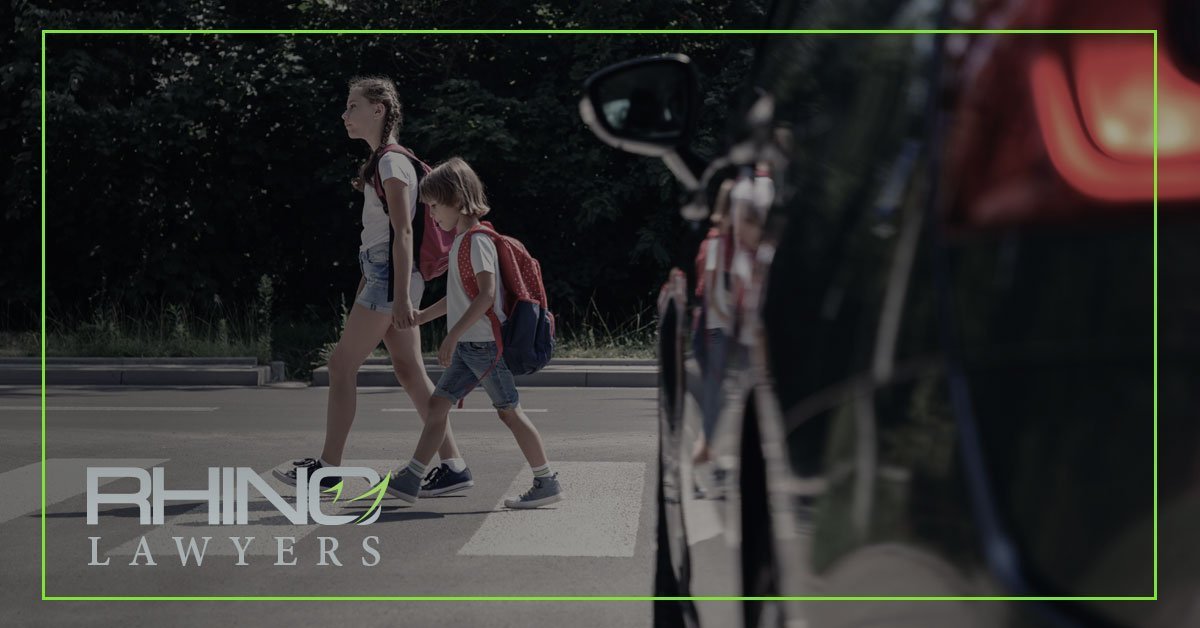
¿Cuáles son las leyes para conducir en una zona escolar?
¿Sabías que hay más de 100,000 escuelas ¿en Estados Unidos? La gran cantidad de escuelas en nuestro país significa que tarde o temprano, es seguro que conduzcas por una zona escolar. Siempre que veas señales de zona escolar, puedes ajustar tu velocidad y estar alerta a los niños. Pero, ¿cuáles son las restricciones de límite de velocidad para las zonas escolares de Florida? ¿Y qué sucede si cometes una infracción mientras conduces en una de estas zonas?
Si quieres descubrir las respuestas a estas preguntas, estás en el lugar perfecto. Esta guía te ayudará a aprender todo lo que necesitas saber sobre las leyes para conducir en una zona escolar de Florida. De esta manera, podrás conducir con seguridad cada vez que te acerques a una escuela.
¿Qué son las zonas escolares?
Las zonas escolares se refieren ya sea a las áreas inmediatas que rodean una escuela o a los cruces peatonales cerca de un establecimiento. Cuando un conductor entra en una zona escolar, debe prestar especial atención a los posibles niños y padres que cruzan la calle.
A veces hay guardias de cruce en las zonas escolares para facilitar el flujo seguro del tráfico. Un conductor también deberá reducir su velocidad al conducir en una zona escolar.
Sin embargo, por lo general estas restricciones de velocidad solo ocurren por la mañana y por la tarde, cuando los niños son dejados y recogidos. Las zonas escolares están señalizadas con letreros de zona escolar o luces intermitentes.
¿Cómo son las señales de zona escolar?
Las señales de zona escolar tienen forma de pentágono irregular. Eso significa que tienen un triángulo en la parte superior, con una forma cuadrada en la parte inferior. Las señales de color amarillo fluorescente también contienen símbolos negros de personas cruzando la calle.
Estos letreros se colocan por toda la escuela. Sin embargo, por lo general se limitan a los cruces peatonales y a los lugares donde los niños juegan a menudo.
¿Cuáles son las restricciones de límite de velocidad para estas zonas?
Las leyes relacionadas con los límites de velocidad en las zonas escolares de Florida provienen del estatuto estatal 316.1895. Esta ley establece que el límite de velocidad máximo en una zona escolar es de veinte millas por hora. ¿Por qué es necesaria esta ley?
Si un niño corre hacia la mitad de la calle, esto les da a los conductores suficiente tiempo para reaccionar y frenar. Las leyes estatales adicionales sobre la conducción en zonas escolares también establecen que es ilegal usar el celular y enviar mensajes de texto mientras se conduce en una zona escolar.
También puedes recibir multas si te niegas a seguir la instrucción de un guardia de cruce escolar o si no cedes el paso a los peatones. Si deseas leer los estatutos de Florida en su totalidad, puedes hacerlo visitando este recurso de aquí.
Multas por infracciones de tránsito en zonas escolares
Cuando cometes una infracción en una zona escolar, se considera una infracción de tránsito. Por lo general, la multa por una infracción de tránsito comienza en $50. Sin embargo, si ocurre en una zona escolar, se duplica.
También es importante tener en cuenta que puede aumentar dependiendo de qué tan rápido ibas en incrementos de cinco mph. Así que, si pasas volando por una zona escolar a cincuenta mph, puedes esperar multas bastante cuantiosas.
Si recibe una multa de tránsito en una zona escolar, no recomendamos pagarla de inmediato. ¿Por qué? Porque puede resultar en una condena automática y puntos en su licencia de conducir.
Si acumulas suficientes puntos en tu licencia de conducir, esto puede resultar en la suspensión de tu licencia. En su lugar, comunícate con un abogado que se especialice en multas de tránsito. Ellos pueden asesorarle sobre el mejor curso de acción para sus circunstancias específicas.
¿Cuáles son los accidentes comunes que ocurren en una zona escolar?
Las zonas escolares están ahí por una razón: son extremadamente vulnerables a los accidentes. No solo las personas cruzan la calle con frecuencia, sino que los vehículos también se detienen repentinamente para bajar a los niños.
Algunos de los accidentes más comunes con los que probablemente se encuentre incluyen cosas como:
- Los accidentes por apertura de puertas ocurren cuando un ciclista o vehículo choca contra la puerta abierta de un automóvil
- Los accidentes de peatones ocurren cuando alguien es atropellado en una calle transitada
- Colisiones por alcance debido a paradas repentinas para dejar o recoger niños
- Accidentes de bicicleta de niños que viajan en bicicleta a la escuela
Si usted ha estado involucrado en uno de estos accidentes, es fundamental comunicarse con un abogado de lesiones personales tan pronto como le sea posible. Puede evitar estos costosos accidentes siguiendo los consejos presentados en la siguiente sección.
Consejos para conducir de forma segura en una zona escolar
Respetar el límite de velocidad en una zona escolar es una de las principales cosas que puedes hacer para prevenir accidentes. Sin embargo, hay otras precauciones que puedes tomar para conducir de forma segura en estas zonas.
Para empezar, nunca intentes rebasar a un vehículo detenido en una zona escolar. Es muy probable que este auto estacionado esté subiendo o bajando niños. Como tal, podrías atropellarlos si intentas rebasar. También es importante estar alerta cuando te encuentres en estas zonas.
Los niños no son como los adultos. A menudo se mueven de manera impredecible. Pueden intentar cruzar por una zona que no tiene cruce peatonal. O pueden correr hacia la calle para agarrar algo.
Esté atento para evitar estos peligros. Por último, si se detiene en una intersección, asegúrese de que su vehículo no esté bloqueando el cruce de peatones. Esto obligará a los niños y a otros peatones a bajar a la calle, lo que puede convertirlos en un peligro potencial para otros vehículos.
¿Te multaron por conducir en una zona escolar? Ponte en contacto con RHINO Lawyers
Esperamos que esta guía le haya ayudado a aprender más sobre las señales de zonas escolares, los límites de velocidad y las infracciones. Como mencionamos antes, si tiene varios puntos en su licencia, una multa de tráfico en zona escolar podría resultar en sanciones civiles o en la suspensión potencial de su licencia.
Si te encuentras en esta situación, es importante ponerse en contacto con un profesional como los que se encuentran en RHINO Lawyers. Nuestro equipo cuenta con una amplia experiencia en lo que respecta a las leyes de tránsito en el estado de Florida.
Por lo tanto, ya sea que se haya lesionado en un accidente o necesite ayuda con multas de tráfico, podemos ayudarlo. Contáctenos hoy para programar su consulta por video gratuita.
CONTACTE A UN ABOGADO DE MULTAS DE TRÁFICO EN TAMPA
RHINO Lawyers puede ayudar y guiarlo a través de un sistema moldeado por las fuerzas del orden, jueces y abogados durante décadas. Habiendo ganado casos para nuestros clientes en circunstancias similares, nuestro equipo de defensa penal sabe lo que se necesita para luchar en tu nombre.
Permitir RHINO Lawyers responda a sus preguntas y revise los hechos de su caso con una consulta gratuita. Así que comience completando el “Evaluación de caso instantánea y gratuita”o llamándonos en cualquier momento, día o noche, al (844) RHINO-77.
Leer más
Los costos ocultos de las multas por exceso de velocidad en Florida
Most speeding tickets in Florida come with a $200 to $300 price tag. And if you thought that amount was high, take note. Play your cards wrong, and you could find yourself paying up to $1,000 if caught going 50mph over the speed limit. The fees you pay vary according to how fast you’re going. As well as, if they catch you speeding in a specific zone. When it comes to speeding, the best way to protect yourself is to drive within the speed limit. If you thought fines were hefty, there is a pretty good reason why. Speeding comes within the top five most common causes of car accidents, after distracted driving, drunk driving, poor weather, and reckless driving or road rage. If you do tend to push the pedal to the metal, then be aware of the hidden costs that can accompany a speeding ticket.
The Hefty Costs of Point Suspensions
When you receive a ticket, you can earn points which, when accumulated, can cause your license to be suspended. If you receive 12 points within 12 months, you receive a 30-day suspension. For 18 points within 18 months, you get a 3-month suspension. Meanwhile, for 24 points within 36 months, you can receive a 1-year suspension. Simply add up how much taking a car saves you time on public transport, and taxis or Uber. Can you afford to lose your license by racking up points?
Paying More for Insurance
If you are budget-conscious, then one area you may try to save on is insurance. You might do this by choosing a vehicle type that is generally cheaper to insure—for instance, an SUV with a positive rating and reputation for safety or a safe family sedan, as opposed to a car known for its speed. What’s more, is that some brands (including Dodge and Tesla—known for speed—and whose vehicles can be expensive to repair) are pricier than others to insure. If you are looking to save unnecessary expenditures, be aware that in Florida. There is an average 22% increase in a driver’s insurance rate if they get a speeding ticket. This makes sense considering the big role that speeding has played in countless accidents.
Additional Penalties
Drivers have an obligation to stick to speed limits regardless of where they are driving. However, with a view to keeping children safe, Florida lawmakers have created more serious consequences for those violating the law in zones where children are going to and coming from school. As such, you will have to pay a higher fine than average if you get caught speeding in one of these zones. And you can also cause you to lose more points. In general, you can expect to pay double the amount you would for a standard speeding ticket. Moreover, you will have obtained at least 3 points on your license, or 4 points if you’re going 16mph or over the limit, and 6 points if speeding leads to a crash.
More Hidden Costs
Be careful of pleading guilty to speeding in Florida. Doing so will mean you will have a conviction on your record. Seek the help of a traffic lawyer to avoid indirect costs. The latter can range from out-of-pocket costs for Uber and Lyft to strained relationships with family and friends who you may ask to help you out. While many people would undoubtedly like to ease your burden. Everyone has their own obligations and needs, and they may be unable to adapt to your schedule.
Why Is it Wise to Hire a Lawyer if You Get a Speeding Ticket?
Convictions can have a big impact on your life. So it is always a good idea to hire a traffic lawyer who knows the rules of the road to help reduce the negative consequences. And potentially get your ticket reduced or dismissed. Lawyers who practice in this field know the ins and outs of the relevant legislation. Plus, they rely on various strategies to help their clients. For instance, they may see it fit to challenge the validity of a radar or laser that was used to record your speed.
Clearly, the costs of receiving a citation for speeding in Florida can go way beyond the cost of the fine itself. You can rack up points, end up paying higher insurance premiums, and ultimately find yourself with a suspended license. Therefore, avoid turning your life upside down by sticking to the speed limit and seek legal advice if you are ticketed.
CONTACTE A UN ABOGADO DE MULTAS DE TRÁFICO EN TAMPA
RHINO Lawyers puede ayudar y guiarlo a través de un sistema moldeado por las fuerzas del orden, jueces y abogados durante décadas. Habiendo ganado casos para nuestros clientes en circunstancias similares, nuestro equipo de defensa penal sabe lo que se necesita para luchar en tu nombre.
Permitir RHINO Lawyers responda a sus preguntas y revise los hechos de su caso con una consulta gratuita. Así que comience completando el “Evaluación de caso instantánea y gratuita”o llamándonos en cualquier momento, día o noche, al (844) RHINO-77.
Leer más
Can Stress Affect Driving Enough to Cause an Accident?
When you think of auto accidents, you probably think of tangible causes such as the weather, distracted driving, and the like. What you might not think about, however, is physiological causes.
Physiological stress, in particular, can have a seismic impact on a person’s state of being. It can make a person nervous, distracted, and irrational, to name just a few characteristics.
That said, can stress and driving lead to car accidents? Can it result in a car accident injury? We’re going to dive into that topic below, helping you determine whether you’re fit to be on the road.
Let’s begin!
Can Stress Lead to Auto Accidents?
Put simply, yes, stress can lead to accidentes automovilísticos. Stress is defined as physical or mental tension. When a person is in a state of tension, they’re not operating at the max capacity.
As such, they could very easily do things they wouldn’t normally do. For instance, they could turn in front of another driver who’s coming up on them fast. Or, they could hit the gas pedal when they would normally ease back.
It’s important to note, though, that if your stress results in you causing an accident, you won’t be able to use stress as an excuse to escape liability. You will still be held liable for causing the accident.
In What Ways Can Stress Lead to Auto Accidents?
As noted above, stress can absolutely lead to auto accidents. To better illustrate this, we’re going to discuss how exactly it does so. Stress:
Impairs Your Decision Making
First and foremost, stress impairs your decision-making. When you’re under stress, you’re essentially being overwhelmed by many thoughts at once. If you’re overwhelmed by many thoughts, you won’t be able to make quick decisions on the road.
Let’s say that you don’t notice your turn until the last second. In a state of non-stress, you might just drive past it and turn around. In a stressed state, however, you might try to slam on your brakes and make the turn, thus resulting in a car accident.
Slows Your Reaction Time
Not only does stress impair your decision making but it also slows your reaction time. Because your mind is stuck on other things, you’re not able to process stimuli as quickly. As such, you are much slower to react when unexpected things come your way.
So, let’s say that someone slams their brakes on in front of you. In a non-stressed state, you would respond almost immediately. In a stressed state, however, you’re more apt to wait a second or two. That additional 1 or 2 seconds could easily result in an accident.
Results in Road Rage
Another way that stress can lead to auto accidents is that it can result in road rage. When you’re stressed, you’re more apt to get angry at other drivers.
As such, you might, for instance, tailgate a driver that just cut you off. Or, you might give an offensive hand gesture to a driver, resulting in that driver driving in a way that puts you in a dangerous situation. These situations could very easily end in an accident.
Creates Physical Impairment
Oftentimes, when mental stress becomes extreme enough, it ends up manifesting itself in physical symptoms. These run the gamut from headaches to light sensitivity to general fatigue and more.
Of course, all of these physical impairments have the potential to negatively affect one’s driving. It wouldn’t be a surprise if they resulted in an auto accident.
Keeping Stress to a Minimum
As you can see, stress most certainly leads to auto accidents. The issue, of course, is that, at certain times, we have to drive in order to tend to specific responsibilities. So, we can’t always refrain from driving just because we’re stressed out.
This is why we must make decisions that keep our stress levels to a minimum. Some ways of keeping stress levels low include:
Exercising on a Regular Basis
Exercise isn’t just good for your physical health but also for your mental well-being. Aerobic exercise literally reduces the amount of stress hormones in the body, thereby helping a person to feel more calm.
So, if you want to keep stress levels low, you need to be exercising regularly. Ideally, you’ll exercise 3 to 5 times a week for 30 minutes to 90 minutes at a time.
Getting Ample Sleep
Driving when you’re tired is always a dangerous prospect. Not only could it cause you to fall asleep behind the wheel but it could also result in you experiencing stress while you drive.
This is why it’s important to get ample sleep night in and night out. Try to get 7 to 9 hours of sleep daily.
Eat Right
Eating right is also key to maintaining stress levels. This includes keeping a balanced diet according to the food pyramid. It also includes keeping things in moderation, such as alcohol and junk food.
Sugary and processed foods, in particular, tend to cause stress. So, only eat these sparingly, if you can help it.
Keep a Good Social Life
Human beings are, indeed, social creatures. If we don’t socialize on a regular basis, we tend to feel depressed and, well, stressed. Our anxiety levels spike and our moods plummet.
So, keep a good social life. Hang out with your friends regularly and make sure your life is more than work.
Stress and Driving Are a Bad Combo
While stress isn’t one of the most obvious car accident causes, it’s a cause nonetheless. As such, as much as possible, you should avoid stress and driving.
Were you recently involved in a stress-related car accident? Looking to file a claim over injuries? If so, it would be wise to speak with a car accident attorney.
An auto accident attorney can help you obtain a settlement, helping to pay for your hospital bills and other related expenses.
Looking for Tampa accident lawyers? Look no further than RHINO Lawyers. Contáctenos now for a free consultation!
COMUNÍQUESE CON UN ABOGADO DE ACCIDENTES AUTOMOVILÍSTICOS EN TAMPA
En resumen, después de un accidente automovilístico, es posible que no conozca sus derechos. Sobre todo, no luche solo durante el proceso. En realidad, nuestro equipo de lesiones personales está aquí para ayudarle con cualquier necesidad legal que pueda tener relacionada con su accidente.
Por último, que RHINO Lawyers responda a sus preguntas y revise los hechos de su caso con una consulta gratuita. Así que comience completando el “Evaluación de caso instantánea y gratuita”o llamándonos en cualquier momento, día o noche, al 844.RHINO.77.
Leer más
What’s the Difference Between ‘Nolo Contendere,’ ‘Nolle Prosequi,’ and ‘Guilty Plea?’
Going to court in Florida can be daunting. After all, the Sunshine State has 94 different courts, each with different personalities and oppositions you have to deal with.
If you have never been to court, you may think there are only guilty and not guilty pleas as options. As any good lawyer will tell you, these pleas only scratch the surface.
What are the biggest differences between guilty vs. no contest and the other types of pleas available? Read on to find out the answers to these questions and more.
Guilty vs. No Contest
Before we get into the biggest differences between these pleas, let’s go over what guilty and no-contest pleas share in common.
The main thing that these two have in common is that with both pleas, the defendant accepts a conviction and the consequences that go with it by the court. That’s about where the similarities end. Below, we spell out the main differences between these pleas.
Guilty
First, what is the guilty plea? When you plead guilty, you fully admit to the crimes or civil charges against you. You are also owning up to your actions and accepting responsibility.
Someone might plead guilty if it’s the best way to negotiate in a plea bargain. For example, the plaintiff or prosecutor may offer the defendant a better deal with their punishment or charges if the defendant pleads ‘guilty’ to a charge. This saves everyone time and effort to pursue this case further and allows both sides to reach some sort of compromise.
If a defendant pleads ‘not guilty’ in a case, then the defendant can face more severe penalties if they are still ruled guilty. Because of this, they may plead guilty to prevent the possible penalties associated with the crime. It could reduce fines and keep them out of jail.
No Contest – nolo contendere
The other option that some people may choose to go with is a no-contest plea. Also known as “nolo contendere,” many people fail to understand the difference between nolo contendere vs. not guilty pleas, so here’s a quick explainer.
With the not guilty plea, you admit guilt to the charges against you. Comparably, with a nolo contendere plea, you are not admitting guilt. The only thing you are doing is accepting the penalties the court applies to you.
Let’s say that you got charged with a DUI. However, you are a public figure in your local area. As such, you are concerned about what this could do to your reputation, your social life, and even your career.
A no-contest plea here allows you to accept similar penalties without fully admitting that you did anything wrong. As a result, this can make it more difficult for someone to face civil penalties or consequences.
Some people may choose this as an alternative to going to trial. Considering that defendants lose 90% of cases that go to trial in civil lawsuits, they may look at it as a way to avoid losing a lot more down the road.
What Is Nolle Prosequi?
Nolle prosequi means “unwilling to pursue.” It refers to a formal notice from a plaintiff or prosecutor that they will be abandoning their civil or criminal lawsuit. However, it must be entered before the judge returns the verdict.
How a Lawyer Can Help With Guilty and No Contest Pleas
Now that you understand the differences between each of these pleas, it is time to discuss how a good lawyer comes into play for a guilty plea and a no-contest plea. Let’s take a look at what lawyers do for each plea.
Lawyers and Guilty Pleas
What can a lawyer do for someone who is pleading guilty to charges presented to them? The two biggest things are convincing the defendant that this is the best move for them as well as negotiating the penalties down.
Let’s go back to the DUI example. If a court wants to rule you guilty, you may be thinking about how unfair it is and that something went wrong during the process.
Two things can happen here. A lawyer can look at the case and tell a defendant that there is nothing more that they can do. They can also provide legal counsel and tell the defendant how much more severe the penalties can get if a defendant continues to pursue this.
Then, a lawyer can sit with a prosecutor and discuss terms. Once a lawyer can get a defendant on board with pleading guilty, it becomes easier to negotiate said penalties.
Examples can be that the defendant does not spend any time in jail rather than up to a year. Or their community hours are about 20% of the maximum amount allowed in the state.
In other words, the right lawyer helps keep penalties down to a minimum.
Lawyers and No Contest Pleas
One of the biggest things a lawyer can do in this position is to let a defendant know that they even have this option. The right legal counsel can explain the benefits of a public figure doing this rather than pleading guilty.
If a lawyer is set on this being the best move for their client, they can also use this as part of a negotiation tactic. Just like the above, they are eventually going to have to sit in the same room as a prosecutor and talk about this case.
They can talk to a prosecutor and get an idea of what the penalties might be for their client.
Also, a lawyer is more likely to see what the future consequences could be for either plea. If they can see a civil lawsuit coming after this case, they will know that a no-contest plea can help someone down the road.
Hire the Right Lawyer
These are the main things you need to know about a guilty vs. nolo contendere plea. With the former, you are admitting that you committed a crime or a wrong action. With the latter, you are merely accepting the consequences that would likely come from a guilty plea without admitting the actual guilt.
A good lawyer can help you decide which plea is right for your case. Obtenga una revisión de caso gratuita from us today.
CONTACTE A UN ABOGADO DE MULTAS DE TRÁFICO EN TAMPA
RHINO Lawyers puede ayudar y guiarlo a través de un sistema moldeado por las fuerzas del orden, jueces y abogados durante décadas. Habiendo ganado casos para nuestros clientes en circunstancias similares, nuestro equipo de defensa penal sabe lo que se necesita para luchar en tu nombre.
Permitir RHINO Lawyers responda a sus preguntas y revise los hechos de su caso con una consulta gratuita. Así que comience completando el “Evaluación de caso instantánea y gratuita”o llamándonos en cualquier momento, día o noche, al (844) RHINO-77.
Leer más
Florida Tort Reform Law: What Does It Mean for You?
House Bill 837 recently took effect all across the state of Florida. The new Florida tort reform law will make it more difficult to obtain the compensation you deserve after getting injured due to someone else’s negligence.
Additionally, if you have just filed or are about to file a personal injury lawsuit, you may face unexpected delays. Many plaintiffs rushed to file their cases before the new law’s passage, creating a significant backlog.
The new tort laws may make filing a personal injury case more difficult. But that does not mean you should give up. The personal injury attorneys at RHINO Lawyers want to help you learn how to navigate this new landscape.
What changes can you expect from the recent Florida tort reform bill? We are talking about each of them in this guide, as well as ways to successfully file your case in light of these changes.
Which Cases Does House Bill 837 Apply To?
House Bill 837 applies to cases that fall under tort law. Tort law refers to any case where a victim gets injured by another party. The following situations fall under tort law in Florida:
- Intentional torts, where the defendant intentionally caused the plaintiff’s injury or fear of injury (e.g., assault, battery, false imprisonment, etc.)
- Negligence torts, where the defendant’s lack of reasonable care caused the plaintiff’s injury (e.g., lesiones personales)
- Strict liability torts, where the defendant is liable for the plaintiff’s injury regardless of intent or negligence
Tort law is a type of civil law, meaning that defendants don’t receive felonies or go to jail if found guilty. Instead, courts order defendants to pay the plaintiff compensation for their medical bills, lost wages, pain and suffering, and more.
An Overview of the Florida Tort Reform Law
HB 837 impacts all three types of torts. The new bill makes changes to the following:
- The statute of limitations, or how long you have to file a lawsuit
- The types of medical evidence plaintiffs can use to make their cases
- The liability of multi-family residence owners
- The comparative negligence rule
- The ability to make bad-faith claims against certain insurers
These changes will take effect immediately. Other changes to tort law are still to be seen as courts set new precedents. Keep an eye on this space for future updates on how courts interpret and apply the new law.
Now, let’s discuss what each of these changes means for your personal injury case.
Statute of Limitations
The statute of limitations for tort cases in Florida used to be four years. That means plaintiffs could file a tort lawsuit within four years of the day they received the injury.
If your injury occurred on or after March 24th, 2023, you now only have two years from the date of your injury to file a claim. Failing to file your lawsuit within this time frame means you must forfeit your right to compensation.
Medical Evidence
HB 837 places a new cap on the amount of compensation a victim can receive for medical expenses. Victims can only recover the amount a health insurance provider would pay for the medical services they received for their injuries.
It is a commonly known fact that insurance companies pay less than what medical providers actually bill for their services. That means compensation may not cover all of a victim’s medical bills.
Another impact of this change regards to evidence of future medical bills. Sometimes, an injury may be so severe that it causes disability. Victims can then claim compensation for future medical expenses they may incur.
Now, individuals without health insurance may not be able to claim future medical expenses. That is bad news considering that 2.6 million people in Florida are uninsured.
This change will still impact your case even if you do have insurance. You will receive compensation at insurance company prices, not what providers actually bill.
Multi-Family Property Owner Liability
“Multi-family residences” refer to properties like apartment complexes. People living in apartment buildings used to have unlimited rights when suing property owners for on-premise crimes like robberies and muggings.
The new bill protects multi-family residence owners from liability in these types of cases. These added protections could potentially reduce the compensation victims receive after being a victim of a crime in their apartment buildings.
Negligencia comparativa
Florida used to be a pure comparative negligence state. This means plaintiffs could still obtain compensation for their injuries even if they were 99% at fault for the accident.
The recent tort reform changed the pure comparative negligence rule to modified comparative negligence. With modified comparative negligence, victims can only file for damages with less than 51% at fault for the accident.
The only type of case this new change does not apply to is medical malpractice claims. Medical malpractice claims target medical professionals who cause injuries to their patients due to negligence or omission.
Bad Faith Claims
A bad faith claim occurs when an insurance company deliberately violates its agreements with a policyholder. In personal injury cases, this can happen if your liability insurer refuses to pay out a valid claim.
Previously, Floridians had the right to sue insurance providers acting in bad faith. Recent tort reforms have changed this rule to favor liability insurance companies.
RHINO Lawyers Will Get You the Compensation You Deserve
The Florida tort reform law places hurdles in front of injury victims. You now have less time to file your claim and fewer rights if you were at fault for the accident. The new bill also favors property owners and insurers over victims.
Even worse, these changes could reduce compensation for victims all across the state. That is why working with an experienced tort lawyer in Florida is more crucial than ever.
Are you searching for an attorney who can get you the compensation you deserve in spite of HB 837? Contacto RHINO Lawyers for a free case review and learn how we can successfully win your case.
COMUNÍQUESE CON UN ABOGADO DE ACCIDENTES AUTOMOVILÍSTICOS EN TAMPA
En resumen, después de un accidente automovilístico, es posible que no conozca sus derechos. Sobre todo, no luche solo durante el proceso. En realidad, nuestro equipo de lesiones personales está aquí para ayudarle con cualquier necesidad legal que pueda tener relacionada con su accidente.
Por último, que RHINO Lawyers responda a sus preguntas y revise los hechos de su caso con una consulta gratuita. Así que comience completando el “Evaluación de caso instantánea y gratuita”o llamándonos en cualquier momento, día o noche, al 844.RHINO.77.
Leer más