Can a Car Seat or Seat Belt Defect Make Your Injuries Worse After a Florida Crash?
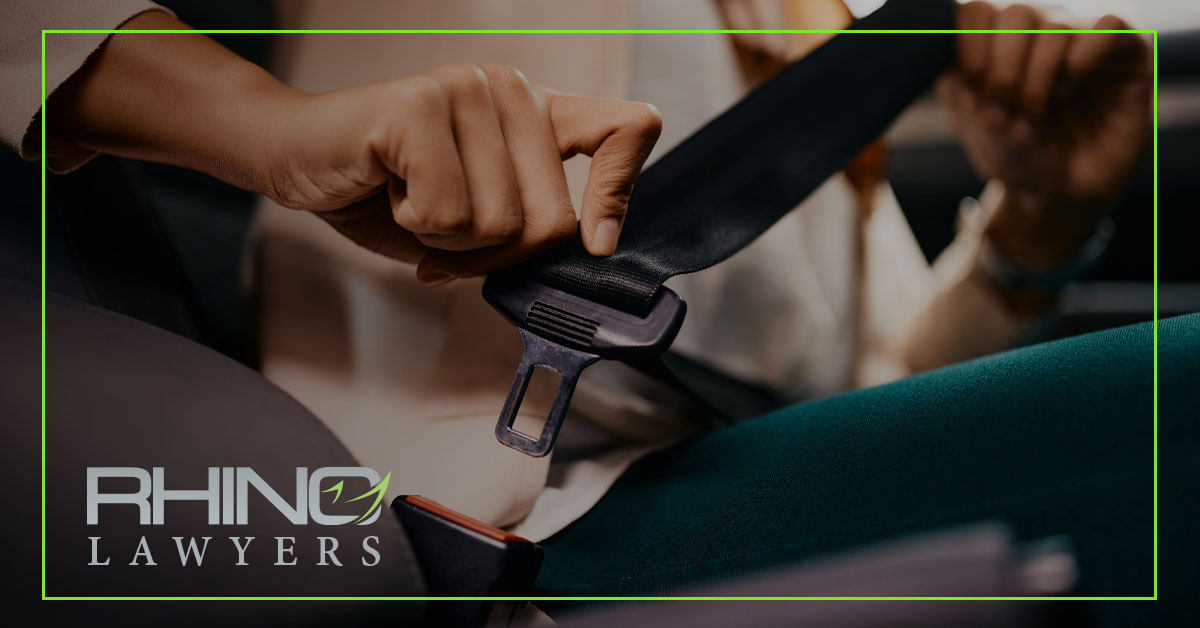
You wore your seat belt. So why were your injuries so severe?
Seat belts and vehicle seats are designed to protect you during a collision. Most of the time, they do.
But when a seat belt unlatches unexpectedly, a seatback collapses, or another safety system fails, the injuries from an otherwise survivable crash can become far more serious.
These cases are different from typical car accident claims.
Instead of focusing only on what caused the collision, investigators also examine whether a defect in the vehicle’s safety systems made the injuries worse than they should have been.
This is known as a crashworthiness claim.
If you’ve suffered severe injuries after a Florida crash and believe a defective seat belt or vehicle seat contributed to the outcome, you may have claims against both the at-fault driver and the vehicle or component manufacturer.
At RHINO Lawyers, we help injury victims across Florida investigate complex accidents involving vehicle defects, product liability, and catastrophic injuries.
What Is Crashworthiness?
Crashworthiness refers to a vehicle’s ability to protect its occupants during a collision.
No vehicle can prevent every accident.
However, manufacturers are expected to design cars with safety systems that reduce the risk of serious injury when a crash occurs.
These safety systems include:
- Seat belts
- Vehicle seats
- Airbags
- Head restraints
- Roof structures
- Door latches
- Interior padding
When one of these systems fails during a collision, the injuries may be far worse than the crash alone would have caused.
These cases are sometimes called enhanced injury claims because the defect doesn’t necessarily cause the collision—it increases the severity of the injuries afterward.
According to the National Highway Traffic Safety Administration (NHTSA), vehicle safety systems play a critical role in protecting occupants during crashes and are subject to federal safety standards.
Understanding the difference between what caused the accident and what caused the injuries is often one of the most important parts of a crashworthiness investigation.
Common Vehicle Safety Defects
A variety of vehicle defects can contribute to more serious injuries during a collision.
Some involve the seat belt itself.
Others involve the vehicle seat or surrounding safety systems.
Common examples include:
- Seat belt buckle failures
- Seat belt webbing is tearing
- Seat belt retractors failing to lock
- Seat belts unlatching during impact
- Collapsing seatbacks
- Broken seat tracks
- Defective head restraints
- Airbag deployment failures
- Roof crush defects
- Door latch failures
These defects may increase the risk of:
- Traumatic brain injuries
- Spinal cord injuries
- Neck injuries
- Internal organ damage
- Partial or complete ejection from the vehicle
- Wrongful death
In many cases, these failures are not obvious immediately after the accident.
A detailed inspection of the vehicle is often necessary to determine whether a vehicle safety defect contributed to the outcome.
Our Florida Car Accident Lawyer team works with experts to investigate crashes involving suspected vehicle defects.
When a Manufacturer May Be Liable
Not every severe injury is the result of a defective vehicle.
Sometimes, the force of the collision alone causes catastrophic injuries.
Other times, the crash may have been survivable if the vehicle’s safety systems had worked as intended.
That’s where product liability law may come into play.
A vehicle manufacturer may be liable if it designed, manufactured, or sold a vehicle with an unreasonable safety defect that increased the severity of the occupant’s injuries.
Examples may include:
- A seat belt that unlatches during impact
- A defective seatback that collapses in a rear-end collision
- A restraint system that fails to lock properly
- A vehicle seat that breaks away from its mounting points
- A safety component that does not meet applicable standards
In some cases, liability may also extend to:
- A seat belt manufacturer
- A parts supplier
- A vehicle distributor
- Another company involved in designing or producing the defective component
Florida follows a modified comparative fault system for most negligence and product liability claims. In a crashworthiness case, fault may be apportioned among the people or companies that contributed to the accident and the enhanced injuries. A claimant who is found more than 50% at fault for their own harm generally cannot recover damages under Florida Statute § 768.81.
A crashworthiness claim doesn’t replace your claim against the at-fault driver.
Instead, it may provide an additional path to compensation if a safety defect made your injuries significantly worse.
Preserving the Vehicle as Evidence
If you suspect a seat belt or vehicle defect contributed to your injuries, preserving the vehicle is extremely important.
Repairs, salvage, or disposal can destroy evidence that engineers need to inspect.
If possible:
- Do not authorize repairs immediately.
- Keep the vehicle in its post-crash condition.
- Photograph the interior and exterior from multiple angles.
- Take close-up photos of the seat belt, buckle, seat, airbags, and dashboard.
- Preserve any loose or broken vehicle parts.
- Save towing, storage, and repair records.
- Keep your purchase records and maintenance history if available.
Experts may later inspect the vehicle to determine:
- Whether the seat belt functioned properly
- If the restraint system locked as designed
- Whether the seat collapsed during impact
- If the airbags deployed correctly
- Whether another safety component failed
This investigation often includes reviewing crash data, vehicle damage, and the severity of the occupant’s injuries.
The sooner evidence is preserved, the greater the opportunity to determine whether a seat belt failure accident or a defective car seat lawsuit may be supported by the facts.
Our Florida Personal Injury Attorneys can help protect critical evidence before it’s altered or lost.
Can You Pursue Multiple Claims?
Yes. One of the unique aspects of a crashworthiness case is that you may have claims against more than one party.
For example, another driver’s negligence may have caused the collision.
A defective seat belt or vehicle seat may have made your injuries far worse.
Both can be legally significant.
Depending on the facts, you may have claims involving:
- The at-fault driver
- The driver’s insurance company
- The vehicle manufacturer
- A seat belt manufacturer
- A parts supplier
- Another company involved in the vehicle’s design or production
Each claim focuses on a different question. The negligence claim asks:
Who caused the crash?
The product liability claim asks:
Why were the injuries more severe than they should have been?
These claims often proceed at the same time while relying on different types of evidence.
Medical experts may explain how the injuries occurred.
Engineers may analyze whether the restraint system failed.
Accident reconstruction specialists may determine how the forces of the collision affected the occupants.
Together, that evidence helps establish whether the vehicle’s safety systems performed as they were intended—or whether a defect contributed to your injuries.
Because these cases can involve multiple insurance companies, manufacturers, and technical experts, it’s important to conduct a thorough investigation before important evidence disappears.
You can learn more about your rights after a serious collision by visiting our Car Accident FAQs.
Frequently Asked Questions
What is a crashworthiness claim?
A crashworthiness claim alleges that a defect in a vehicle’s safety systems made your injuries worse during an otherwise survivable crash.
Can I sue both the at-fault driver and the vehicle manufacturer?
Possibly. If another driver’s negligence caused the collision and a vehicle defect increased your injuries, you may have claims against both parties.
What if my seat belt were fastened?
Wearing your seat belt does not prevent a claim. If the restraint system failed during the crash, the manufacturer may still be responsible for enhanced injuries.
What types of seat belt defects can cause serious injuries?
Examples include buckle failures, retractors that fail to lock, torn webbing, accidental unlatching, and defective anchor points.
Should I keep the vehicle after the crash?
Yes, if possible. Preserving the vehicle in its post-crash condition allows experts to inspect the seat belts, seats, airbags, and other safety systems before repairs or disposal destroy valuable evidence.
How do investigators determine whether a defect existed?
They may inspect the vehicle, review crash data, analyze engineering evidence, examine recall information, and evaluate how the restraint systems performed during the collision.
Can a recalled vehicle support my case?
A recall may be relevant, but it does not automatically establish liability. Every claim depends on the specific facts, evidence, and nature of the defect.
How long do I have to file a product liability claim in Florida?
The applicable deadline depends on the facts of your case and Florida law. Speaking with an attorney promptly can help preserve your legal rights and critical evidence.
A Vehicle Should Protect You When It Matters Most
Seat belts and vehicle seats are designed to reduce the risk of serious injury—not make a crash more dangerous. When those safety systems fail, the consequences can be life-changing.
If you’ve been injured in a Florida accident and believe a defective seat belt, collapsing seat, or other vehicle safety defect made your injuries worse, don’t assume the at-fault driver is your only avenue for compensation. A crashworthiness investigation may reveal additional claims against the manufacturer or other responsible parties.
Sometimes the crash isn’t the only cause of your injuries. Call RHINO Lawyers at 844.RHINO.77 for a free consultation. We’re available 24/7, and there’s no fee unless we win.
CONTACT A TAMPA AUTO ACCIDENT ATTORNEY
In short, after a car accident, you may not know your rights. Above all, don’t struggle through the process alone. Actually, our personal injury team is here to help you with any legal needs you might have regarding your accident.
Lastly, let RHINO Lawyers answer your questions and review the facts of your case with a Free Consultation. So, get started by completing the “Free Instant Case Evaluation” or by calling us any time, day or night, at 844.RHINO.77.