

What Happens If You Delay Medical Treatment After a Florida Car Accident?
Could that decision cost you your entire claim?
If you’ve experienced delayed medical treatment after a crash, you’re not alone. Many injured drivers across Florida—from Tampa to Orlando to Fort Myers—wait hours, days, or even weeks before seeing a doctor. But here’s the reality: under Florida law, the PIP 14-day rule can directly impact whether your medical bills are covered and whether your injury claim remains viable.
That one decision—to “wait and see”—may give insurance companies exactly what they need to challenge your case.
En RHINO Lawyers, we’ve seen strong cases weakened simply because treatment was delayed. But we’ve also helped clients recover even after waiting longer than they should have.
Let’s break down what really happens—and what you can still do next.
Florida’s 14-Day PIP Rule — What You MUST Know
Florida’s no-fault insurance system requires drivers to carry Personal Injury Protection (PIP). You can review the official requirements through the Seguridad en Carreteras y Vehículos Motorizados de Florida.
But here’s where many claims fall apart.
Why Timing Matters
Under Florida law, you must seek medical treatment within 14 days of your car accident to qualify for PIP benefits.
That means:
- Emergency room visits count
- Urgent care visits count
- Chiropractor visits count
- Primary care visits count
If you wait beyond 14 days, your PIP coverage may not apply at all.
And that’s a major problem.
Because PIP typically covers:
- 80% of medical bills
- 60% de salarios perdidos
Without it, you may be responsible for those costs out of pocket.
What Happens If You Miss It
If you fail to seek treatment within the 14-day window, insurance companies may:
- Deny PIP benefits entirely
- Argue your injuries are unrelated to the crash
- Refuse to pay medical bills
Even if you were actually injured.
That’s how strict the rule is.
And once that deadline passes, it cannot be undone.
How Delayed Treatment Hurts Your Claim
Insurance companies look for gaps.
And delayed medical treatment creates one of the biggest gaps possible.
Insurance Arguments You May Face
If you waited to seek care, insurers may argue:
- “You weren’t really hurt.”
- “Your injuries came from something else.”
- “If it was serious, you would have gone immediately.”
These arguments are common—and they are effective if not properly addressed.
The “You Weren’t Injured” Defense
One of the most damaging narratives insurers use is simple:
If you didn’t seek treatment right away, you must not have been injured.
But that ignores reality.
Many injuries—especially soft tissue injuries, concussions, and spinal issues—don’t fully appear until hours or days later.
Según el Administración Nacional de Seguridad del Tráfico en las Carreteras, symptoms from crash-related injuries may be delayed depending on the nature of the impact.
Still, insurance companies often rely on timing to question credibility.
And credibility affects value.
Common Reasons People Delay Care
If you waited, you’re not alone.
There are real reasons why people delay treatment after a crash.
Adrenaline Masks Pain
Immediately after a crash, your body releases adrenaline.
That can:
- Reduce pain temporarily
- Make injuries feel minor
- Delay symptoms for hours or days
You might walk away thinking you’re fine—only to wake up the next day in serious pain.
Cost Concerns
Many drivers worry about:
- Emergency room bills
- Insurance deductibles
- Time off work
So they wait.
Unfortunately, waiting may make the financial situation worse if PIP coverage is lost.
Underestimating Injuries
Some injuries start small.
- Rigidez en el cuello
- Mild headaches
- Soreness
But those symptoms may evolve into:
- Hernias discales
- Chronic pain
- Neurological issues
Delaying care allows insurers to argue that the injury worsened for reasons unrelated to the crash.
¿Aún puedes obtener una indemnización?
Missing the 14-day window does not automatically mean your case is over.
But it does make things more difficult.
When It May Still Be Possible
You may still have a viable claim if:
- You eventually sought treatment and documented symptoms
- There is clear medical evidence linking the injury to the crash
- Another driver was clearly at fault
- You meet Florida’s serious injury threshold
Florida law allows claims beyond PIP in certain situations, especially when serious injuries are involved. You can review Florida’s serious injury standard under Florida Statute § 627.737.
What Evidence Helps
If treatment was delayed, stronger evidence is needed.
Eso puede incluir:
- Medical records documenting the progression of symptoms
- Imaging studies (MRI, CT scans)
- Physicians’ opinions linking injury to the crash
- Accident reports
- Declaraciones de testigos
Trabajando con un Abogado de accidentes automovilísticos en Florida may help build a stronger case despite early delays.
Because once the timeline is questioned, evidence becomes everything.
What To Do If You Waited Too Long
If you delayed care, the next steps matter even more.
Busque atención médica de inmediato
Even if it has been weeks, get evaluated.
Document:
- Current symptoms
- Niveles de dolor
- Functional limitations
The longer you wait, the harder it becomes to connect your injury to the crash.
Be Honest With Your Doctor
Tell your doctor:
- When the crash occurred
- When symptoms began
- Why was the treatment delayed
La constancia importa.
Avoid Insurance Statements Without Guidance
Insurance companies may ask:
- Why didn’t you seek care sooner?
- When did symptoms begin?
Answering incorrectly—or incompletely—may harm your claim.
Before providing recorded statements, consider speaking with experienced Florida Abogados de lesiones personales.
Build a Clear Timeline
Your case may depend on showing:
- When symptoms appeared
- How they progressed
- When treatment began
A clear timeline can help counter insurance arguments.
Preguntas frecuentes
- What is the PIP 14-day rule in Florida?
You must seek medical treatment within 14 days of a crash to qualify for PIP benefits.
- What happens if I wait more than 14 days?
You may lose access to PIP coverage, which could affect payment for medical bills and lost wages.
- Can I still file a claim if I delayed medical treatment?
Possibly. You may still pursue compensation depending on the severity of your injuries and available evidence.
- Why do insurance companies care about treatment timing?
They use delays to argue that injuries were not caused by the crash.
- What if my symptoms didn’t appear right away?
Delayed symptoms are common, but documentation becomes critical to support your claim.
- Should I talk to insurance before seeing a lawyer?
It may be helpful to understand your rights before providing recorded statements.
- What kind of injuries are often delayed?
Soft tissue injuries, concussions, and spinal injuries often develop symptoms over time.
- Can I recover pain and suffering if I missed the 14-day window?
In some cases, yes—especially if your injury meets Florida’s serious injury threshold.
For more information, visit our Preguntas frecuentes sobre accidentes automovilísticos página.
Delayed Medical Treatment, Too Long? You May Still Have Options
Waited too long to see a doctor? You may still have options.
Delayed medical treatment does not automatically end your case—but it does make it more challenging. Insurance companies will look for gaps. They will question timing. They will try to minimize your injuries.
But with the right strategy, documentation, and guidance, it may still be possible to pursue compensation.
If you were injured in a crash, call RHINO Lawyers en 844.RHINO.77 for a free consultation. We are available 24/7, and there is no fee unless we win.
COMUNÍQUESE CON UN ABOGADO DE ACCIDENTES AUTOMOVILÍSTICOS EN TAMPA
En resumen, después de un accidente automovilístico, es posible que no conozca sus derechos. Sobre todo, no luche solo durante el proceso. En realidad, nuestro equipo de lesiones personales está aquí para ayudarle con cualquier necesidad legal que pueda tener relacionada con su accidente.
Por último, que RHINO Lawyers responda a sus preguntas y revise los hechos de su caso con una consulta gratuita. Así que comience completando el “Evaluación de caso instantánea y gratuita”o llamándonos en cualquier momento, día o noche, al 844.RHINO.77.
Leer más
High BAC DUI in Florida: What Changes If You Blow Over .15?
Think it’s “just a DUI”?
Not exactly.
Under Florida law, a breath result of .15 or higher is not treated the same as a standard DUI. A high BAC DUI Florida charge carries enhanced penalties, longer ignition interlock requirements, and increased financial consequences.
Many drivers are shocked to learn that crossing the .15 threshold automatically raises the stakes — even for a first offense.
Across Hillsborough, Pinellas, Polk, Pasco, and throughout West Florida, courts treat elevated blood alcohol concentration results differently. The penalties increase. The leverage shifts. The risks grow.
Understanding what changes — and what does not — is critical.
What Is Considered a “High BAC” in Florida?
Florida’s legal limit for most drivers is .08. That is the number most people recognize.
However, Florida Statute §316.193 creates enhanced penalties when a driver’s breath or blood alcohol level measures .15 or higher.
The full statute outlining DUI penalties can be reviewed directly in the text of Estatuto de Florida 316.193.
Legal Limit Explanation
For drivers over 21 operating non-commercial vehicles, .08 is the legal limit.
Commercial drivers face a lower threshold of .04.
Drivers under 21 are subject to zero-tolerance administrative penalties beginning at .02.
A result above .08 supports a DUI charge.
A result above .15 enhances it.
The .15 Threshold
The .15 number is not random.
Florida law identifies it as an aggravating factor. If the breath test shows .15 or more — or if a minor was in the vehicle — enhanced penalties apply.
That means even a first-time DUI with a .16 reading can carry stricter consequences than a .09.
Why It Matters
Crossing that line can trigger:
- Higher mandatory fines
- Longer ignition interlock requirements
- Greater potential jail exposure
Insurance carriers also view higher BAC cases as elevated risk.
The difference between .14 and .15 may look small on paper.
In court, it is not.
Enhanced Penalties for DUI Over .15
Florida separates DUI penalties into standard and enhanced categories.
When BAC measures .15 or greater, additional consequences apply.
Increased Fines
For a first DUI conviction:
- Standard fine range: $500–$1,000
- High BAC fine range: $1,000–$2,000
Second offenses and beyond increase significantly.
Financial penalties are only the beginning.
Longer Ignition Interlock Requirements
For a first offense involving .15 or higher, Florida requires a mandatory ignition interlock device (IID) for at least six months.
Ignition interlock requirements are explained by the Florida Department of Highway Safety and Motor Vehicles on its ignition interlock program page.
Without a high BAC finding, a first-time DUI does not automatically require interlock installation.
That is a major distinction.
Possible Jail Exposure
Although first-time DUI jail exposure can be up to six months, enhanced cases allow courts to impose up to nine months in jail.
Actual sentences vary depending on facts, criminal history, and negotiation outcomes.
Still, the statutory maximum increases.
That changes the leverage in plea discussions.
Does a High BAC Automatically Mean Conviction?
No.
A high reading strengthens the state’s position — but it does not eliminate defenses.
Evidence Challenges
Breath testing devices must be properly maintained and calibrated.
Maintenance logs, inspection records, and operator certifications matter.
Errors in procedure can impact admissibility.
Testing Reliability
Breath results are not infallible.
Factors that may influence readings include:
- Medical conditions
- Residual mouth alcohol
- Improper observation periods
- Machine calibration issues
The Florida Administrative Code sets detailed requirements for breath testing procedures, which can be reviewed through the state’s breath alcohol testing program guidelines.
When procedures are not followed precisely, challenges may arise.
Field Sobriety Test Issues
High BAC cases often include field sobriety exercises captured on body camera or dashcam video.
Performance on those exercises can be subjective.
Environmental factors — uneven pavement, poor lighting, and medical limitations — may affect results.
A number on a machine does not tell the entire story.
Ignition Interlock — What You Need to Know
An ignition interlock device requires the driver to provide a breath sample before the vehicle will start.
For high BAC DUI Florida cases, installation is mandatory upon conviction for a minimum period.
Duration Requirements
- First offense over .15: Minimum 6 months
- Second offense over .15: Minimum 2 years
Judges may impose longer periods depending on circumstances.
Installation Costs
Drivers are responsible for:
- Installation fees
- Monthly monitoring costs
- Calibration appointments
Costs vary by provider but typically range from $70–$150 per month, plus installation.
Who Pays?
The driver.
Florida does not subsidize interlock costs except in limited hardship situations.
Financial strain often becomes part of the overall consequence picture.
Seguro y consecuencias a largo plazo
A high BAC conviction impacts more than court fines.
FR-44 Requirements
After a DUI conviction, Florida requires an FR-44 certificate of financial responsibility.
FR-44 insurance requires significantly higher liability coverage limits than standard policies.
The state outlines financial responsibility requirements on its financial responsibility law page.
Premiums often double or triple.
For high BAC cases, insurers may classify the driver as high risk for years.
Premium Increases
In Florida’s already expensive insurance market, DUI convictions frequently lead to dramatic premium spikes.
A .15 reading can make underwriting more difficult.
Long-term financial impact can exceed the original fine many times over.
License Points vs. Suspension
DUI convictions do not operate through the normal point system.
Instead, they trigger mandatory license suspension periods.
For a first DUI conviction, administrative and court-ordered suspensions apply separately.
Understanding how those timelines interact is important, especially for drivers who previously faced issues under the Florida DUI administrative suspension process.
Suspension is not about points.
It is about privilege.
Can a High BAC DUI Be Reduced?
Every case depends on its facts.
Negotiations may consider:
- Strength of breath evidence
- Legality of the traffic stop
- Officer testimony credibility
- Video evidence consistency
- Prior criminal history
First-Time vs. Repeat Offenses
First-time offenders often face different negotiation dynamics than repeat offenders.
Repeat DUI charges carry escalating penalties, including longer interlock periods and potential felony exposure.
A high BAC reading increases pressure in both scenarios.
That does not mean outcomes are predetermined.
It means strategy matters.
For drivers facing DUI or other criminal traffic allegations in West Florida, our broader overview of how these cases move through local courts provides additional context in our criminal traffic defense resource center.
Preparation shapes positioning.
Frequently Asked Questions About High BAC DUI Charges in Florida
What qualifies as a high BAC DUI charge in Florida?
A breath or blood alcohol result of .15 or higher qualifies as enhanced under Florida law.
Are penalties automatically worse over .15?
Yes. Statutory fines increase, and ignition interlock installation becomes mandatory for first-time convictions.
Does .15 mean I will go to jail?
Not automatically. Jail exposure increases under the statute, but sentencing depends on case-specific factors.
Is ignition interlock required for every DUI?
No. It is mandatory for first-time convictions only when BAC is .15 or higher, or when a minor was present in the vehicle.
Can breath test results be challenged?
Yes. Maintenance records, calibration issues, and procedural compliance may be reviewed.
How long will FR-44 insurance be required?
Typically, for three years following reinstatement.
Does a high BAC affect plea negotiations?
It can. Prosecutors may treat enhanced cases differently due to statutory penalty increases.
Is this considered a felony?
A first DUI over .15 is still a misdemeanor, unless additional factors apply. Repeat offenses or serious injury can elevate charges.
The Stakes Rise Quickly
A high BAC charge raises the stakes. Fast.
Enhanced fines. Mandatory ignition interlock. Increased jail exposure. Higher insurance requirements.
The difference between .14 and .15 may seem small.
Under Florida law, it is significant.
If police arrested you for DUI in Hillsborough, Pinellas, Polk, Pasco, or surrounding West Florida counties and your breath test measured .15 or higher, don’t assume the outcome is automatic.
Llamar (844) RHINO-77 para una consulta gratuita. RHINO Lawyers defends DUI and criminal traffic cases across West Florida and can explain how enhanced penalties may apply to your specific situation so you can make informed decisions about your next steps.
CONTACTE A UN ABOGADO DE MULTAS DE TRÁFICO EN TAMPA
RHINO Lawyers puede ayudar y guiarlo a través de un sistema moldeado por las fuerzas del orden, jueces y abogados durante décadas. Habiendo ganado casos para nuestros clientes en circunstancias similares, nuestro equipo de defensa penal sabe lo que se necesita para luchar en tu nombre.
Permitir RHINO Lawyers responda a sus preguntas y revise los hechos de su caso con una consulta gratuita. Así que comience completando el “Evaluación de caso instantánea y gratuita”o llamándonos en cualquier momento, día o noche, al (844) RHINO-77.
Leer más
Injured Driving a Work Vehicle? Here’s What Florida Law Says
Driving a company car when the crash happened?
Si usted resultó herido en un company vehicle accident in Florida while on the job, your situation may be more complex than a typical crash. A work car accident claim can involve multiple insurance policies, workers’ compensation rules, employer liability questions, and Florida’s comparative negligence laws.
Were you delivering packages in Tampa? Driving between job sites in Orlando? Heading to a client meeting in Fort Myers? Using a company truck in Clearwater or Lakeland?
When a crash happens in a work vehicle, the legal path forward depends on several factors.
Who owns the vehicle?
Were you on the clock?
Was another driver involved?
Does workers’ compensation apply?
En RHINO Lawyers, we help injured Floridians untangle these layered claims every day. Here’s what Florida law says about work-related vehicle crashes — and how to protect your rights.
Company Vehicle vs. Personal Vehicle — Why It Matters
The first question in a company vehicle accident in Florida case is simple:
Who owns the vehicle?
But the legal implications are not simple at all.
Ownership Issues
If you were driving:
- A company-owned car
- A commercial truck
- A fleet vehicle
- A branded service van
… your employer likely carries commercial auto insurance.
If you were driving your personal car for work purposes — such as running errands for your employer — different insurance layers may apply.
Ownership affects:
- Which insurance policy responds first
- Whether workers’ compensation applies
- Whether your employer may bear responsibility
Even rideshare drivers and delivery contractors may face unique classification issues depending on employment status.
The details matter.
Insurance Policy Layers
In many work-related crashes, multiple policies may be involved:
- Your employer’s commercial auto policy
- Your own personal auto policy
- Workers’ compensation coverage
- La cobertura de responsabilidad civil del conductor culpable
- Potential umbrella policies
Commercial auto policies often carry higher limits than personal policies. That can be important in serious injury cases.
Understanding policy layers early in a work car accident claim helps avoid costly missteps.
Working with an experienced Abogado de accidentes automovilísticos en Florida may help ensure all applicable coverage is identified and preserved.
Does Workers’ Compensation Apply To A company vehicle accident?
Many people assume that if they are injured while working, workers’ compensation is the only remedy.
That is not always true.
The On-the-Job Requirement
Under Florida law, workers’ compensation generally covers injuries that occur “in the course and scope of employment.”
If you were:
- Making deliveries in Hillsborough County
- Driving between job sites in Polk County
- Performing a service call in Sarasota
- Traveling to a client meeting in Orlando
… you may qualify for workers’ compensation benefits.
Workers’ compensation may cover:
- Medical treatment
- Partial wage replacement
- Disability benefits
You can review Florida’s workers’ compensation framework through the Florida Division of Workers’ Compensation.
But workers’ comp does not cover pain and suffering.
That distinction is critical.
The Commuting Rule — And Exceptions
Generally, injuries sustained while commuting to and from work are not covered by workers’ compensation. This is known as the “going and coming rule.”
However, exceptions may apply if:
- You were running a work errand
- You were traveling between job sites
- You were on a special assignment
- You were required to use a company vehicle for work purposes
If you were driving a company car home after completing deliveries in Tampa, the facts may determine whether workers’ comp applies.
Gray areas are common.
And they require careful evaluation.
Can You File a Personal Injury Claim Too?
Here’s where many work vehicle cases become layered.
Workers’ compensation may not be your only option.
Third-Party Drivers
If another driver caused the crash — for example:
- A distracted driver in Clearwater rear-ended you
- A speeding driver in Fort Myers ran a red light
- A drunk driver in Orlando sideswiped your company truck
… you may be able to file a third-party personal injury claim against that driver.
This is separate from workers’ compensation.
A third-party claim may allow you to pursue:
- Dolor y sufrimiento
- Full wage loss
- Future earning capacity
- Pérdida del disfrute de la vida
These damages are not available through workers’ comp alone.
Employer Liability
In some situations, employer negligence may play a role.
Por ejemplo:
- Failure to maintain company vehicles
- Unsafe scheduling practices
- Inadequate driver training
- Encouraging unsafe driving behavior
Employer liability depends on the specific facts.
Florida also follows a comparative negligence system under § 768.81. You can review the statute through the Florida Senate website.
If multiple parties share fault, compensation may be reduced by your percentage of responsibility.
Comparative Fault
Even in a company vehicle accident in Florida, you may be assigned a percentage of fault.
Por ejemplo:
- Allegations of speeding
- Conducción distorsionada
- No ceder el paso
Under Florida’s modified comparative negligence rule, recovery may be reduced by your percentage of fault — and barred if you are more than 50% responsible.
These cases require strategic evaluation.
Consulting experienced Abogados de lesiones personales en Florida can help clarify how fault may affect your recovery.
What Insurance Coverage May Be Involved?
Work vehicle crashes often trigger multiple layers of coverage.
Understanding those layers can significantly impact your compensation.
Commercial Auto Policies
Most employers carry commercial auto insurance covering company-owned vehicles.
These policies often provide:
- Higher liability limits
- Coverage for employee drivers
- Protection for third-party claims
Commercial carriers may aggressively investigate claims.
La preparación importa.
Umbrella Policies
Some businesses carry umbrella policies that provide additional coverage above standard policy limits.
In serious crashes involving catastrophic injuries, umbrella coverage can be critical.
Personal Auto Exclusions
If you were using your personal vehicle for work purposes, your personal auto insurer may attempt to deny coverage under a “business use” exclusion.
These disputes are common in delivery, gig economy, and sales roles.
Insurance policy language matters.
So does timing.
Steps to Protect Your Rights After a company vehicle accident
The moments after a crash in a company vehicle are overwhelming.
But what you do next can significantly impact your claim.
Report the Incident Immediately
Notify:
- Law enforcement
- Your employer
- Your insurance carrier (if required)
Ensure an official crash report is created. You can access Florida crash report information through the Seguridad en Carreteras y Vehículos Motorizados de Florida sitio web.
Delays in reporting can create credibility issues.
Seek Medical Treatment Promptly
Under Florida’s PIP rules, you generally must seek treatment within 14 days to preserve certain benefits.
Even in a work-related crash, prompt medical documentation is critical.
Symptoms sometimes worsen days later.
Do not ignore pain.
Avoid Recorded Statements Without Guidance
Insurance adjusters — whether commercial carriers or third-party insurers — may request recorded statements quickly.
You are not required to provide a recorded statement without understanding your rights.
Statements given too early may:
- Lock you into incomplete facts
- Overlook injuries that worsen later
- Be used to assign fault
Before speaking on the record, consider consulting a professional who understands layered work car accident claim cases.
Preguntas frecuentes
- If I were driving a company car and got hurt, do I only have a workers’ comp claim?
Not necessarily. If another driver caused the crash, you may also pursue a third-party personal injury claim.
- What if I was partially at fault?
Florida’s comparative negligence rules may reduce your recovery based on your percentage of fault.
- Does it matter whether I was on the clock?
Yes. Workers’ compensation eligibility often depends on whether you were acting within the course and scope of employment.
- What if I were commuting home in a company vehicle?
The “going and coming rule” may apply, but exceptions exist depending on work duties and employer requirements.
- Can I recover pain and suffering in a company vehicle accident?
Workers’ compensation does not cover pain and suffering. However, a third-party claim against an at-fault driver may allow recovery of non-economic damages.
- What if my employer’s insurance denies responsibility?
Coverage disputes are common in commercial policy cases. Reviewing the policy language is critical.
- What should I do if multiple insurance companies are involved?
Layered claims require careful coordination. Providing inconsistent statements to different insurers can complicate your case.
- How long do I have to file a claim in Florida?
Deadlines vary depending on the type of claim. Acting promptly helps preserve evidence and protect your rights.
For additional answers about accident claims in Florida, visit our Preguntas frecuentes sobre accidentes automovilísticos.
Injured in a company vehicle accident? You May Have More Options Than You Think.
From delivery drivers in Tampa to service technicians in Orlando and construction workers in Fort Myers, a company vehicle accident in Florida may involve more than one path to compensation.
Workers’ compensation may apply.
A third-party claim may apply.
Commercial insurance policies may apply.
Each layer matters.
Do not assume you only have one option.
If you were injured driving a work vehicle, call RHINO Lawyers en 844.RHINO.77 for a free consultation. We are available 24/7, and there is no fee unless we win. From fender-benders to serious crashes, RHINO Lawyers delivers HUGE RESULTS.
COMUNÍQUESE CON UN ABOGADO DE ACCIDENTES AUTOMOVILÍSTICOS EN TAMPA
En resumen, después de un accidente automovilístico, es posible que no conozca sus derechos. Sobre todo, no luche solo durante el proceso. En realidad, nuestro equipo de lesiones personales está aquí para ayudarle con cualquier necesidad legal que pueda tener relacionada con su accidente.
Por último, que RHINO Lawyers responda a sus preguntas y revise los hechos de su caso con una consulta gratuita. Así que comience completando el “Evaluación de caso instantánea y gratuita”o llamándonos en cualquier momento, día o noche, al 844.RHINO.77.
Leer más
When Is a Car Accident Considered “Serious” Under Florida Law?
Does your injury qualify as “serious” in Florida?
If you were hurt in a crash and are wondering whether your injuries meet the serious injury threshold Florida law requires, you are not alone. Florida’s no-fault system limits when you can step outside Personal Injury Protection (PIP) coverage and pursue full compensation. To recover certain damages, your injury must meet the legal definition of a permanent injury that Florida law recognizes.
That definition is not always obvious.
You may be in pain. You may be missing work. Or you may need ongoing treatment.
But does your injury qualify as “serious” under Florida law?
Here’s what you need to know.
Florida’s No-Fault Insurance System Explained
Florida operates under a no-fault insurance system. That means your own insurance typically pays for your initial medical expenses, regardless of who caused the crash.
PIP Basics
Every Florida driver is required to carry at least $10,000 in Personal Injury Protection (PIP) coverage. You can review Florida’s insurance requirements directly through the Seguridad en Carreteras y Vehículos Motorizados de Florida sitio web.
PIP generally covers:
- 80% of reasonable medical expenses
- 60% de salarios perdidos
- Certain replacement services
But there are limits.
The $10,000 Cap
The maximum PIP benefit is typically $10,000.
However, if your injury is not classified as an “emergency medical condition,” benefits may be capped at $2,500.
In many serious crashes in Tampa, Clearwater, Orlando, Lakeland, Sarasota, or Fort Myers, $10,000 is exhausted quickly. Ambulance transport alone can cost thousands. Imaging, specialist visits, and therapy add up fast.
Once PIP is exhausted, what happens next?
Why Lawsuits Aren’t Automatic
Under Florida’s no-fault system, you cannot automatically sue the at-fault driver for pain and suffering after every crash.
To step outside the no-fault system and pursue non-economic damages, your injury must meet Florida’s serious injury threshold.
That threshold determines whether you can seek compensation beyond basic PIP coverage.
And that is where many cases turn.
What Is the “Serious Injury Threshold”?
Florida law defines when an injury is legally “serious” enough to allow a claim for pain and suffering and other non-economic damages.
The standard appears in Florida Statutes § 627.737, which you can review through the Florida Senate’s official website.
Under this statute, you must show one of the following:
1. Significant and Permanent Loss of an Important Bodily Function
This includes loss of function in areas such as:
- Mobility
- Range of motion
- Strength
- Sensation
Por ejemplo:
- Permanent nerve damage affecting arm function
- Chronic spinal limitations restricting movement
- Loss of normal use of a shoulder or knee
The loss must be both significant and permanent.
Temporary pain alone is usually not enough.
2. Permanent Injury Within a Reasonable Degree of Medical Probability
This is the most common category in Florida car accident cases.
A doctor must testify that your injury is permanent within a reasonable degree of medical probability.
That does not mean you must be completely disabled.
It means medical evidence supports that your condition will not fully resolve.
Examples may include:
- Herniated discs with ongoing symptoms
- Chronic neck or back pain with lasting limitations
- Permanent soft tissue injuries
- Long-term cognitive symptoms after a concussion
This is where medical documentation becomes critical.
3. Significant and Permanent Scarring or Disfigurement
Visible scars or disfigurement that are significant and permanent may qualify.
Por ejemplo:
- Facial scarring
- Severe burn marks
- Permanent surgical scars
- Disfigurement from fractures
The focus is on both permanence and impact.
4. Death
In fatal crashes, surviving family members may pursue a wrongful death claim under Florida law.
The serious injury threshold is automatically satisfied in these cases.
Medical Evidence Needed to Prove Serious Injury
Meeting the serious injury threshold, Florida law requires more than personal testimony.
It requires medical proof.
Doctor Testimony
A physician must state that your injury is permanent within a reasonable degree of medical probability.
This language matters.
Insurance companies often challenge permanence unless clearly supported by medical records and physician opinions.
Working with an experienced Abogado de accidentes automovilísticos en Florida can help ensure the necessary documentation is properly developed and presented.
Imaging Studies
Objective evidence strengthens serious injury claims.
Common examples include:
- MRI showing herniated discs
- CT scans confirming fractures
- EMG studies documenting nerve damage
- X-rays demonstrating structural changes
Imaging alone does not prove seriousness. But combined with symptoms and physician opinions, it can be powerful.
Long-Term Prognosis
A doctor may document:
- Ongoing pain
- Permanent range-of-motion restrictions
- Need for future injections
- Potential surgical intervention
- Chronic headaches or neurological symptoms
Long-term prognosis often determines whether an injury meets the legal threshold.
Why This Threshold Matters for Pain and Suffering
The serious injury threshold directly impacts the types of damages you may pursue.
Economic vs. Non-Economic Damages
Economic damages include:
- Gastos médicos
- Salarios caídos
- Future medical expenses
- Reduced earning capacity
These may be recoverable regardless of the threshold if another driver was negligent.
Non-economic damages include:
- Dolor y sufrimiento
- Sufrimiento emocional
- Pérdida del disfrute de la vida
- Mental anguish
To pursue non-economic damages, you must meet the serious injury threshold under Florida law.
That is why the threshold matters so much.
Settlement Leverage
When a case clearly meets the permanent injury Florida law standard, settlement negotiations often change.
Why?
Because exposure increases.
Insurance companies evaluate risk. If a jury could award significant pain and suffering damages, that would affect how claims are valued.
Clear documentation of permanence strengthens leverage.
Ambiguity weakens it.
What If the Insurance Company Disputes Severity?
It happens often.
Las compañías de seguros pueden argumentar:
- “The injury is temporary.”
- “It’s just soft tissue.”
- “The MRI shows degeneration, not trauma.”
- “You’ll recover fully.”
Disputing seriousness is a common defense strategy.
Independent Medical Exams (IMEs)
Insurers may require an Independent Medical Examination.
The examining physician may:
- Review your records
- Perform a brief evaluation
- Issue a report minimizing your injuries
IMEs can significantly impact serious injury disputes.
La preparación importa.
Defense Arguments
Common arguments include:
- Pre-existing degeneration
- Brechas en el tratamiento
- Minimal vehicle damage
- Inconsistent complaints
Even low-speed crashes can cause serious injury. According to the Administración Nacional de Seguridad del Tráfico en las Carreteras, crash forces and injury outcomes vary widely depending on vehicle design, impact angle, and occupant vulnerability.
Severity is not determined by bumper damage alone.
Importance of Documentation
Consistent treatment. Clear physician opinions. Detailed records.
These elements help counter defense arguments.
Working with experienced Abogados de lesiones personales en Florida may help ensure the threshold issue is properly addressed from the beginning.
Because once severity is questioned, the case often centers around that dispute.
Preguntas frecuentes
- What is the serious injury threshold in Florida?
It is the legal standard that determines whether you can pursue non-economic damages such as pain and suffering after a car accident.
- Do I automatically qualify if I have a herniated disc?
Not automatically. A doctor must determine that the injury is permanent within a reasonable degree of medical probability.
- Is surgery required to meet the threshold?
No. Surgery is not required. Permanent injuries can exist without surgical intervention.
- What if my injury improves over time?
If the injury fully resolves, it may not meet the permanence requirement. Medical opinions are key.
- Can soft tissue injuries qualify?
They can, if medical evidence supports that the condition is permanent.
- What if the insurance company says my injury isn’t serious?
Disputes are common. Medical documentation and legal advocacy play a significant role in resolving these disagreements.
- Does Florida’s no-fault system prevent lawsuits?
Not entirely. It limits when lawsuits for pain and suffering may be filed, based on the serious injury threshold.
- How long do I have to pursue a claim?
Time limits vary depending on case specifics. Acting promptly helps preserve evidence and protect your rights.
For additional information about accident claims, visit our Preguntas frecuentes sobre accidentes automovilísticos.
Injured? Make Sure Your Case Is Evaluated Properly.
From rear-end crashes in Tampa to intersection collisions in Orlando and highway accidents in Fort Myers, determining whether your injury meets the serious injury threshold Florida law requires can significantly impact your recovery.
You may be in real pain.
You may be facing mounting bills.
But unless the injury qualifies as serious under Florida’s legal definition, pain and suffering damages may not be available.
Do not assume. Get clarity.
If you were injured in a crash, call RHINO Lawyers en 844.RHINO.77 for a free consultation. We are available 24/7, and there is no fee unless we win. From fender-benders to serious crashes, RHINO Lawyers delivers HUGE RESULTS.
COMUNÍQUESE CON UN ABOGADO DE ACCIDENTES AUTOMOVILÍSTICOS EN TAMPA
En resumen, después de un accidente automovilístico, es posible que no conozca sus derechos. Sobre todo, no luche solo durante el proceso. En realidad, nuestro equipo de lesiones personales está aquí para ayudarle con cualquier necesidad legal que pueda tener relacionada con su accidente.
Por último, que RHINO Lawyers responda a sus preguntas y revise los hechos de su caso con una consulta gratuita. Así que comience completando el “Evaluación de caso instantánea y gratuita”o llamándonos en cualquier momento, día o noche, al 844.RHINO.77.
Leer más
DUI Arrest? Why the First 10 Days Matter More Than You Think
Did you know the clock starts ticking on your license before your court date is even scheduled?
Most drivers assume their DUI case begins at arraignment.
In reality, one of the most important deadlines hits long before you ever step inside a courtroom.
Under the 10 day DUI rule, Florida drivers face the first ten days after an arrest, which can determine whether you keep driving — or lose your license automatically.
Across Hillsborough, Pinellas, Polk, Pasco, and surrounding counties, many people miss this window simply because no one explained how the DUI administrative suspension in Florida procedures actually work.
That mistake can reshape your entire case.
What Is an Administrative DUI Suspension in Florida?
After a DUI arrest in Florida, two completely separate processes begin.
One process is criminal. The second is administrative.
Understanding the difference is critical.
Criminal Case vs. Administrative Action
The criminal case is handled in county court. It involves charges under Florida Statute §316.193 and focuses on whether the state can prove impairment beyond a reasonable doubt.
The administrative action, however, is handled by the Florida Department of Highway Safety and Motor Vehicles (FLHSMV). It concerns your driving privilege — not guilt or innocence.
These are separate tracks.
It is possible to win one and lose the other. In some cases, one matter resolves while the second continues moving forward.
The state explains administrative license suspensions through its Bureau of Administrative Reviews overview, which outlines how license actions are imposed after DUI arrests.
Why They Are Separate Processes
Florida law allows the state to suspend your license administratively if:
- You provided a breath or blood sample over .08, or
- You refused lawful testing
That suspension is triggered by the arrest itself.
The administrative process does not wait for your criminal court date.
It moves immediately.
Who Imposes the Suspension?
The arresting officer issues a DUI citation and confiscates your physical license.
FLHSMV then imposes the administrative suspension unless you take action within ten days.
That is where the 10 day DUI rule, which Florida drivers often overlook, becomes critical.
The 10-Day Deadline Most Drivers Miss
You have 10 days from the date of arrest to challenge the administrative suspension.
This is not ten business days. The deadline runs for ten calendar days.
What the 10-Day Window Means
Within those ten days, you must request a hearing with the Bureau of Administrative Reviews.
If you do not request a hearing, the suspension automatically takes effect after the temporary permit expires.
Waiting until your arraignment is too late.
Formal Review Hearing vs. Waiver Hearing
Florida offers two primary options:
- Formal Review Hearing
- Waiver Review (Hardship License) Hearing
Each choice carries strategic considerations.
A formal review hearing challenges the legality of the stop, arrest, and suspension.
A waiver hearing typically allows you to obtain a hardship license more quickly — but you give up the right to contest the administrative suspension.
The state outlines hardship eligibility requirements on its hardship license information page.
Choosing the right path depends on timing, evidence, and long-term goals.
What Happens If You Do Nothing
If no hearing is requested within ten days:
- The administrative suspension begins automatically
- You lose the opportunity to challenge the suspension
- Driving privileges become restricted or revoked
For many drivers in Tampa, Clearwater, Lakeland, and New Port Richey, missing this deadline creates immediate employment problems.
The window closes quickly.
What License Do You Have Immediately After Arrest?
When you are arrested for DUI, the officer typically issues a DUI citation that acts as a temporary driving permit.
DUI Citation as a Temporary Permit
That citation generally allows you to drive for 10 days after arrest.
That ten-day period is not random; it mirrors the same window you have to request a hearing.
How Long Does It Last
After the ten-day period:
- Requested a formal review hearing? Your driving privilege may be extended while you wait for the hearing.
- Choose a waiver hardship route? Eligibility typically depends on meeting program and compliance requirements.
- Took no action at all? The suspension usually takes effect when the temporary permit expires.
Timing matters.
Driving Limitations
If granted a hardship license, driving is typically limited to:
- Empleo
- School
- Religious purposes
- Medical necessities
Full driving privileges are not restored automatically.
Formal Review Hearing vs. Waiver — What’s the Difference?
This is where strategy enters the picture.
Formal Review Hearing
A formal review hearing allows you to challenge:
- Lawful basis for the stop and arrest, including probable cause
- Procedure compliance, such as required warnings and paperwork steps
- Breath testing reliability, including whether results are properly supported
- Refusal allegations, including whether the refusal was treated as lawful under the circumstances
During this hearing:
- The arresting officer may be subpoenaed
- Breath test technicians may testify
- Maintenance records for testing devices may be examined
These hearings can reveal weaknesses in the state’s case.
Testimony given at a formal review hearing can also become part of the criminal case strategy.
That crossover is important.
For drivers evaluating DUI defense options in Florida, our broader overview of how DUI and criminal traffic cases proceed through local courts provides helpful context in our Florida criminal traffic defense resource center.
Waiver Review Hearing
A waiver hearing typically focuses on obtaining a hardship license quickly.
However:
- You waive the right to challenge the administrative suspension.
- The suspension remains on your record.
- Evidence is not preserved through officer testimony.
The decision is not automatic.
It should be deliberate.
What Happens If You Win or Lose the Hearing?
Los resultados varían.
If You Win
If the administrative suspension is invalidated:
- Full driving privileges may be reinstated
- The administrative suspension is lifted
- The criminal case continues separately
A favorable ruling at the administrative level does not dismiss the DUI charge. However, it can protect your driving privileges while the criminal case proceeds.
If You Lose
If the suspension is upheld:
- The administrative suspension remains in place
- You may pursue hardship eligibility
- The criminal case proceeds
First-time DUI administrative suspensions typically last:
- 6 months for a breath test over .08
- 12 months for a refusal
Refusal suspensions carry additional long-term consequences.
Understanding those differences early can shape strategy.
Hardship License Considerations
Drivers who qualify for hardship privileges must:
- Enroll in DUI school
- Provide proof of enrollment
- Meet reinstatement conditions
The state’s DUI program requirements are described in detail on its DUI administrative suspension guidance page.
Delays in enrollment can delay eligibility.
Again, timing matters.
Counties Where This Frequently Happens
Administrative DUI suspensions occur statewide, but high-volume DUI arrests are common in:
Condado de Hillsborough
Tampa and the surrounding areas see frequent DUI enforcement, particularly on weekends and during major events.
Condado de Pinellas
Clearwater and St. Petersburg DUI checkpoints often lead to administrative suspensions.
Condado de Polk
Lakeland and Winter Haven roadways generate a significant number of DUI arrests annually.
Condado de Pasco
Growth in New Port Richey and Wesley Chapel has increased traffic enforcement activity.
No matter the county, the 10 day DUI rule of Florida law applies the same.
Frequently Asked Questions About Florida DUI Administrative Suspensions
What is the 10 day DUI rule Florida drivers must follow?
You have 10 calendar days from the date of arrest to request a hearing challenging the administrative suspension.
Is the administrative suspension separate from my DUI court case?
Yes. The license suspension is handled by FLHSMV, while the DUI charge proceeds in criminal court.
Can I drive after a DUI arrest?
Your DUI citation generally acts as a temporary permit for 10 days. After that, your status depends on whether you requested a hearing.
What happens if I refuse the breath test?
A refusal typically results in a 12-month administrative suspension for a first refusal.
Can I get a hardship license immediately?
You may qualify, but eligibility depends on the type of suspension and compliance with DUI school requirements.
Does winning the administrative hearing dismiss my DUI?
No. The criminal charge continues separately.
What if I miss the 10-day deadline?
The administrative suspension begins automatically, and you lose the right to challenge it.
Do all DUI arrests trigger administrative suspension?
Most do, either due to a breath test result over .08 or a refusal.
Don’t Wait and Hope It Works Out
The first ten days after a DUI arrest can shape your entire case.
Missing the deadline can result in a license suspension before your first court appearance. Taking prompt action may preserve options that influence both your driving privileges and your overall defense strategy.
If you were arrested for DUI in Hillsborough, Pinellas, Polk, Pasco, or surrounding West Florida counties, speak with someone who understands how DUI administrative suspension procedures in Florida intersect with the criminal case.
Llamar (844) RHINO-77 para una consulta gratuita. RHINO Lawyers defends DUI and criminal traffic cases across West Florida and can explain your options clearly so you can make informed decisions during those critical first ten days.
CONTACTE A UN ABOGADO DE MULTAS DE TRÁFICO EN TAMPA
RHINO Lawyers puede ayudar y guiarlo a través de un sistema moldeado por las fuerzas del orden, jueces y abogados durante décadas. Habiendo ganado casos para nuestros clientes en circunstancias similares, nuestro equipo de defensa penal sabe lo que se necesita para luchar en tu nombre.
Permitir RHINO Lawyers responda a sus preguntas y revise los hechos de su caso con una consulta gratuita. Así que comience completando el “Evaluación de caso instantánea y gratuita”o llamándonos en cualquier momento, día o noche, al (844) RHINO-77.
Leer más
¿Violaste las reglas de tu permiso de aprendizaje? Qué sucede a continuación en Florida
¿Se le permite a su adolescente conducir a las 11:30 PM con un permiso de conducir?
Muchas familias de Florida se equivocan en esto.
Un permiso de aprendizaje se siente como un pequeño paso hacia la independencia. Un poco de libertad. Un poco de responsabilidad. Pero bajo las reglas del permiso de aprendizaje de Florida, ese privilegio conlleva condiciones estrictas, y violarlas puede generar consecuencias reales.
En todo Tampa, San Petersburgo, Clearwater, Lakeland, Orlando, Fort Myers, Sarasota y más allá, los adolescentes son citados cada año por infringir las restricciones de sus permisos de conducir. A veces se trata de conducir tarde en la noche. A veces es conducir sin la supervisión adecuada. O a veces es simplemente un malentendido de la ley.
El problema no es solo si se rompió una regla.
El problema es lo que sucede después.
Requisitos para el permiso de aprendizaje de Florida
Antes de ver las infracciones, ayuda entender lo que Florida realmente exige.
El sistema de licencia gradual de Florida está diseñado para reducir los accidentes entre los conductores jóvenes. Los requisitos oficiales son descritos por el Departamento de Seguridad de Carreteras y Vehículos Motorizados de Florida en su página de requisitos para la licencia de aprendiz.
Esto es lo que más importa.
Requisitos de edad
En Florida, un adolescente debe de al menos 15 años de edad para obtener un permiso de aprendizaje.
Antes de la emisión, el adolescente debe:
- Completar un curso de educación sobre leyes de tránsito y abuso de sustancias (TLSAE)
- Aprobar el examen de conocimientos escritos
- Cumplir con los estándares de visión y audición
- Proporcione el consentimiento de los padres
Un permiso de aprendizaje no es una licencia de conducir completa.
Es un privilegio restringido.
Reglas de supervisión
Según las normas del permiso de aprendizaje de Florida, el adolescente siempre debe conducir con un conductor con licencia que sea:
- Tener al menos 21 años
- Sentado en el asiento delantero del pasajero
Ese adulto supervisor debe permanecer alerta y capaz de tomar el control si es necesario.
Manejar solo, incluso para un viaje corto a la casa de un amigo, viola las condiciones del permiso.
Y sí, los oficiales multan por eso.
Horas de manejo requeridas
Antes de calificar para una licencia de conducir de Clase E a los 16 años, el adolescente debe completar 50 horas de manejo supervisado, incluidos:
- 40 horas diurnas
- 10 horas nocturnas
Los padres o tutores certifican estas horas.
Si la documentación es inexacta o está incompleta, pueden producirse retrasos al solicitar la licencia definitiva.
El sistema se basa en el desarrollo gradual de habilidades.
Omitir pasos crea problemas.
Explicación de las restricciones de conducción nocturna
Aquí es donde muchas familias se equivocan.
Bajo las restricciones para conductores adolescentes de la ley de Florida, el titular de un permiso de aprendizaje puede conducir solo durante las horas del día durante los primeros tres meses después de que se emita el permiso.
Después de tres meses, se permite conducir hasta las 10:00 PM.
¿Manejar a las 11:30 p. M. solo con un permiso de aprendiz?
Eso es una infracción.
Horarios de toque de queda
Para explicarlo claramente:
- Primeros 3 meses: Solo horas de luz
- Después de 3 meses: Horas de luz natural y conducción nocturna hasta las 10 PM
Estas reglas se aplican en todo el estado, ya sea que su hijo adolescente esté conduciendo en el condado de Hillsborough o en el condado de Collier.
Una vez que un adolescente obtiene una licencia completa de Clase E a los 16 o 17 años, se aplican restricciones escalonadas independientes. El estado detalla esos plazos en su recurso sobre la ley de licencia de conducir escalonada.
Comprender en qué etapa está tu adolescente es importante.
Excepciones
Hay excepciones limitadas a las restricciones nocturnas, que incluyen conducir por:
- Empleo
- Actividades escolares
- Eventos religiosos
Se puede requerir documentación.
Un oficial que detiene a un adolescente después del toque de queda a menudo le preguntará a dónde va y por qué.
Las respuestas vagas pueden empeorar las cosas.
Cumplimiento
Las infracciones de permisos suelen manejarse como infracciones en movimiento.
Un oficial puede emitir una citación por violar las restricciones de la licencia. En algunos casos, también se emiten citaciones adicionales, como por exceso de velocidad o conducción negligente.
En zonas concurridas como el centro de Tampa, Ybor City o las zonas de entretenimiento de Orlando, las paradas de tráfico a altas horas de la noche que involucran a adolescentes son comunes.
El cumplimiento del toque de queda es real.
¿Qué pasa si un adolescente infringe las normas de su permiso de conducir?
Los padres suelen preguntar si es “sólo una advertencia”.”
A veces lo es.
A menudo, no es así.
Consecuencias de la citación
Infringir las normas del permiso de aprendizaje de Florida puede resultar en:
- Una multa de tránsito
- Costas procesales y multas
- Puntos en el historial de manejo del adolescente
Los puntos se evalúan bajo el sistema de Florida, el cual se explica en el de página oficial del sistema de puntos.
Incluso una sola infracción puede afectar la elegibilidad para una licencia por motivos de necesidad o retrasar el avance hacia una licencia sin restricciones.
Retraso de licencia
Una infracción del permiso puede retrasar la capacidad del adolescente para obtener una licencia completa de Clase E.
Los tribunales pueden imponer:
- Extensiones de supervisión obligatoria
- Períodos de espera adicionales
- Escuela de manejo obligatoria
En algunas situaciones, las infracciones repetidas pueden dar lugar a la suspensión.
Para las familias que ya hacen malabares con los horarios escolares, los deportes y los trabajos de medio tiempo, una demora puede generar una gran disrupción.
Impacto del seguro
Aquí es donde las consecuencias van más allá de la cancha.
Las compañías de seguros revisan con frecuencia los historiales de manejo del grupo familiar. Una infracción de tránsito de un conductor adolecente puede desencadenar:
- Prima aumentada
- Pérdida de descuentos por buen conductor
- Costos a largo plazo más altos
Florida ya tiene algunas de las tarifas de seguro de auto más altas del país. Agregar a un conductor adolescente aumenta las primas significativamente. Agregar una infracción las aumenta aún más.
El efecto dominó financiero suele sorprender a las familias.
Cómo los padres pueden proteger el historial de manejo de su adolescente
La mejor defensa es la preparación.
La comunicación clara sobre las restricciones de manejo para adolescentes en la ley de Florida reduce la confusión.
Aquí hay pasos prácticos que las familias pueden tomar:
- Revisar juntos las reglas del permiso
- Registra cuidadosamente las horas de manejo supervisado
- Establecer un toque de queda en el hogar más estricto que la ley estatal
- Confirmar los detalles de la cobertura del seguro
- Evite los “viajes rápidos” informales sin supervisión
En muchos condados —incluidos Pinellas, Pasco y Polk—, los calendarios de los tribunales de tráfico se llenan rápidamente. Si se emite una multa, es importante responder con prontitud.
Los padres también deben entender que pagar una multa suele considerarse como una admisión de culpabilidad. Una vez procesado el pago, se asignan puntos y es posible que se notifique a las aseguradoras.
Antes de tomar esa decisión, reúne los hechos.
¿Se puede apelar una infracción de permiso?
Sí, en determinadas situaciones.
Cada caso depende de hechos específicos.
Los posibles problemas pueden incluir:
- Datos de citación incorrectos
- Malentendido sobre el horario del toque de queda
- Excepción válida (laboral o escolar)
- Falta de evidencia clara
Los procedimientos de los tribunales de tráfico varían ligeramente según el condado. Nuestra descripción general de cómo los tribunales de tráfico de Florida manejan las infracciones en movimiento proporciona contexto adicional para las familias que navegan por el proceso en diferentes jurisdicciones: consulte nuestro Recursos para la defensa de multas de tráfico en Florida.
Impugnar una multa no garantiza la anulación.
Sin embargo, permite revisar los hechos.
Esto no es asesoramiento legal.
Pero es un recordatorio de que el pago inmediato no es la única opción.
Cómo podría ser el proceso judicial
Si se solicita una audiencia, por lo general el caso se programa en el tribunal de tránsito del condado.
En esa audiencia:
- El oficial presenta testimonio
- Se pueden presentar pruebas
- El adolescente (a través de un abogado o con un padre) puede responder
- Un juez toma una determinación
Algunos tribunales ofrecen programas de desvío o alternativas de escuelas de manejo para jóvenes infractores primerizos.
Los resultados varían.
La preparación importa.
Preguntas frecuentes para padres de Florida
¿Puede mi hijo de 15 años conducir de noche con un permiso de aprendizaje?
Durante los primeros tres meses, la conducción está limitada solo a las horas del día. Después de tres meses, se permite conducir hasta las 10 p. m.
¿Qué pasa si mi adolescente maneja solo con un permiso de conducir?
Manejar sin un adulto supervisor que tenga al menos 21 años y esté sentado en el asiento del pasajero delantero infringe las normas del permiso y puede resultar en una multa.
¿Una infracción con el permiso retrasará la obtención de la licencia completa?
Sí puede. Los tribunales pueden imponer periodos de supervisión adicionales o exigir la finalización de una escuela de manejo antes de proceder.
¿Las infracciones de permiso suman puntos?
Sí. Las infracciones suelen tratarse como infracciones en movimiento y pueden resultar en puntos bajo el sistema de Florida.
¿Puede subir el seguro de mi adolescente después de una multa con el permiso de aprendizaje?
A menudo, sí. Las aseguradoras suelen revisar los historiales de manejo del grupo familiar y ajustar las primas en consecuencia.
¿Hay excepciones a la regla nocturna?
Se pueden aplicar excepciones limitadas por motivos laborales, escolares o religiosos. Es posible que se necesite documentación.
¿Simplemente deberíamos pagar la multa?
El pago generalmente cuenta como una admisión de culpa y resulta en la acumulación de puntos. Las familias deben comprender el impacto a largo plazo antes de decidir.
¿Puede un abogado representar a mi adolescente en el tribunal de tránsito?
Sí. En muchos casos, la representación permite a los padres comprender mejor las opciones y los posibles resultados.
Antes de que un pequeño error se convierta en un problema mayor
Una infracción del permiso de aprendizaje puede parecer menor en el momento.
Un paseo tarde en la noche. Un viaje rápido sin supervisión. Un malentendido sobre el toque de queda.
Lo que parece menor puede crecer rápidamente, afectando el cronograma de manejo de su adolecente, los costos del seguro y su historial a largo plazo.
It is not a felony. It is not a major criminal charge.
Yet even one citation can become the first entry on a record that follows a young driver for years.
If your teen has been cited for violating Florida learner’s permit rules, take the time to understand the full picture before deciding what to do next.
RHINO Lawyers defends traffic and criminal traffic cases across West Florida, including cases involving teen drivers and permit violations. We help families understand the process, potential consequences, and realistic options moving forward.
Llamar (844) RHINO-77 for a free consultation. We are available 24/7 to answer your questions and explain how Florida courts handle permit violations so your family can make an informed decision.
CONTACTE A UN ABOGADO DE MULTAS DE TRÁFICO EN TAMPA
RHINO Lawyers puede ayudar y guiarlo a través de un sistema moldeado por las fuerzas del orden, jueces y abogados durante décadas. Habiendo ganado casos para nuestros clientes en circunstancias similares, nuestro equipo de defensa penal sabe lo que se necesita para luchar en tu nombre.
Permitir RHINO Lawyers responda a sus preguntas y revise los hechos de su caso con una consulta gratuita. Así que comience completando el “Evaluación de caso instantánea y gratuita”o llamándonos en cualquier momento, día o noche, al (844) RHINO-77.
Leer más
Old Injury, New Crash: Can You Still Get Compensation in Florida?
Bad back before the crash?
If you are dealing with a pre-existing injury car accident situation in Florida, you may be wondering whether you can still recover compensation. The answer often depends on whether the new collision caused an aggravation of the injury claim — meaning the crash worsened an existing condition. And yes, in many cases, you may still pursue compensation under Florida law.
Insurance companies may try to blame your past. Your old records. A previous MRI. Your prior complaints.
But Florida law does not automatically disqualify you because you had an injury before the crash.
En RHINO Lawyers, we regularly help clients across Tampa, Clearwater, Lakeland, Orlando, Sarasota, and Fort Myers who were already managing a condition before a new collision made everything worse.
An old injury does not mean a new crash gets a free pass.
Let’s break it down.
What Counts as a Pre-Existing Condition?
A pre-existing condition is any injury, illness, or medical issue that existed before your current car accident.
That can include minor issues. Or serious ones.
Old Car Crash Injuries
If you were injured in a prior accident — even years ago — and later suffer another crash in Hillsborough County or Pinellas County, insurers may review your old medical records carefully.
Por ejemplo:
- Prior neck strain from a 2018 rear-end collision
- Previous lumbar disc herniation from a Polk County crash
- Ongoing shoulder pain after a past Sarasota accident
If a new crash worsens that condition, the legal issue becomes whether the recent accident aggravated the injury.
Esa distinción importa.
Sports Injuries
Florida is active. Youth sports. Adult leagues. Gym workouts. Beach volleyball in Clearwater. Running in Tampa.
A torn ACL from college. A prior rotator cuff injury. A herniated disc from weightlifting.
If a car accident worsens a sports-related injury, you may still have a valid aggravation of injury claim.
The key question: Did the crash make it worse?
Degenerative Conditions
As we age, imaging often shows degenerative changes:
- Degenerative disc disease
- Arthritis
- Spinal stenosis
- Osteoarthritis in the knees or shoulders
Insurance companies frequently argue that pain stems from “degeneration,” not trauma.
But degeneration does not mean you were symptom-free before the crash.
If you were living, working, and functioning — and a collision suddenly increased your pain — that change matters.
Florida law recognizes that difference.
Florida Law on Aggravation of Injuries
Many injured people are surprised to learn that Florida law protects individuals with prior conditions.
The “Eggshell Plaintiff” Concept
Florida follows what is commonly called the “eggshell plaintiff” rule.
In simple terms, a negligent driver takes you as they find you.
If you have a fragile spine, prior surgery, or a vulnerable joint, and a crash worsens it, the at-fault party may still be responsible for the aggravation.
They cannot escape responsibility simply because you were more susceptible to injury.
Courts across the country recognize this principle, and it applies in Florida personal injury cases as well.
Defendants Take Victims as They Find Them
Imagine two people are rear-ended at the same red light in Orlando.
- One has no prior back issues.
- The other had mild degenerative disc disease but no active pain.
If both suffer increased pain and require treatment, the at-fault driver does not get a discount because one person had prior degeneration.
Under Florida’s comparative negligence system, fault percentages may reduce compensation — but pre-existing vulnerability alone does not eliminate recovery. You can review Florida’s comparative negligence statute under § 768.81 through the Florida Senate’s official website.
The legal focus is on what changed after the crash.
How Insurance Companies Use Your Medical History
This is where many cases become complicated.
Insurance adjusters almost always request prior medical records in a pre-existing injury car accident case.
Broad Medical Record Requests
After a crash, insurers may ask you to sign authorizations allowing them to access years of medical history.
They may look for:
- Prior complaints
- Old imaging studies
- Previous physical therapy
- Chiropractic treatment
- Pain management records
Their goal?
To argue that your current symptoms are not new.
This is why working with an experienced Abogado de accidentes automovilísticos en Florida early in the process may help protect your claim and ensure your medical history is evaluated properly.
Independent Medical Examinations (IMEs)
In some cases, insurers request an Independent Medical Examination (IME).
During an IME, a doctor selected by the insurance company evaluates you.
The doctor may:
- Review prior records
- Compare old MRIs to new ones
- Assess current symptoms
If they find degenerative changes, they may argue that your condition predated the crash.
But imaging alone does not tell the whole story.
Pain levels. Functional limitations. Treatment progression. Those factors matter too.
Blaming Prior Accidents
If you were involved in a prior crash in Lakeland or Tampa, insurers may attempt to shift blame to that earlier event.
They may argue:
- “You already had a herniated disc.”
- “Your knee was already damaged.”
- “Your back pain never resolved.”
This is where clear documentation becomes critical.
How to Strengthen Your Claim
An aggravation of injury claim often turns on medical clarity.
Strong evidence can make a difference.
Clear Medical Documentation
From the first appointment after your crash:
- Tell doctors about prior injuries.
- Be honest and complete.
- Describe how symptoms have changed.
Por ejemplo:
- Was your pain level previously 2/10 and now 8/10?
- Were you working full-time before, but now missing shifts?
- Were you able to exercise before but not now?
Consistency builds credibility.
Comparing Imaging Studies
If you had prior MRIs or X-rays, comparing them to post-accident imaging can be powerful.
For instance:
- A stable bulging disc in 2020 may now show herniation with nerve compression.
- Mild degeneration may now show acute inflammation.
Objective changes help distinguish aggravation from pre-existing baseline conditions.
Treating Physician Narratives
A detailed report from your treating physician explaining:
- Your prior condition
- Your functional baseline before the crash
- The change in symptoms after the crash
- The medical opinion is that trauma worsened your condition
… can significantly strengthen your case.
Experimentado Abogados de lesiones personales en Florida often work closely with medical providers to ensure the full story is documented.
Because the story matters.
What Damages May Still Be Recoverable?
Having a prior injury does not automatically eliminate damages.
If the crash worsened your condition, you may still pursue compensation for the additional harm caused.
Increased Pain and Suffering
If your pain significantly increased after the crash, that difference may be compensable.
The law focuses on:
- Worsening symptoms
- Reduced quality of life
- Increased limitations
Not your medical history alone.
Extended Treatment
If you were stable before the crash but now require:
- Additional physical therapy
- Pain management injections
- Surgery
- Chiropractic care
… the at-fault driver may be responsible for that additional treatment.
Florida’s no-fault system requires drivers to carry Personal Injury Protection (PIP). You can review Florida’s insurance requirements through the Seguridad en Carreteras y Vehículos Motorizados de Florida website. However, serious injuries may allow claims beyond PIP limits.
Future Care
If a crash accelerates degeneration or increases the likelihood of future surgery, that projected care may be considered.
Por ejemplo:
- A previously mild disc condition now requires surgical consultation
- A knee that now needs replacement sooner than expected
The key question becomes: What did the crash change?
Preguntas frecuentes
- Can I file a claim if I already had back pain before my car accident?
Yes. If the accident worsened your condition, you may pursue an aggravation of injury claim.
- What if my MRI shows degenerative disc disease?
Degenerative changes are common. The issue is whether the crash caused new symptoms or worsened existing ones.
- Will insurance companies request my old medical records?
Often, yes. They may review your prior treatment to evaluate whether your current complaints are new or have been aggravated.
- What is the eggshell plaintiff rule?
It means a negligent driver takes you as they find you. They may still be responsible for worsening a vulnerable condition.
- Can I recover compensation if I had a prior car accident?
Possibly. If the new crash caused additional injury or worsened your prior condition, recovery may still be available.
- Does Florida comparative negligence affect pre-existing injury cases?
Comparative negligence affects fault allocation, not vulnerability. Having a prior condition does not automatically reduce your recovery.
- What kind of evidence helps prove aggravation?
Medical records, imaging comparisons, physician opinions, and documented changes in symptoms are key.
- How long do I have to file a claim in Florida?
Deadlines depend on the specifics of your case. Speaking with an attorney promptly is important to protect your rights.
For more detailed answers about accident claims, visit our Preguntas frecuentes sobre accidentes automovilísticos página.
Old Injury? New Crash? You Still Have Rights.
¿Lesionado?
From rear-end crashes in Tampa to highway collisions in Orlando and Fort Myers, many Floridians live with prior injuries. That does not mean a negligent driver escapes responsibility for making things worse.
A pre-existing injury car accident situation requires careful documentation, strategic presentation, and a clear understanding of how insurers evaluate medical history.
If a crash aggravated your prior condition, do not assume you have no case.
Llamar RHINO Lawyers en 844.RHINO.77 for a free consultation. We are available 24/7, and there is no fee unless we win. From fender-benders to serious crashes, RHINO Lawyers delivers HUGE RESULTS.
COMUNÍQUESE CON UN ABOGADO DE ACCIDENTES AUTOMOVILÍSTICOS EN TAMPA
En resumen, después de un accidente automovilístico, es posible que no conozca sus derechos. Sobre todo, no luche solo durante el proceso. En realidad, nuestro equipo de lesiones personales está aquí para ayudarle con cualquier necesidad legal que pueda tener relacionada con su accidente.
Por último, que RHINO Lawyers responda a sus preguntas y revise los hechos de su caso con una consulta gratuita. Así que comience completando el “Evaluación de caso instantánea y gratuita”o llamándonos en cualquier momento, día o noche, al 844.RHINO.77.
Leer más
Is Failure to Yield Just a Ticket — or Something More?
Think a failure to yield ticket is minor?
Just a fine. A few points. Maybe traffic school.
No big deal.
But under Florida right of way laws, that “small” ticket can carry consequences that follow you for years. Higher insurance. License points. Court appearances. And in certain situations, criminal exposure.
Across Tampa, St. Petersburg, Clearwater, Orlando, Fort Myers, Sarasota, and beyond, drivers are cited every day for failure to yield Florida violations — often after crashes that could have gone either way.
The real question isn’t whether it’s “just a ticket.” The real question is what it can turn into.
What Is “Failure to Yield” Under Florida Law?
Failure to yield is governed primarily by Florida Statute §316.121 and related right-of-way provisions. In plain English, it means you did not give another vehicle, pedestrian, or emergency responder the legal priority the law requires in that moment.
But the details matter.
Intersections
Most failure to yield Florida citations happen at intersections.
Common scenarios include:
- Turning left in front of oncoming traffic
- Rolling through a stop sign without yielding
- Entering from a side street without proper clearance
- Pulling out of a driveway or parking lot into traffic
Left turns are especially risky. If you turn left in front of another vehicle and a crash occurs, officers frequently assume the turning driver failed to yield.
That assumption can stick — unless challenged.
If you want a broader overview of how Florida courts handle moving violations, our guide on Florida traffic ticket defense options walks through how citations are processed and contested across Florida courts, and what drivers should expect after receiving a ticket.
Because intersections are where split-second decisions become long-term consequences.
Pedestrians
Florida law requires drivers to yield to pedestrians in marked crosswalks — and even in unmarked crosswalks at intersections.
In high-foot-traffic areas like downtown Tampa, Ybor City, St. Pete Beach, or Orlando’s tourist corridors, pedestrian-related citations are common.
The Florida Highway Safety and Motor Vehicles department outlines pedestrian right-of-way rules directly on its official pedestrian safety page, including when drivers must stop and when pedestrians must yield.
When a pedestrian is involved, officers and judges often take a stricter view.
And insurance companies do too.
Emergency Vehicles
Drivers must yield to emergency vehicles using lights and sirens. That includes police cars, fire trucks, and ambulances.
Florida’s Move Over requirements are explained in detail on the state’s Move Over Law resource page, which outlines exactly when and how drivers must yield.
Failure to comply can lead to citations — and in some cases enhanced penalties.
When emergency response is delayed, courts rarely treat it as harmless.
Points, Fines, and Insurance Impact
So what actually happens after a failure to yield Florida ticket?
It starts with points.
But it rarely ends there.
How Many Points?
Most failure to yield violations carry 3 points on your Florida driving record.
Según el Florida DHSMV point system, accumulating points within certain timeframes can trigger automatic suspension:
- 12 points in 12 months = 30-day suspension
- 18 points in 18 months = 3-month suspension
- 24 points in 36 months = 1-year suspension
Three points may not seem serious.
Until they stack.
Especially if you already have prior tickets in Hillsborough County, Pinellas County, Polk County, or Orange County.
Insurance Spike
This is where many drivers are caught off guard.
Insurance carriers typically treat failure to yield as an at-fault moving violation.
That can mean:
- Premium increases of 10% to 30% or more
- Pérdida de descuentos por buen conductor
- Higher rates for three to five years
In Florida’s already expensive auto insurance market — particularly in metro areas like Tampa and Miami — even one citation can significantly raise your costs.
The ticket might be a few hundred dollars.
The insurance impact could be thousands.
Hidden Costs
Beyond fines and points, consider:
- Costas judiciales
- Traffic school fees
- Time off work
- Potential civil claims if a crash occurred
If the incident involved injuries or significant property damage, the financial exposure may extend far beyond the citation itself.
A small mistake can become a large liability.
When Failure to Yield Becomes Criminal
Most failure to yield Florida citations are civil infractions.
But not always.
Certain facts can escalate the situation.
Bodily Injury
If a failure to yield results in serious bodily injury, prosecutors may evaluate whether additional charges are appropriate.
Depending on the circumstances, that could include:
- Careless driving
- Conducción imprudente
- Other related traffic offenses
The difference often comes down to evidence:
- Officer observations
- Body camera footage
- Dashcam video
- Crash reconstruction
- Statements made at the scene
What you say in those first minutes can matter later.
Daños materiales
If your failure to yield caused significant property damage, civil exposure increases. Even without criminal charges, you may face lawsuits or insurance disputes.
And if multiple violations are alleged, prosecutors may add charges after reviewing reports.
That is why documentation is critical from the start.
What If You Believe the Other Driver Was at Fault?
Not every citation is accurate.
In some situations, officers did not witness the crash directly. In others, the citation relies heavily on one driver’s version of events. Visibility issues, unclear signage, or sudden weather changes may also play a role.
If you believe the other driver contributed — or was primarily at fault — act quickly.
Evidence to Gather
If it is safe to do so:
- Photograph the intersection
- Capture traffic signals and signage
- Document road conditions
- Note the weather conditions
Florida weather changes fast. Afternoon storms in Sarasota or Fort Myers can affect visibility in seconds.
Evidence disappears just as quickly.
Testigos
Independent witnesses can make a difference.
Recopilar:
- Names
- Phone numbers
- Brief statements, if possible
Neutral third-party accounts often carry significant weight in traffic court.
Dashcam Footage
Dashcams are increasingly common across Florida.
If you have a video:
- Preserve it immediately
- Back it up
- Avoid editing it
Video can contradict assumptions about right-of-way.
And assumptions are often what citations are built on.
If your situation involves multiple allegations or more serious charges, our breakdown of how criminal traffic cases move through Florida courts provides helpful context in our Florida criminal traffic defense resources section.
Because the process matters just as much as the charge.
¿Qué sucede después de recibir la multa?
In most counties, you have 30 days to choose one of the following options:
- Paga la multa
- Elect traffic school (if eligible)
- Request a court hearing
Paying the ticket is typically treated as an admission of guilt.
Once payment is processed, points are assessed, and insurance companies are typically notified — effectively closing the case.
But that decision should be made carefully.
In counties like Hillsborough, Pinellas, Pasco, and Orange, you may request a hearing to contest the citation. At that hearing, the officer must present evidence. You may present yours.
The judge decides.
Traffic court may be less formal than criminal court — but the consequences can still be long-lasting.
Can You Fight a Failure to Yield Ticket?
Yes. In many situations, drivers choose to contest the citation.
Possible defense angles depend on the facts, but may include:
- Inaccurate officer observations
- Obstructed signage
- Malfunctioning traffic signals
- Comparative fault
- Insufficient evidence of right-of-way violation
Each case is different.
Esto no es asesoramiento legal.
But it is a reminder that “just paying it” is not the only option.
For drivers concerned about accumulating too many violations, our article on Florida’s habitual traffic offender law explains how repeated tickets can eventually lead to license revocation and long-term consequences.
Because three points today can become a suspension tomorrow.
Mistakes to Avoid After a Failure to Yield Citation
Drivers often make situations worse by:
- Admitting fault unnecessarily at the scene
- Posting about the crash on social media
- Ignoring deadlines
- Assuming insurance will “handle everything.”
- Missing the 30-day response window
In Florida, inaction can cost more than action.
El tiempo importa.
How RHINO Lawyers Can Help
En RHINO Lawyers, we defend drivers across Florida facing traffic and criminal traffic charges — including failure to yield Florida violations.
From Tampa and Clearwater to Lakeland, Sarasota, Orlando, Naples, and Fort Myers, we understand how local courts process these cases and how insurance consequences can follow long after the citation is issued.
If you received a failure to yield ticket — especially after a crash — do not assume it is minor.
Llamar (844) RHINO-77 for a free consultation. We are available 24/7, and we will explain your options clearly — including how traffic defense fees work — so you can make an informed decision.
Because protecting your license protects your future.
Preguntas frecuentes
How many points is failure to yield in Florida?
Most failure to yield violations result in 3 points on your Florida driving record.
Can I take traffic school for failure to yield?
In many cases, yes — if you meet eligibility requirements and have not exceeded election limits within a 12-month period.
Will my insurance go up after a failure to yield ticket?
Often, yes. Insurance carriers frequently treat it as an at-fault moving violation, which may increase premiums.
Is failure to yield a criminal offense in Florida?
Usually, it is a civil infraction. However, if the violation involves serious injury or other aggravating factors, additional charges may be considered.
How long do points stay on my license?
Points generally remain for three years for insurance purposes, though the citation may remain on your record longer.
Do I have to appear in court?
Not always. You may pay the fine, elect traffic school, or request a hearing. The court is typically required if you contest the citation.
What if the other driver was speeding?
Comparative fault may be relevant. Evidence such as dashcam footage or witness statements can impact how the case is evaluated.
Can multiple tickets lead to suspension?
Yes. Accumulating too many points within a specific timeframe can result in automatic suspension under Florida’s point system.
Before You Decide It’s “Just a Ticket,”
Is failure to yield just a ticket?
It can be.
However, it can also lead to higher insurance premiums, accumulating points, increased risk of license suspension, and financial exposure that can last for years.
Choosing to pay it without question can quietly impact your record. A single crash report may shape how insurance companies view you for years. Even three additional points could move you closer to suspension under Florida’s system.
Before you decide, understand what is truly at stake.
If you are facing a failure to yield Florida citation, especially after a crash, speak with someone who understands how Florida traffic courts and prosecutors evaluate these cases.
RHINO Lawyers is available 24/7 to help walk you through the process. Protect your license. Safeguard your record. Plan your next move with confidence. Call (844) RHINO-77 para una consulta gratuita.
CONTACTE A UN ABOGADO DE MULTAS DE TRÁFICO EN TAMPA
RHINO Lawyers puede ayudar y guiarlo a través de un sistema moldeado por las fuerzas del orden, jueces y abogados durante décadas. Habiendo ganado casos para nuestros clientes en circunstancias similares, nuestro equipo de defensa penal sabe lo que se necesita para luchar en tu nombre.
Permitir RHINO Lawyers responda a sus preguntas y revise los hechos de su caso con una consulta gratuita. Así que comience completando el “Evaluación de caso instantánea y gratuita”o llamándonos en cualquier momento, día o noche, al (844) RHINO-77.
Leer más
Piensa antes de publicar: Las redes sociales y las demandas por lesiones en Florida
¿Podría una sola publicación costarte MILES?
Si estás cursando reclamo por accidente de tráfico en redes sociales en Florida, entiende esto: vigilancia de la compañía de seguros en Florida a menudo incluye monitorear tu actividad en línea. Lo que publicas después de un accidente en Tampa, Clearwater, Orlando, Lakeland o Fort Myers puede afectar directamente cómo se evalúa tu demanda por lesiones. Una sola foto. Un comentario rápido. Una ubicación etiquetada. Puede parecer inofensivo, hasta que se convierte en evidencia.
Hoy, su caso no solo vive en los registros médicos y en los informes de accidentes. Puede vivir en Instagram, Facebook, TikTok y X.
Y las compañías de seguros están prestando atención.
En RHINO Lawyers, ayudamos regularmente a los floridanos lesionados a comprender cómo el contenido en línea puede complicar reclamaciones por lesiones personales que por lo demás son sólidas. Antes de hacer clic en “publicar”, esto es lo que necesita saber.
Por qué las compañías de seguros revisan tus redes sociales después de un choque
Después de una colisión en el condado de Hillsborough, Condado de Pinellas, Condado de Polk, Condado de Orange, el condado de Collier o en cualquier lugar de Florida, las compañías de seguros comienzan a investigar de inmediato.
Esa investigación puede incluir sus cuentas de redes sociales.
Cuentas públicas frente a privadas
Muchas personas suponen que cambiar su cuenta a “privada” resuelve el problema.
No lo hace.
Incluso con la configuración de privacidad:
- Las fotos de perfil suelen seguir siendo públicas.
- Las publicaciones etiquetadas pueden aparecer en las cuentas de otras personas.
- Es posible que los amigos en común compartan contenido.
- Las publicaciones antiguas aún pueden aparecer en las búsquedas.
Los ajustadores de seguros revisan frecuentemente el contenido público durante un reclamo. Si se presenta una demanda, las herramientas formales de descubrimiento pueden permitir una revisión más profunda de las publicaciones relevantes.
La privacidad ayuda. Pero no es protección.
Monitoreo durante reclamos activos
La vigilancia de las compañías de seguros en Florida no siempre implica que alguien te esté siguiendo físicamente.
Puede incluir:
- Revisando publicaciones recientes
- Monitoreo de actividades físicas mostradas en línea
- Comparación de declaraciones con registros médicos
- Seguimiento de asistencia a eventos
Si reportas dolor de espalda grave tras un choque por alcance en Sarasota pero publicas fotos jugando vóleibol de playa en Nápoles, las aseguradoras podrían cuestionar las limitaciones que reportas.
Aunque hayas estado con dolor todo el tiempo.
Aunque te hayas ido temprano.
Las compañías de seguros buscan inconsistencias. Y las inconsistencias pueden influir en las negociaciones.
Capturas de pantalla y conservación de evidencia
Eliminar una publicación no significa que desaparezca.
Las aseguradoras pueden:
- Capturas de pantalla
- Guardar videos
- Archivar comentarios
- Marcas de tiempo del documento
Si se elimina contenido después de que comienza un reclamo, esto puede generar dudas sobre su credibilidad.
Y la credibilidad lo es todo en un caso de lesiones en Florida.
Publicaciones que pueden perjudicar su caso de lesión
No todas las publicaciones dañarán su reclamo. Pero ciertos tipos de contenido pueden complicar un caso de lesiones personales en Florida.
Fotografías que parecen contradecir sus lesiones
Imagínate que estás recibiendo tratamiento por lesiones en el cuello y los hombros después de un choque en Orlando.
Dos semanas después, apareces en una foto grupal sonriente en una fiesta de cumpleaños en San Petersburgo.
Para ti, es un momento de vida normal.
Para un ajustador de seguros, puede parecer una recuperación completa.
Las fotos no muestran:
- Niveles de dolor
- Uso de medicamentos
- Movimiento limitado
- Fisioterapia continua
- Sufrimiento emocional
Pero moldean la percepción rápidamente.
Registros de ubicación y publicaciones de actividad
Registrando entrada en:
- Un gimnasio en Tampa
- Un parque temático en Orlando
- Un servicio de pesca chárter en Fort Myers
… se puede utilizar para argumentar que usted tiene más capacidad física de la que afirma.
El contexto importa. Pero el contexto rara vez viaja con las publicaciones de las redes sociales.
Comentarios casuales sobre el choque
Declaraciones tales como:
- “Estoy bien.”
- “No fue para tanto.”
- “Ni siquiera los vi.”
Más tarde pueden considerarse como admisiones.
Florida sigue un sistema de negligencia comparativa modificada bajo Estatutos de Florida § 768.81. Si tienes parte de la culpa, tu indemnización podría reducirse en función de tu porcentaje de responsabilidad. Si se determina que tu responsabilidad es superior a 50%, es posible que no puedas recibir indemnización alguna.
Un comentario casual puede tener peso legal.
Eliminar publicaciones: Por qué puede ser contraproducente
Después de darse cuenta del riesgo, muchas personas comienzan a borrar publicaciones.
Pero una vez que se activa un reclamo, eliminar contenido puede:
- Despertar sospechas
- Conducir a una investigación más profunda
- Caracterizarse como la destrucción de pruebas
Antes de hacer cambios importantes, tal vez sea prudente hablar con alguien con experiencia ABOGADO DE ACCIDENTES AUTOMOVILÍSTICOS EN FLORIDA en RHINO Lawyers que comprende cómo se evalúa la evidencia digital en las demandas por lesiones en Florida.
La estrategia importa.
Esto no constituye asesoramiento legal. Cada caso depende de sus hechos específicos.
¿Pueden los investigadores privados usar su actividad en línea?
Sí. La actividad en línea disponible públicamente puede ser revisada durante una demanda por lesiones.
La vigilancia de las compañías de seguros en Florida se ha expandido a las investigaciones digitales.
Cómo pueden funcionar las investigaciones en línea
Una investigación puede incluir:
- Revisión de perfiles públicos
- Supervisar las fotos etiquetadas
- Comparación de los niveles de actividad con las quejas médicas
- Revisión de videos de capacidad física
Si usted declara que estar de pie durante períodos prolongados le causa dolor severo, y aparece un video suyo bailando en una boda en Clearwater, las aseguradoras pueden usarlo para cuestionar su credibilidad.
Incluso si ese clip muestra solo segundos de una noche dolorosa.
Metadatos y marcas de tiempo
Los archivos digitales suelen contener datos incrustados, que incluyen:
- Fecha de creación
- Tiempo capturado
- Location information
If litigation proceeds, those details may be examined.
Tagged Posts From Friends and Family
You may avoid posting entirely.
But others may tag you:
- At Clearwater Beach
- On a boat in Collier County
- At a Lightning game in Tampa
Tagged posts may still appear in connection with your name.
Once a claim is filed, your digital footprint becomes relevant.
What Should You Do After a Florida Car Accident?
The days after a crash are overwhelming.
Medical appointments. Insurance calls. Vehicle repairs. Missed work.
Add social media caution to the list.
Adjust Privacy Settings Immediately
Review:
- Account privacy
- Tag approval settings
- Public visibility
- Old posts
Limit access wherever possible.
It reduces exposure.
Avoid Discussing Injuries or Fault Online
Do not:
- Debate who caused the crash
- Share pain updates
- Discuss settlement expectations
- Vent about adjusters
Florida requires drivers to carry Personal Injury Protection (PIP) insurance. You can review Florida’s PIP requirements through the Seguridad en Carreteras y Vehículos Motorizados de Florida sitio web.
Even though Florida operates under a no-fault system initially, fault may still matter in bodily injury or FLORIDA UNINSURED MOTORIST CLAIMS situations.
Online statements may affect how insurers evaluate those claims.
Speak With an Attorney Before Major Decisions
Before deleting posts. Before responding publicly. Before posting updates.
Consult experienced FLORIDA PERSONAL INJURY ATTORNEYS who understand how insurance companies evaluate digital evidence and comparative fault.
The earlier you protect your case, the stronger your position may be.
Florida Comparative Negligence and Online Evidence
Florida’s modified comparative negligence system can significantly impact compensation.
If you are found 30% responsible, your compensation may be reduced by 30%. If you are more than 50% responsible, recovery may not be available.
Online activity may influence that analysis.
How Social Media May Affect Fault Allocation
Suppose you post:
“I guess I should’ve been paying more attention.”
An insurer may argue that you admitted partial fault.
Even if:
- The other driver ran a red light
- They were speeding
- They were distracted
Según el Administración Nacional de Seguridad del Tráfico en las Carreteras, distracted driving remains a leading cause of crashes nationwide. Context matters — but context can be stripped away during negotiations.
Why Perception Influences Value
A smiling photo does not show:
- Fisioterapia continua
- Nighttime pain
- Missed paychecks
- Anxiety behind the wheel
But perception can influence settlement discussions.
That is why careful guidance from a TAMPA CAR ACCIDENT LAWYER may help you avoid unnecessary complications during a pending claim.
Preguntas frecuentes
- Can insurance companies monitor my social media after a Florida crash?
Yes. Public posts may be reviewed during a claim. Insurance company surveillance in Florida frequently includes online monitoring.
- Is it legal for insurers to use my posts against me?
If content is publicly available and relevant, it may be used as evidence.
- Should I deactivate my accounts?
Sudden changes may raise questions. It is wise to speak with an attorney before taking drastic action.
- Can one photo really hurt my case?
Potentially. If it appears inconsistent with your reported injuries, insurers may challenge your credibility.
- What about posts from friends tagging me?
Tagged posts may still be visible and may be reviewed during an investigation.
- Does Florida law allow social media evidence in court?
Yes, if properly authenticated and relevant to the case.
- How long should I limit social media use?
Every case is different. Many attorneys recommend limiting activity until your claim resolves.
- Can online comments affect my compensation?
Yes. Statements about fault or injury severity may influence comparative negligence evaluations.
For more answers about protecting your rights after a crash, visit our CAR ACCIDENT FAQS page for additional guidance.
Protect Your Claim Before You Post
Injured? From fender-benders in Pinellas County to serious crashes in Tampa, Orlando, and Fort Myers, digital evidence now plays a role in many Florida injury claims.
A single post may not seem significant. But in a reclamo por accidente de tráfico en redes sociales, perception can influence negotiations. Insurance company surveillance in Florida is real. Adjusters analyze content. Investigators review details. Online statements may affect fault percentages and compensation discussions.
Before you post, protect your case.
If you were injured in a crash, call RHINO Lawyers en 844-RHINO-77 for a free consultation. We are available 24/7, and there is no fee unless we win.
Learn more about our team and our commitment to injured Floridians. When it matters most, call a RHINO.
COMUNÍQUESE CON UN ABOGADO DE ACCIDENTES AUTOMOVILÍSTICOS EN TAMPA
En resumen, después de un accidente automovilístico, es posible que no conozca sus derechos. Sobre todo, no luche solo durante el proceso. En realidad, nuestro equipo de lesiones personales está aquí para ayudarle con cualquier necesidad legal que pueda tener relacionada con su accidente.
Por último, que RHINO Lawyers responda a sus preguntas y revise los hechos de su caso con una consulta gratuita. Así que comience completando el “Evaluación de caso instantánea y gratuita”o llamándonos en cualquier momento, día o noche, al 844.RHINO.77.
Leer más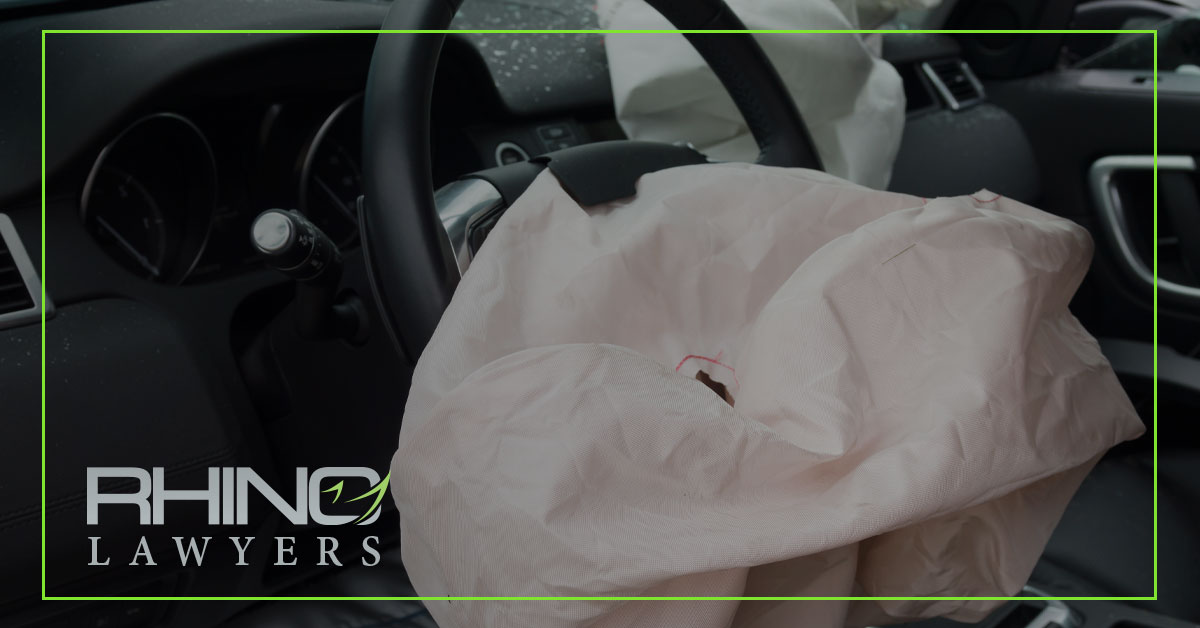
Black Box Evidence After a Florida Car Accident
Most drivers never think about the technology inside their vehicle. Until a crash happens.
Modern cars quietly collect data every time you drive. Speed. Braking. Seatbelt use. Throttle position. In the seconds before a collision, that data may be recorded and stored.
After a serious crash, black box evidence from a Florida car accident can become one of the most influential pieces of information in an injury claim. Often, without the driver realizing it even exists.
Understanding what black box data is, how it is used, and why timing matters can help injured Floridians avoid losing critical evidence.
What Is Black Box Evidence?
Most newer vehicles are equipped with an Event Data Recorder (EDR), commonly referred to as a black box. It functions similarly to flight recorders used in aviation, but on a smaller scale.
An EDR may record:
- Vehicle speed
- Brake application
- Throttle position
- Steering input
- Seatbelt use
- Airbag deployment timing
This data is typically captured seconds before, during, and sometimes immediately after a collision.
It does not record conversations. It records vehicle behavior.
Why Black Box Evidence Matters After a Crash
Car accident claims often involve conflicting accounts. One driver says they braked. Another says they never saw it coming. Memories fade. Stories change. Black box data does not rely on memory. It may:
- Confirm whether the brakes were applied
- Show how fast a vehicle was traveling
- Indicate whether seatbelts were in use
- Support or challenge fault claims
When injuries are serious, this data can significantly influence how insurance companies evaluate responsibility and risk. Objective data changes conversations.
How Black Box Evidence Is Used in Florida Car Accident Claims
Insurance companies understand the value of EDR data. When available, they often seek access early. Black box evidence may be used to:
- Argue speeding or aggressive driving
- Support comparative negligence claims
- Dispute injury severity
- Justify reduced settlement offers
If the data supports the injured driver, insurers may question how it was obtained or interpreted. If it appears unfavorable, insurers may lean on it heavily. Data does not explain context. Interpretation matters.
Black Box Evidence and Florida’s No-Fault Insurance System
Florida operates under a no-fault insurance system, meaning Personal Injury Protection (PIP) coverage typically applies first after a crash. However, black box evidence becomes more important when:
- Injuries exceed PIP limits
- Claims involve serious or permanent harm
- Fault is disputed
- Commercial vehicles are involved
In these situations, evidence beyond basic crash reports can shape the entire claim.
For a broader look at how fault impacts claims, see our guide on Florida comparative negligence after a car accident, which explains how shared responsibility is evaluated.
How Black Box Evidence Plays Out on Florida Roads
Florida crashes often occur under complex conditions. High-speed travel on I-4, I-75, and I-95. Congested urban corridors. Sudden rainstorms that reduce traction and visibility. Tourist drivers are unfamiliar with local traffic patterns.
Consider a highway collision involving multiple vehicles. One driver claims sudden braking caused the crash. Another claims they were rear-ended without warning.
Black box data may show braking patterns, speed changes, and impact timing. That information can change how investigators assess fault.
Florida traffic creates data-heavy crashes. Black box evidence often becomes central.
Who Can Access Black Box Data in Florida?
Accessing EDR data is not automatic. In many cases, access depends on:
- Vehicle ownership
- Consent of the owner
- Court orders
- Preservation of the vehicle
If a vehicle is repaired, sold, or destroyed, black box data may be lost. Timing matters. Once data is overwritten or erased, it cannot be recovered.
How Insurance Companies Preserve and Request Black Box Evidence
Insurance companies may act quickly to preserve vehicle data, especially in high-value claims. They may:
- Request vehicle inspections
- Seek downloads from manufacturers
- Preserve commercial vehicles
- Request court authorization
In contrast, injured drivers often do not realize this data exists until it is already gone. Early awareness protects options.
Common Mistakes Injured Drivers Make With Black Box Evidence
Black box evidence is powerful, but it is also fragile.
Allowing the Vehicle to Be Repaired Too Quickly
Repairs can overwrite or erase stored data.
Assuming Data Will Be Retrieved Automatically
EDR data must be intentionally accessed.
Ignoring Commercial Vehicle Involvement
Trucks, rideshare vehicles, and delivery vehicles often have additional data systems.
Believing Data Is Always Accurate
Data requires proper interpretation and context.
Avoiding these mistakes can preserve critical evidence.
Black Box Evidence vs Dash Cam Footage
Black box data is often discussed alongside video evidence, but they serve different purposes. Dash cams show what happened visually. While black boxes show how the vehicle responded.
In many cases, attorneys use both forms of evidence together. You can learn more about video evidence in our article on dash cam footage after a Florida car accident, where we explain how experts evaluate recordings.
Technology does not replace investigation. It supplements it.
How RHINO Lawyers Approach Black Box Evidence
Handle all black box evidence carefully. Data without explanation can be misleading. RHINO Lawyers focuses on auto injury cases across Florida, including:
- Hillsborough
- Pinellas
- Pasco
- Polk
- Manatee
- Orange
- Sarasota
- Lee
- Collier
- Charlotte
- Hernando
RHINO Lawyers takes action to preserve vehicle data, review it carefully, and explain it in the proper context when it becomes part of a claim.
Once data disappears, no one can recreate it.
What Federal Safety Data Says About Vehicle Technology
Federal safety research from the Administración Nacional de Seguridad del Tráfico en las Carreteras highlights how vehicle systems and crash dynamics affect injury outcomes.
El Insurance Institute for Highway Safety also studies how vehicle behavior during collisions relates to occupant safety.
These sources reinforce why electronic vehicle data has become increasingly important in modern crash investigations.
FAQs About Black Box Evidence After a Florida Car Accident
Q: Do all vehicles have black boxes?
Many newer vehicles include EDRs, but some makes and models do not.
Q: How long is black box data stored?
Storage depends on the vehicle. The system may overwrite or erase data if someone alters the vehicle.
Q: Can black box data be wrong?
Data accuracy depends on proper retrieval and interpretation.
Q: Can insurance companies use black box data against me?
Yes. Data may be used to support fault or behavior arguments.
Q: Is black box data used in every car accident case?
No. It is more common in serious or disputed claims.
Q: Can black box evidence support injury claims?
In many cases, yes. It may help explain crash severity.
Q: What if my car were totaled?
Data may still be retrievable if preserved early.
Q: Does Florida law regulate black box access?
Access is generally governed by consent, ownership, and court authority.
Injured? Do Not Let Critical Data Disappear.
Black box evidence is time-sensitive. Once someone alters or destroys a vehicle, crucial data can disappear forever.
If you suffered injuries in a Florida car accident and black box data plays a role, learning how this evidence works early helps you protect your position.
If it happens on the road, call 844-RHINO-77 to speak with RHINO Lawyers. Free consultation. Available 24/7. No fee unless we win.
Call a RHINO before losing critical data.
COMUNÍQUESE CON UN ABOGADO DE ACCIDENTES AUTOMOVILÍSTICOS EN TAMPA
En resumen, después de un accidente automovilístico, es posible que no conozca sus derechos. Sobre todo, no luche solo durante el proceso. En realidad, nuestro equipo de lesiones personales está aquí para ayudarle con cualquier necesidad legal que pueda tener relacionada con su accidente.
Por último, que RHINO Lawyers responda a sus preguntas y revise los hechos de su caso con una consulta gratuita. Así que comience completando el “Evaluación de caso instantánea y gratuita”o llamándonos en cualquier momento, día o noche, al 844.RHINO.77.
Leer más